Cornwall’s coastline stretches for more than 300 miles, and much of it is lined with rocky shores that shelter some of the UK’s richest intertidal habitats. At low tide, these beaches reveal a world of anemones, strange fish, rare sea slugs and prehistoric-looking crustaceans — all within arm’s reach. Cornwall ranks among the best destinations in the UK for rock pooling. Whether you are planning a family holiday or a focused wildlife trip, knowing where to go and when makes the difference between an empty stretch of rock and a pool teeming with life. This guide covers the top beaches for rock pooling in Cornwall, the species you are most likely — and least likely — to encounter, and how to plan your visit around the tides.
- Treyarnon Bay has a natural tidal pool roughly 12 metres across and over 2 metres deep — one of the most accessible in the UK.
- Hannafore Beach in West Looe sits within the Looe Voluntary Marine Conservation Area; free guided rockpool rambles run throughout the year.
- The Helford area hosts nearly 300 recorded seaweed species in a single OS kilometre square — more than anywhere else in Britain.
- Tides lower than 1.2 metres expose the best pools; arriving two hours before low water gives you the most time to explore.
The Best Rock Pooling Beaches in Cornwall
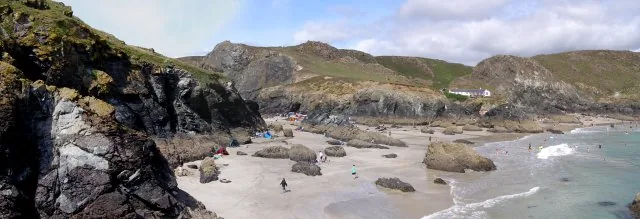
Not all Cornish beaches are equally rewarding for rock pooling. The best sites share a few things in common: a mixture of rocky reef and sheltered gullies, easy access at low tide, and a variety of substrate that supports different species. The four beaches below consistently stand out for the quality and accessibility of their pools.
Treyarnon Bay
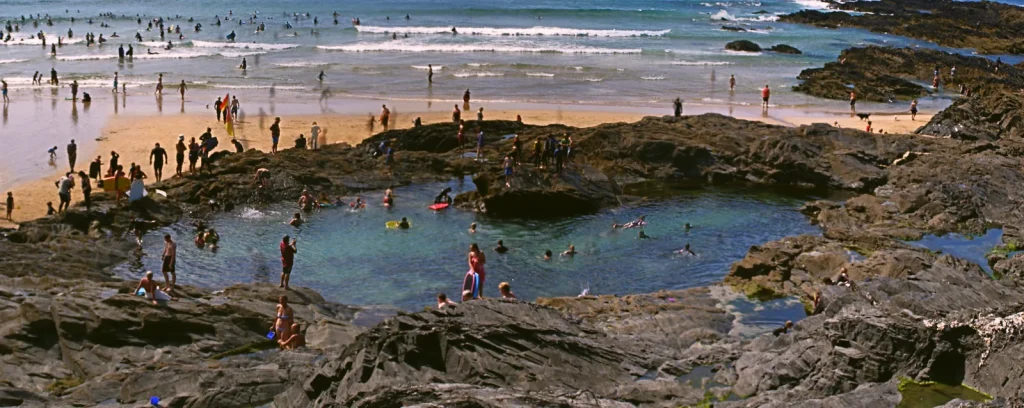
Tucked between Newquay and Padstow on Cornwall’s north coast, Treyarnon Bay is home to one of the most distinctive rock pooling features in the county: a large natural tidal pool carved into the northern rocks. The pool is roughly 12 metres across and over 2 metres deep in places, and it is refilled with fresh seawater at every rising tide. Unlike the shallow puddles you find on most beaches, this pool is deep enough to swim in — a genuine outdoor lido that costs nothing to use.
The surrounding rocky outcrops at low tide reveal a second layer of smaller pools packed with the species you would expect on a north-facing Cornish shore: anemones, shore crabs, shrimps, blennies and the occasional cushion star. The beach itself is northwest-facing with a sand and rock combination, a car park, toilets and a lifeguard patrol throughout the summer months. Dogs are welcome year-round. For families wanting a beach that delivers both a paddling pool for toddlers and genuine wildlife for older children, Treyarnon Bay is difficult to beat.
Hannafore Beach, West Looe
Hannafore sits at the western edge of Looe and forms the heart of the Looe Voluntary Marine Conservation Area — one of the most closely studied stretches of rocky shore in Cornwall. The beach is a shingle and sand mix that uncovers an extensive reef twice a day, giving rock poolers a twice-daily window onto one of the most species-rich intertidal zones in the southwest.
A species identification sign at the beach helps visitors put names to what they find, and free parking is available on the seafront. Look carefully in the rocky gullies for dahlia anemones — their frilly, multi-coloured tentacles are among the most photogenic sights on any Cornish beach. Among the seaweed, it is also worth checking for the egg cases of the nursehound, a small shark species whose pale brown, spiralling cases wash up or lodge in weed throughout the year.
The Looe Marine Conservation Group runs guided rockpool rambles at Hannafore throughout the year. Booking is essential, as places fill quickly, but the events are free and led by knowledgeable local naturalists who will show you species you would almost certainly walk straight past on your own.
Castle Beach, Falmouth
Castle Beach is a shingle beach at the southern edge of Falmouth that reveals wide stretches of rocky crevice and low-lying reef at low tide. Marine specialists have documented hundreds of different species here, including rare finds such as the Calma glaucoides sea slug — a predatory nudibranch that feeds on fish eggs and is seldom recorded on UK shores. The beach is conveniently central to Falmouth, with easy access on foot from the town centre.
A beach café at the top of the shore sells buckets and nets, so you do not need to plan ahead if you arrive unprepared. The rocky areas extend far enough at a low spring tide to reward careful exploration, and the proximity to the Falmouth intertidal zone — one of the most monitored in Cornwall — means that sightings of unusual species are well-documented and not purely a matter of luck.
Kennack Sands, The Lizard Peninsula
Kennack Sands is on the eastern side of the Lizard Peninsula, roughly 14 miles south of Helston. It is a family-orientated beach with a large car park, café, shop and toilets, and the rock pools at its northern and southern ends are reliably good for crabs, starfish and anemones. The beach is sheltered enough that pools here are calmer than on exposed north-coast beaches, making it accessible for young children.
What makes this corner of Cornwall particularly notable for rock pooling is what lies nearby. The Helford Voluntary Marine Conservation Area holds nearly 300 recorded seaweed species — and the single OS kilometre square covering the Helford estuary has been described as containing more seaweed species than any other square in Britain. Prisk Cove, within the VMCA, has long stretches of accessible rock pools alongside a seagrass meadow at Grebe.
A short distance away at Stackhouse Cove, past Marazion, the connection between Cornwall’s rock pools and scientific history becomes tangible. The cove is named after John Stackhouse, an 18th-century marine biologist who studied its shores and documented what was then the widest range of seaweed species ever recorded in Britain — a record that drew naturalists to this stretch of coast for generations.
What Lives in Cornwall’s Rock Pools
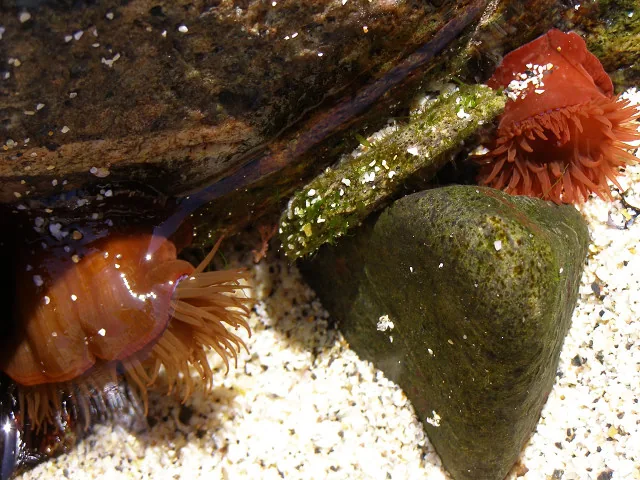
Cornwall’s position on the southwest tip of England, where Atlantic waters reach further north than anywhere else on the British mainland, means its rock pools support a wider range of species than you would find on most UK coasts. The following is not an exhaustive species list — that would run to hundreds of entries — but a practical guide to what you are likely to find, and a few rarities worth keeping an eye out for.
Anemones, Starfish and Crabs
The most conspicuous animals in a Cornish rock pool are almost always the anemones. Beadlet anemones are everywhere: when disturbed or exposed by the tide, they retract their tentacles completely and contract into what looks like a blob of dark red jelly, sometimes with a faint blue ring at the base. Snakelocks anemones cannot retract in the same way, so they remain open even out of water, their long green tentacles trailing in the water. According to Padstow Sea Life Safaris, snakelocks anemones contain a special protein that causes them to glow fluorescent green under ultraviolet light — something to test on your next night-time low tide. In deeper gullies and sheltered overhangs, look for the multi-petalled dahlia anemone, which comes in a range of colours from orange to purple.
Among the starfish, the small cushion star is the one most often found in shallow pools — it looks exactly as its name suggests. In larger pools, velvet swimming crabs are common and should be handled with care: they are aggressive, fast-moving, and their bright red eyes make them easy to identify. Hermit crabs occupy any empty shell they can find and will retreat inside when picked up. For a table of common Cornish rock pool crustaceans:
| Species | Where to find | Key feature |
|---|---|---|
| Velvet swimming crab | Mid to lower shore pools | Red eyes, blue-tinged claws, aggressive |
| Hermit crab | Any pool with empty shells | Soft abdomen tucked into borrowed shell |
| Shore crab | Under rocks and weed | Dark green; the most common crab on UK shores |
| Montagu’s crab | Lower shore under stones | Smooth, pale carapace with dark tips |
Fish and Rare Species Worth Searching For
Rock pool fish are masters of camouflage and easy to miss if you rush. Spend a few minutes watching a pool without moving and you will usually spot a common blenny or a rock goby resting motionless on the bottom. The shore clingfish uses a sucker disc on its underside to hold itself against rocks even in surge. In larger pools near the low-tide line, pipefish — elongated relatives of the seahorse — hover vertically among strands of seaweed.
Cornwall also offers some genuinely rare finds for patient observers. Celtic sea slugs are a species restricted to North Cornwall, Devon and a handful of other locations in the British Isles; in a documented find at Trevone Bay, eight individuals were found on a single rock. Blue rayed limpets, no more than 2 centimetres in length, attach to kelp fronds rather than bare rock and are identifiable by the iridescent blue lines running along their shells. In the sheltered pools of the Helford estuary, sea hares — soft-bodied molluscs related to sea slugs — can reach up to 20 centimetres in length and are occasionally spotted by rock poolers exploring the lower shore at a spring tide. Stalked jellyfish, which look unlike any conventional jellyfish, attach themselves to seaweed or eelgrass in calmer pools and are another species that rewards close attention.
How to Plan Your Rock Pooling Visit in Cornwall
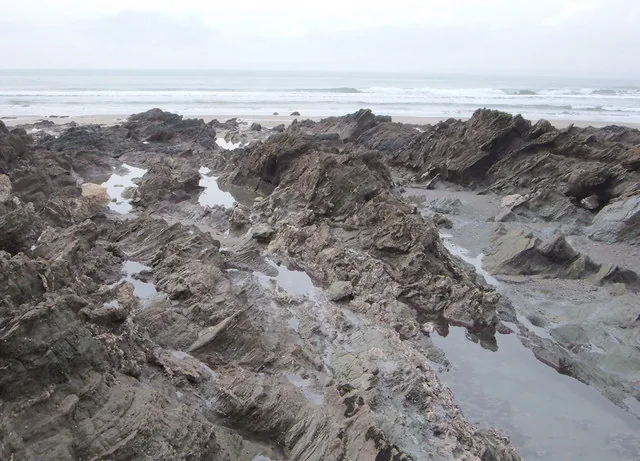
The difference between a productive rock pooling trip and an unrewarding one often comes down to timing. Getting the tides right, choosing the right season, and arriving with a small amount of equipment turns a walk along the shore into a genuine wildlife encounter.
Best Tides and Seasons
According to Padstow Sea Life Safaris (February 2026), tides lower than 1.2 metres are the benchmark for productive rock pooling — at this level, the lower shore zones that are rarely uncovered begin to appear. Aim to arrive at least two hours before the predicted low water time, which gives you time to work your way down the shore as the tide drops, then return before the flood catches up with you.
Spring tides are the most rewarding. These occur around the autumn and spring equinoxes, when the gravitational pull of the moon and sun aligns and produces the highest high tides and lowest low tides of the year. During a spring low tide, rock pools that are normally submerged are briefly accessible — and that is where the rarer species live. Late spring to early autumn is the most comfortable season for rock pooling in terms of light and temperature, but the rock pools are occupied year-round by their permanent residents, and a winter low spring tide can be just as productive as a July afternoon.
What to Bring and How to Behave Around Wildlife
You do not need expensive equipment. The essentials are:
- Non-slip beach shoes — limpets and mussel shells are sharp, and seaweed-covered rock is reliably slippery. Ordinary trainers are not adequate; neoprene beach shoes or old wetsuit boots work well.
- A clear bucket or Tupperware container — to hold a small amount of pool water and observe creatures at close range. Avoid nets, which can damage soft-bodied animals.
- A tide table — check the predicted low water time and height for your chosen beach the night before. The BBC tide tables cover all Cornish beaches.
When you are at the pool, move slowly and avoid casting your shadow across the water — fish and crustaceans respond to sudden changes in light by retreating under rocks. If you lift a stone, return it to exactly its original position: animals underneath often have territories and will not simply relocate. Always put any creatures you pick up back in the same pool, and leave the beach as you found it. Rock pooling is legal on all publicly accessible Cornish beaches, but collecting animals or seaweed for any purpose other than scientific research requires a licence under the Wildlife and Countryside Act 1981.
Cornwall’s rock pools are best explored with a companion, both for safety and because two pairs of eyes spot significantly more than one. If you prefer a guided introduction, the Looe Marine Conservation Group and The Rock Pool Project both run events and provide identification resources for self-guided visits.
Perhaps the most surprising fact about Cornwall’s rock pools is how concentrated its biodiversity is: the single OS kilometre square covering the Helford River estuary holds more recorded seaweed species than any other in Britain — nearly 300 in one location. For a first outing, book a free guided rockpool ramble at Hannafore Beach through the Looe Marine Conservation Group website. It is one of the quickest ways to learn the species and understand the habitat before you start exploring on your own. For organised water activities in natural settings across the UK, see our guide to natural swimming pools.
Frequently Asked Questions
What are the best rock pools in Cornwall?
Treyarnon Bay, Hannafore Beach in West Looe, Castle Beach in Falmouth and Kennack Sands on the Lizard Peninsula are consistently rated among the best. Each offers accessible pools at low tide with a wide range of species.
When is the best time to go rock pooling in Cornwall?
Aim to arrive two hours before low tide. Tides lower than 1.2 metres expose the most interesting pools. Spring tides around the equinoxes produce the lowest tides of the year and reveal rarely-seen lower-shore species.
What can you find in Cornwall’s rock pools?
Beadlet and snakelocks anemones, cushion stars, velvet swimming crabs, hermit crabs, blennies, rock gobies and shore clingfish are common. Rare finds include Celtic sea slugs, blue rayed limpets and sea hares.
Is rock pooling free in Cornwall?
Yes. Rock pooling is free on all publicly accessible beaches in Cornwall. Guided rockpool rambles run by the Looe Marine Conservation Group at Hannafore Beach are also free, though booking is required.
What equipment do you need for rock pooling?
Non-slip beach shoes are essential as rocks and seaweed are slippery. A clear bucket or Tupperware container helps you observe creatures closely. Avoid nets, which can injure soft-bodied animals.
Where is the biggest rock pool in Cornwall?
Treyarnon Bay on the north coast has the most famous large natural tidal pool — approximately 12 metres across and over 2 metres deep. It is refilled with seawater at every tide and is deep enough to swim in.