Rock pools are intertidal habitats — sections of coastline that are alternately covered by the sea and exposed to air as the tides advance and retreat. They form wherever bedrock or boulders trap water in depressions during low tide, creating sheltered microenvironments that support species from two distinct worlds: those adapted to life underwater, and those adapted to survive periodic air exposure. The UK’s coastline is approximately 17,820 kilometres long, much of it rocky and exposed to Atlantic tidal forcing, and it supports some of the most biodiverse intertidal habitats in northern Europe. Understanding what rock pools actually are — how they form, how their ecology is organised, and what makes the UK’s examples exceptional — is the starting point for understanding what you are looking at when you find one.
- Rock pools are intertidal habitats — enclosed depressions of water on rocky shorelines, exposed at low tide and submerged at high tide, supporting species adapted to survive both conditions.
- UK rock pools are organised into four distinct zones: splash zone, upper shore, middle shore, and lower shore — each with a different community of species determined by how long it is exposed to air per tidal cycle.
- The lower shore zone, exposed only on spring tides, has the greatest biodiversity — the species found there are normally subtidal and only accessible during the lowest tides of the lunar month.
- Wembury Bay Marine Conservation Area (Devon, designated 1981) and St Abbs and Eyemouth Voluntary Marine Reserve (Scotland, the UK’s first voluntary marine reserve) are the country’s best-protected and most biodiverse intertidal sites.
- UK rock pool species diversity is driven by the country’s large tidal range — up to 14 metres in the Bristol Channel, the second-highest tidal range on earth.
What Are Rock Pools? Formation, Zonation and Why UK Shores Are Exceptional
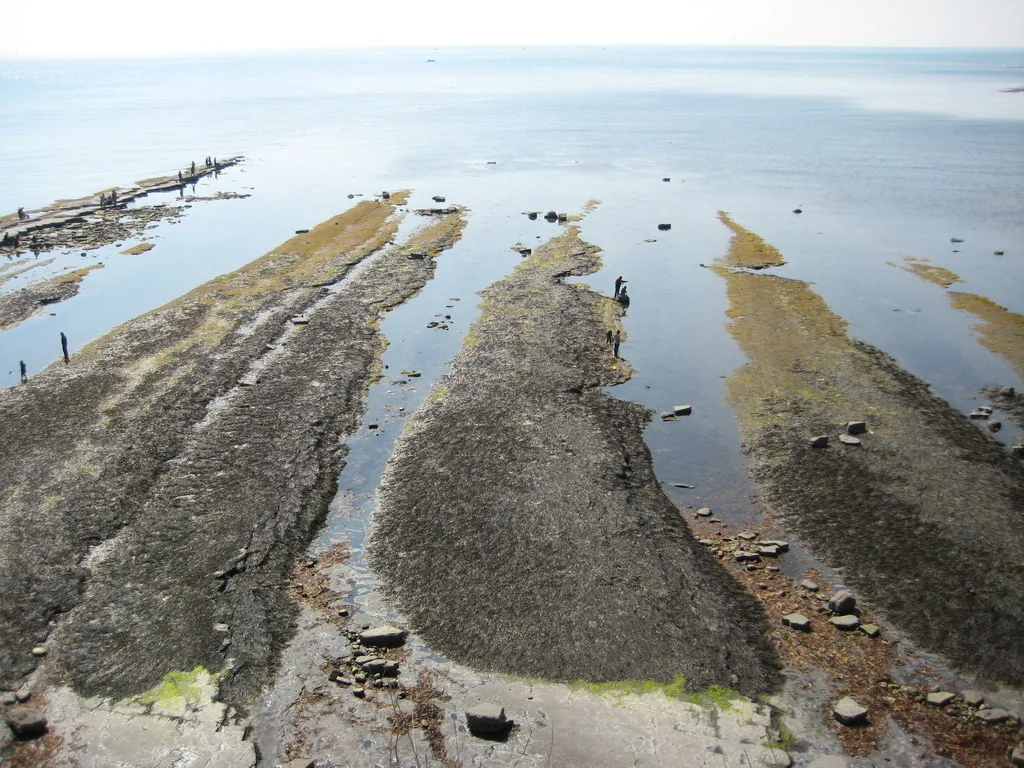
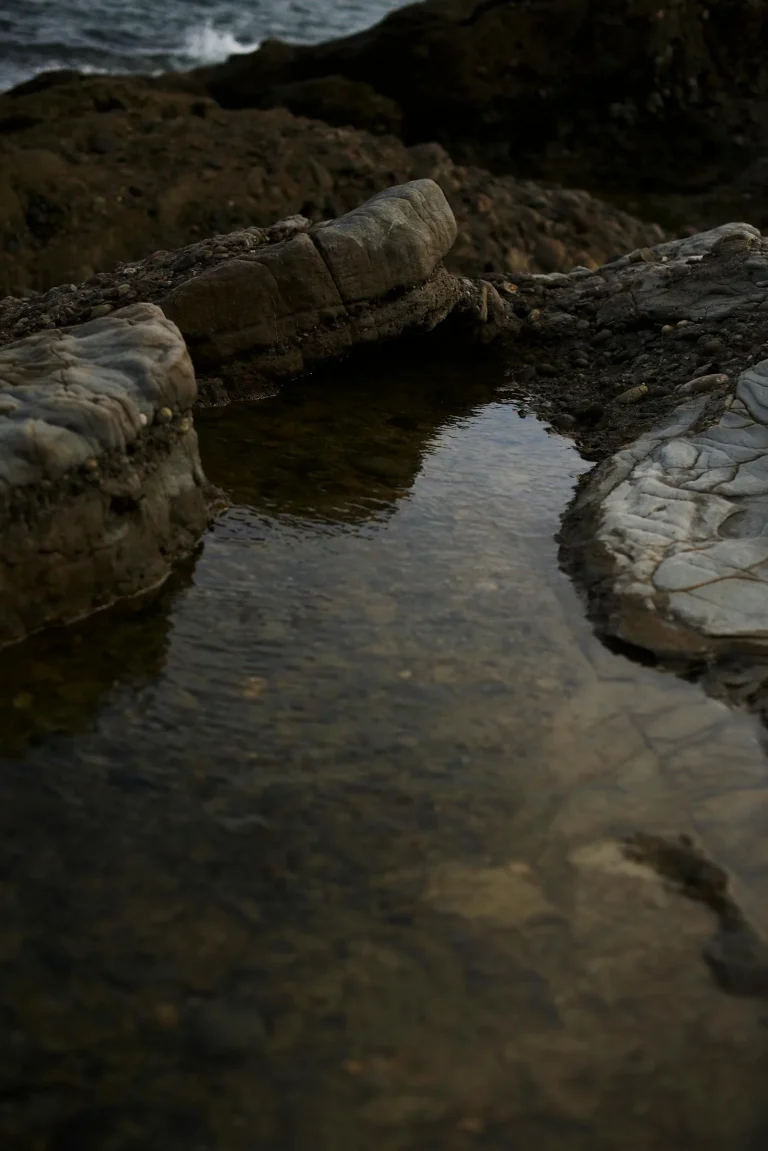
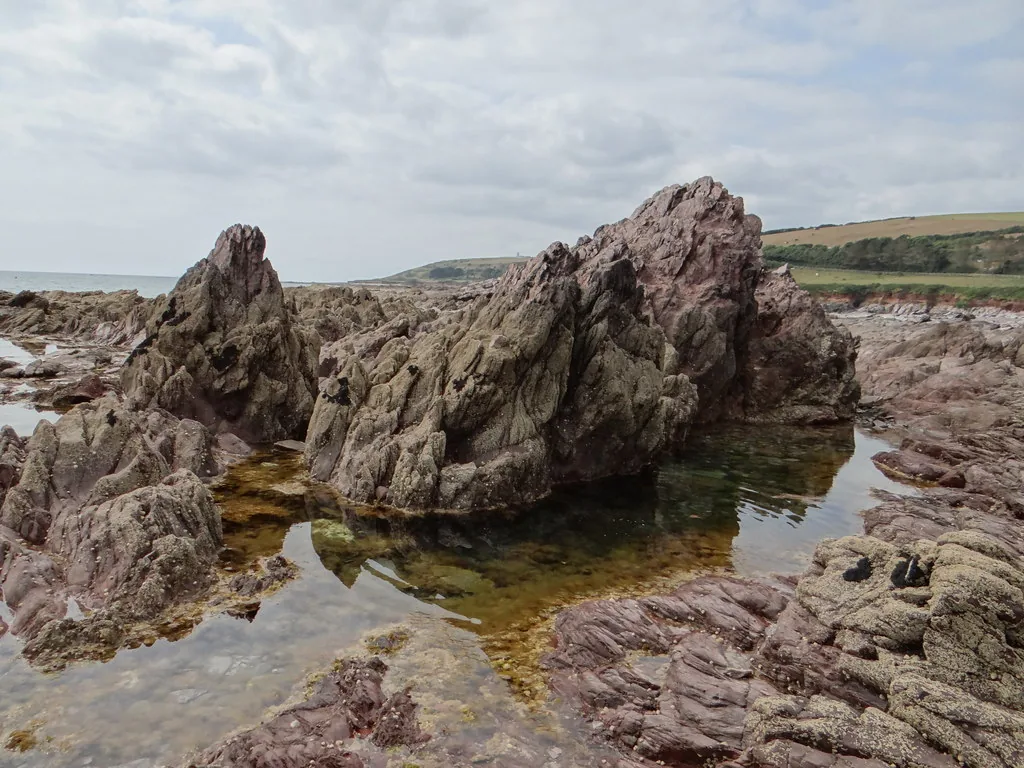
A rock pool is simply a depression in the intertidal bedrock or among boulders that retains water when the tide retreats. The simplicity of the description obscures the complexity of the habitat: each pool is effectively a small isolated ecosystem, subject to extreme variation in temperature, salinity, oxygen levels and pH across a single tidal cycle — conditions that would kill most marine species, but that have driven the evolution of a community of extraordinary generalists adapted to rapid environmental change.
How rock pools form: geology, erosion and tidal exposure
Rock pool formation depends on the intersection of three geological factors: the hardness and structure of the bedrock, the direction and force of wave action, and the tidal range. On soft sedimentary coasts (sandy beaches, mudflats), the tide creates no persistent pools — the water drains through or redistributes the substrate. On hard bedrock coasts — granite in Cornwall, slate in Devon, chalk in Yorkshire, basalt in Northern Ireland — the tide’s hydraulic action gradually undercuts and erodes softer seams in the rock, creating depressions that trap water. The process is accelerated by biological erosion: sea urchins, limpets and boring molluscs abrade the rock surface over decades. The most productive rock pools are typically found on wave-cut platforms — relatively flat expanses of bedrock exposed at low tide that have been planed flat by thousands of years of wave action — rather than in steeply sloped or cliff-base environments. Wembury Bay’s wave-cut slate platforms are a particularly clear example: flat enough to walk across at low tide but sufficiently fractured and varied in texture to create dozens of distinct pool habitats within a small area. The UK’s mix of Devonian slates, Carboniferous limestone, Jurassic sedimentary rock and Precambrian metamorphics means that the rocky coastline provides a wide variety of pool types, from the Jurassic Coast’s fossil-rich limestone pools in Dorset to the dramatic granite platforms of the Lizard Peninsula.
Intertidal zonation: the four zones of a UK rocky shore
Rocky shores are not uniform — they are organised into horizontal bands determined by the duration of tidal immersion at each level. Ecologists recognise four main zones on a UK rocky shore, each with a distinct and largely predictable community of species. The splash zone (above the high-tide mark) is only wetted by sea spray and the highest storm surges — the dominant organisms here are terrestrial and semi-terrestrial species: black lichen, rough periwinkles and a small number of specialist insects. The upper shore is covered only by the highest tides and exposed for most of each tidal cycle; it supports hardy species including channel wrack (seaweed), small periwinkles, barnacles and limpets. The middle shore is the most visible zone for visitors — covered and uncovered twice daily by an average tide — and contains the richest and most accessible pool communities: shore crabs, beadlet anemones, blennies, gobies, common prawns, hermit crabs, starfish and a wide variety of seaweeds including bladder wrack and serrated wrack. The lower shore, exposed only during spring low tides (around full and new moons), has the greatest biodiversity per unit area but is accessible for relatively short windows each month: species here include sea urchins, lobsters, spider crabs, sea slugs, diverse tunicates, large sponges and the subtidal fish species that move onto the platform at night but retreat as the tide drops. Understanding which zone you are visiting determines what species you should realistically expect to find — a visitor arriving at mid-tide on a neap tide will see the middle shore communities only; arriving one hour before a spring low tide opens up the full lower shore as well.
Why the UK’s tidal range makes its rock pools exceptionally biodiverse
Tidal range — the difference in water level between high and low tide — is the primary driver of intertidal habitat diversity. A large tidal range exposes a wide band of shore at each low tide, creating a correspondingly wide diversity of habitat bands, each with its own species community. The UK benefits from exceptional tidal ranges by global standards: the Bristol Channel has a maximum tidal range of approximately 14 metres — the second-highest in the world after the Bay of Fundy in Canada. The typical range around most of the English coastline is 3–8 metres. Compare this to the Mediterranean, where tidal ranges rarely exceed 30 centimetres, and the difference in intertidal habitat width — and thus biodiversity — is immediately apparent. The Mediterranean has almost no intertidal zone to speak of; the UK has one of the most extensive and productive on Earth. The Wildlife Trusts describe UK rock pools as containing “some of the most important intertidal habitats in northern Europe” for this reason. The combination of a large tidal range, diverse rocky coastline geology and Atlantic water temperatures (cold but relatively stable, supporting a wide range of temperate species) creates the conditions for a habitat that rewards exploration at every tidal state.
The Best Rock Pools in the UK: Sites Ranked by Biodiversity and Conservation Status
The UK’s best rock pool sites are distinguished not just by scenic quality but by the formal recognition they have received from conservation bodies — Marine Conservation Areas, Voluntary Marine Reserves and Marine Protected Areas designate the sites with the highest biodiversity value and the most rigorously protected intertidal habitats. Below are the leading sites by conservation status and ecological quality.
England’s most-protected intertidal sites: Wembury and Kimmeridge
Wembury Bay Marine Conservation Area in South Devon, designated in 1981, is England’s best-known and most extensively studied intertidal rock pool site. The bay’s slate reef and wave-cut platforms have been the subject of long-term ecological surveys by Devon Wildlife Trust and Plymouth University, and the site supports reliably documented populations of limpets, beadlet anemones, shore crabs, pipe fish, sea scorpions, spiny starfish, Cornish sucker fish and edible crabs. The Wembury Marine Centre (open daily 10am–4pm, free entry) provides identification guides, aquaria and expert-led Rockpool Safaris through the summer, making it the most accessible educational rock pool site in England. At a comparable ecological quality, Kimmeridge Bay in Dorset sits within the Purbeck Marine Wildlife Reserve — the UK’s longest-established voluntary marine reserve — and combines exceptional intertidal biodiversity with the Jurassic Coast World Heritage landscape. Kimmeridge’s underwater ledges, kelp forests and shallow subtidal habitats support species including cuttlefish, bream and the Cornish sucker fish alongside standard intertidal rock pool assemblages. The Dorset Wildlife Trust runs a voluntary Marine Environmental Monitoring project there which has tracked species populations since 1976 — one of the longest continuous intertidal monitoring records in the UK. Flamborough Headland in East Yorkshire, with its chalk geology, supports a notably different species assemblage from the southwest sites — particularly rich in sea urchins, which prefer the harder substrate — and at spring low tides exposes a substantial kelp forest habitat not normally accessible from shore.
Scotland’s finest rock pool sites: St Abbs and the Isle of Mull
The St Abbs and Eyemouth Voluntary Marine Reserve in the Scottish Borders was the UK’s first designated voluntary marine reserve, established in 1984. Killiedraught Bay within this reserve is consistently rated as Scotland’s finest rock pooling site. The cold, clear North Sea water here supports species less common on England’s warmer Atlantic-facing coasts: breadcrumb sponge, bootlace worm, butterfish and substantial bladderwrack and kelp beds. The seabird colony at St Abbs Head — over 50,000 birds including guillemots, razorbills, kittiwakes and shags — adds a secondary wildlife dimension that makes this a full-day destination. On the Isle of Mull, Calgary Beach offers a qualitatively different experience: a west-facing Atlantic shore with cleaner, more Atlantic-influenced water and the possibility of observing otters hunting in the intertidal zone alongside standard rock pool species. The Brough of Birsay on Orkney provides some of the UK’s most dramatic tidal pool environments — a tidal island accessible at low tide, where the causeway crossing itself crosses an exposed intertidal platform supporting significant populations of chitons, dog whelks and purple sea urchins. Orkney’s tidal ranges are smaller than the southwest but the water is cleaner and colder, supporting subtidal species characteristic of more northern Atlantic systems.
Wales and Northern Ireland: Gower and Strangford Lough
The Gower Peninsula in South Wales — the UK’s first Area of Outstanding Natural Beauty, designated in 1956 — has some of the most accessible quality rock pooling in Wales. Caswell Bay and Rhossili Bay both offer extensive intertidal platforms with good middle and lower shore communities; Rhossili’s Worm’s Head tidal island provides an exceptional lower shore habitat accessible for approximately 2.5 hours either side of a spring low tide. In Wales, the National Trust manages several coastal properties including Rhossili, where interpretation boards detail the tidal access windows and species found. In Northern Ireland, Strangford Lough — the largest sea lough in the British Isles, designated a National Nature Reserve — provides sheltered intertidal habitat quite different in character from the exposed Atlantic-facing sites. The lough is famous for its common seals, and its sheltered bays and reefs support sponges, tunicates and bivalves characteristic of the enclosed lough environment rather than the open coast. The three main access points for rock pooling on the Ards Peninsula — Kearney, Ballymacormick and Orlock, all managed by the National Trust — represent some of the most family-accessible intertidal exploration in Northern Ireland. For those seeking guided access to rock pools rather than self-directed exploration, our guide to natural swimming pools in the UK covers comparable habitats where organised swimming experiences offer structured contact with intertidal water environments.
What Lives in UK Rock Pools: Species by Tidal Zone
The species composition of a rock pool is determined primarily by its position on the shore. A pool in the upper shore zone will contain different organisms from one in the lower shore zone, even if they are only fifty metres apart horizontally. Understanding this zonation makes species identification significantly more productive — you know what to look for before you look, and you understand why you are not finding lower-shore species in upper-shore pools. Wikipedia’s list of British Isles rockpool life documents over 100 species commonly encountered in intertidal zones; the groups below represent the most reliably found organisms at each shore level.
Upper and middle shore species: limpets, barnacles, crabs and anemones
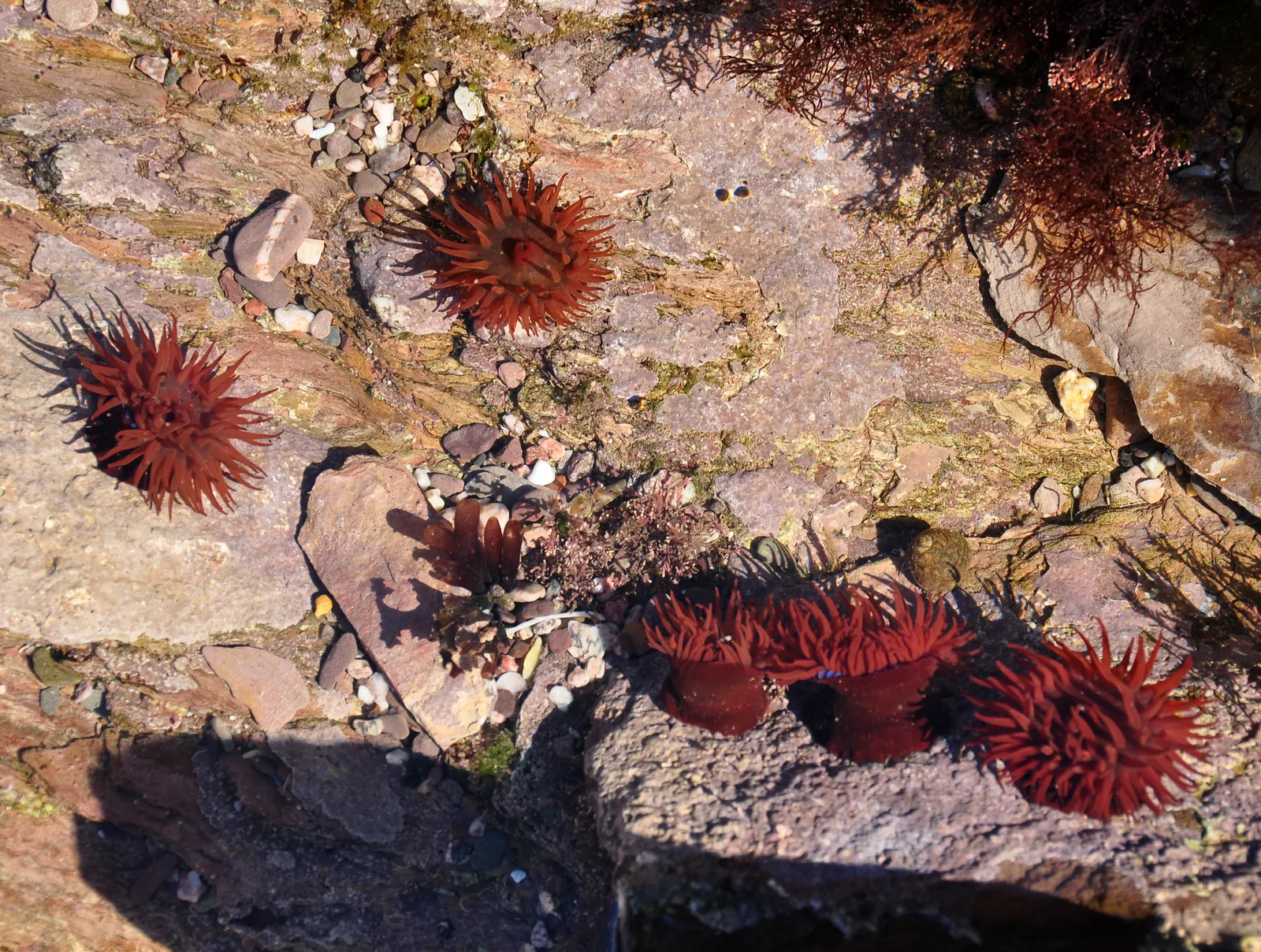
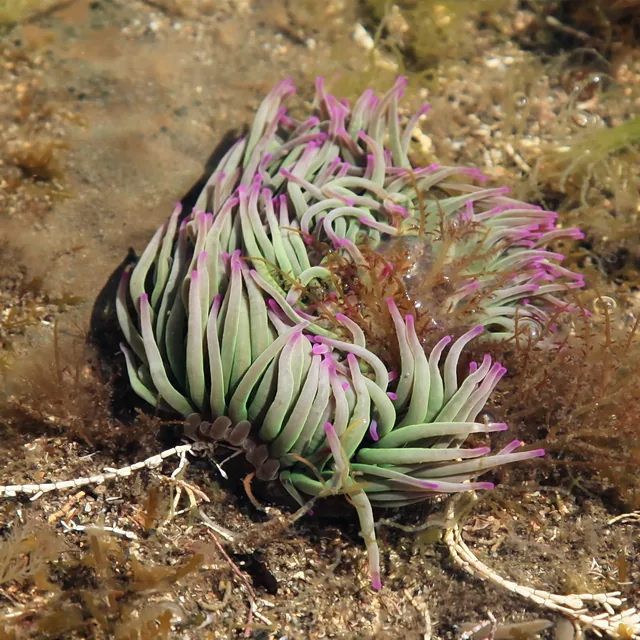
The upper shore is dominated by organisms that can tolerate prolonged air exposure and desiccation stress. Limpets — the conical shells clamped to exposed rock faces — use a home scar (a slightly raised ring in the rock worn by their shell edge over years) that they return to at high tide, sealing in moisture. They are the most abundant macroscopic animal on upper and middle shores. Barnacles form dense white crusts on the rock and are crustaceans rather than molluscs — they feed by extending feathery cirri to filter plankton when covered by water. The common shore crab (shell up to 9cm across, five spines on each side, three rounded lobes between the eyes) is the most commonly found crab at all shore levels, hiding under rocks and in crevices. Hermit crabs occupy empty shells — usually periwinkle or dog whelk shells — and can be observed carrying their portable homes across pool floors. Beadlet anemones (retracted at low tide into brownish-red blobs, up to 5cm across when open) are the most common intertidal anemone across the full range of UK shores; snakelocks anemones, which cannot retract their tentacles, are found lower on the shore and in more sheltered, cleaner-water sites. The Marine Conservation Society’s guide notes that blennies are among the most characteristic middle-shore fish: shannies (common blennies) frequently sit partially out of water in upper pools, using their pelvic fins to grip wet rock.
Lower shore species: sea urchins, lobsters, pipefish and nudibranchs
The lower shore — exposed only at spring low tides — supports a qualitatively different community, largely composed of species that normally live subtidally and move onto the platform to feed at low water. Common starfish are typical lower shore species (handle with extreme care: even brief air exposure causes osmotic stress that can be fatal). Common sea urchins (purple-spined, up to 7cm across) graze encrusting algae and are found in crevices and kelp holdfasts. Lobsters retreat under boulders and into crevices as the tide drops and become briefly accessible to observers at the lowest spring tides — a genuinely dramatic encounter at sites like Wembury and Kimmeridge that most visitors do not expect. Pipefish (straight, needle-like relatives of seahorses, up to 45cm long) hang vertically in seaweed beds. Sea slugs (nudibranchs) are among the most visually striking lower-shore species: the sea lemon, grey sea slug and flamboyant aeolid nudibranchs occur at well-oxygenated lower-shore sites. Common prawns are present at all shore levels but most abundant in the lower shore, where they school visibly in open pools. The tompot blenny — orange-brown, up to 30cm, with distinctive two-branched head tentacles — is a lower-shore specialist that becomes visible in the deepest pools at spring low tide, particularly at south-west England sites.
Rare and unusual UK rock pool species
Beyond the reliably found common species, UK rock pools occasionally yield genuinely unusual animals. Spiny seahorses (Hippocampus guttulatus), the UK’s more commonly recorded seahorse species, are occasionally found in seagrass beds adjacent to lower-shore rock pools — particularly at St Helens Duver on the Isle of Wight and at several Devon and Cornwall sites. The Seahorse Trust maintains a UK sighting database and requests that any seahorse observations be reported. Undulate rays and thornback rays occasionally shelter in the deepest lower-shore pools at exposed sites. Five-bearded rockling and three-bearded rockling are eel-like lower-shore fish found at Scottish and northern English sites. On Orkney and in northern Scotland, purple sea urchins (Paracentrotus lividus) are found in rock-boring holes they have carved themselves over years. Cushion stars — small five-armed starfish with a distinctly pentagonal, padded appearance and typically orange colouration — are robust enough to handle briefly (unlike larger starfish) and are found at many south-west England middle and lower-shore sites, often confusing visitors who do not recognise them as starfish at first glance.
Frequently Asked Questions
What are rock pools?
Rock pools are intertidal habitats — depressions in bedrock or between boulders on rocky coastlines that retain water when the tide retreats. They form where hard bedrock resists erosion and the tidal cycle covers and uncovers the same spot repeatedly. They support a community of species adapted to survive both air exposure and submersion, including crabs, anemones, fish, molluscs and echinoderms.
What are the best rock pools in the UK?
The best-recognised sites by biodiversity and conservation status are: Wembury Bay Marine Conservation Area (Devon), Kimmeridge Bay within the Purbeck Marine Wildlife Reserve (Dorset), Flamborough Headland (Yorkshire), Killiedraught Bay at St Abbs and Eyemouth VMR (Scotland), Calgary Beach (Isle of Mull), Caswell Bay and Rhossili Bay (Gower, Wales), and Strangford Lough access points at Kearney and Orlock (Northern Ireland).
What can you find in UK rock pools?
Common species across UK rock pools: shore crabs, hermit crabs, beadlet anemones, limpets, barnacles, periwinkles, common prawns, shannies (blennies), rock gobies, starfish and cushion stars. At lower shore zones on spring low tides: sea urchins, lobsters, pipefish, tompot blennies, nudibranchs (sea slugs) and spider crabs. Rarely: spiny seahorses, undulate rays, and five-bearded rockling.
What are the four zones of a rocky shore?
UK rocky shores are divided into: (1) Splash zone — above the tide line, wetted only by spray; (2) Upper shore — covered only by the highest tides, dominated by limpets, barnacles and small periwinkles; (3) Middle shore — covered and uncovered twice daily, the richest accessible zone with crabs, anemones and fish; (4) Lower shore — exposed only at spring low tides, most biodiverse, including sea urchins, lobsters and pipefish.
Why are UK rock pools particularly good?
The UK’s rock pools are among the most biodiverse in northern Europe because of the country’s large tidal range (up to 14 metres in the Bristol Channel — the second-highest in the world), its varied rocky coastline geology, and its Atlantic-influenced cool but stable water temperatures. A large tidal range exposes a wide band of shore, creating extensive habitat for each of the four shore zones.
Are there protected rock pool areas in the UK?
Yes. England has Wembury Bay Marine Conservation Area (1981) and the Purbeck Marine Wildlife Reserve at Kimmeridge Bay. Scotland’s St Abbs and Eyemouth Voluntary Marine Reserve (1984) was the UK’s first designated voluntary marine reserve. Many intertidal sites are also within Marine Protected Areas and are managed by organisations including the National Trust, Wildlife Trusts and Natural England.