Fear of swimming pools — a specific form of aquaphobia — affects a significant share of the UK population: Swim England data indicates nearly one in five UK adults admits to a fear of water, and 12.8 million people in the UK will not enter a swimming pool due to fear. It is distinct from not knowing how to swim (though the two often co-occur) and can be addressed through structured exposure and, in persistent cases, cognitive behavioural therapy (CBT). Separately, houses with swimming pools in Scotland are available at the premium end of the property market — indoor pools are more common than outdoor given the climate, with 230+ pooled properties listed on platforms like Green Acres. For those wanting pool access without property ownership, Swimple, Peerspace, and venue-specific hire services offer private pool rental by the hour across the UK. This guide covers all three topics.
- Fear of swimming pools: 12.8 million people in the UK will not enter a pool due to fear; nearly 1 in 5 adults has some fear of water (Swim England). Causes: traumatic experience, never learning to swim, parental anxiety modelling. Treatment: gradual exposure, CBT, specialist adult swim lessons
- Houses with pools Scotland: 230+ properties listed on Green Acres. Indoor pools far more common than outdoor given Scottish climate. Premium over standard equivalent Scottish property: significant — indoor leisure pools typically found in £750k+ properties. Search via Savills, Rightmove, JamesEdition for luxury properties with pools
- Pools to rent UK: Swimple (swimple.co.uk) connects to luxury private pools by the hour. Peerspace lists 36+ pool venues in London. Pricing from £38/hour (max 8 people) to £12/person. Firtree Swimming (near Durham) offers private pool hire. Most sessions are 1–2 hours
Fear of Swimming Pools — Causes, UK Scale, and How to Overcome It
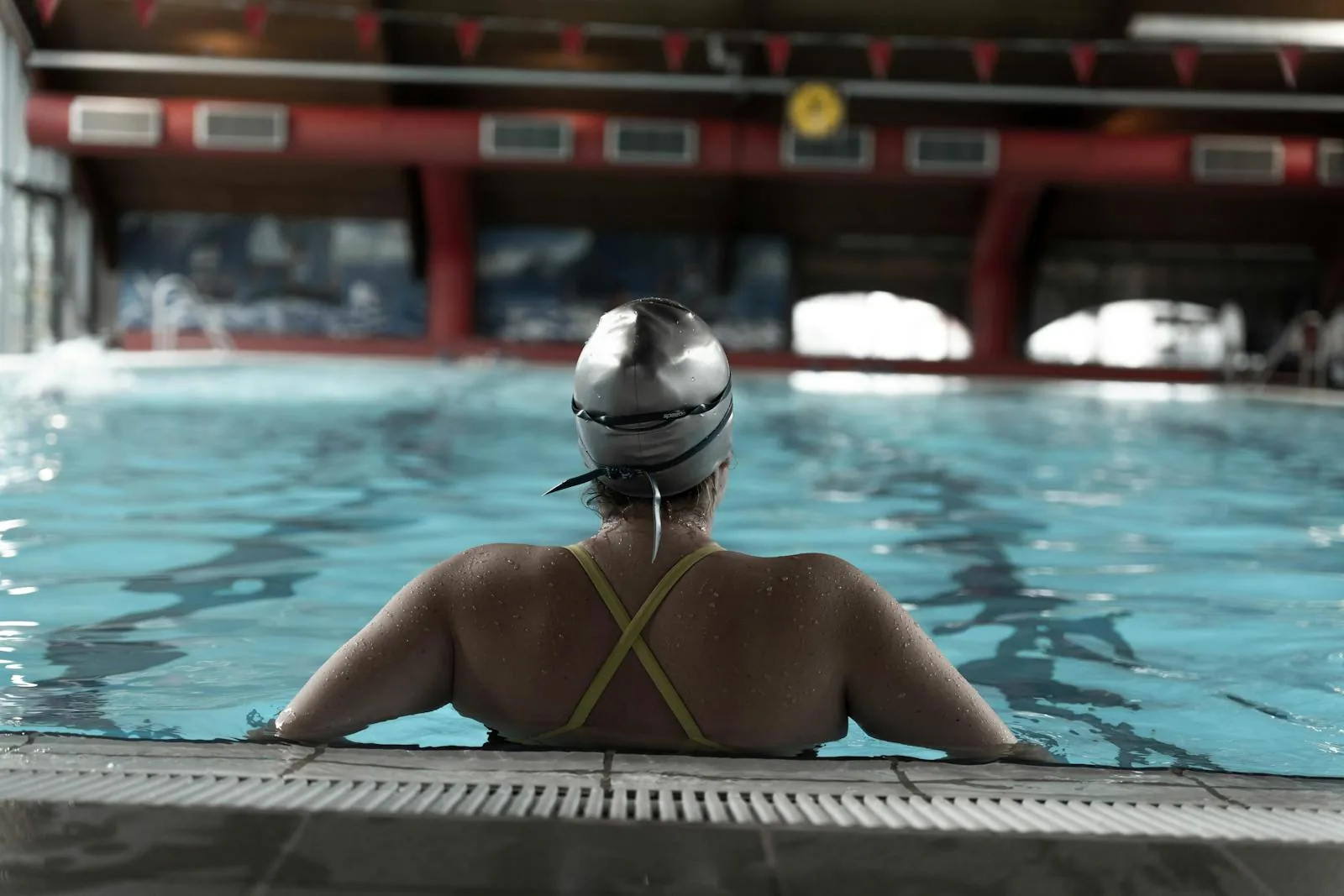
What causes fear of swimming pools — and how many people are affected
Fear of swimming pools is a specific phobia within the broader category of aquaphobia (fear of water). According to CPD Online’s aquaphobia guide, aquaphobia involves an extreme, irrational fear of water where the perceived danger is disproportionate to the actual risk. Swim England data indicates that nearly one in every five adults in the UK admits to a fear of water, and research suggests 12.8 million people in the UK will not enter a swimming pool as a result of fear. A further 4 million adults reportedly will not get into a bath. The scale of this suggests that pool-specific anxiety is one of the largest barriers to swimming participation in the UK — larger than cost or physical barriers for a significant proportion of non-swimmers.
The most common causes are: (1) a traumatic water-related incident early in life — near-drowning, being pushed into water, or watching someone in distress — that creates a conditioned fear response; (2) having never learned to swim with professional support, leading to anxiety about loss of control in water; and (3) parental modelling — a parent’s visible fear of water can transfer to children through observation. The fear typically intensifies with depth — many people who are comfortable in shallow water experience significant anxiety at the point where feet leave the bottom, or at deeper public pools where visibility of the floor is reduced.
Overcoming fear of swimming pools
The most effective interventions for pool-specific anxiety, according to Medical News Today’s aquaphobia overview and clinical practice, are:
- Gradual exposure with support: a structured programme that moves from standing in shallow water, to floating with support, to independent movement. Specialist adult swimming lessons for nervous adults (offered by operators including Love to Swim and most Better/GLL leisure centres) provide professional support from instructors trained in water confidence. Starting with private 1:1 lessons rather than group sessions significantly reduces the social anxiety component.
- Cognitive Behavioural Therapy (CBT): for persistent or severe aquaphobia where anxiety occurs even when thinking about or viewing water, CBT addresses the underlying thought patterns maintaining the fear response. The Counselling Directory’s guide to water-related anxiety recommends working with a therapist familiar with both phobia treatment and the specific triggers of pool environments.
- Breathing and relaxation techniques: diaphragmatic breathing, progressive muscle relaxation, and mindfulness exercises help manage the acute physical symptoms of anxiety (raised heart rate, shallow breathing) that are triggered by pool exposure. These techniques are most effective when practised outside the pool first, then applied during gradual water entry.
For parents concerned about a child’s pool anxiety: forcing the issue or dismissive responses (“there’s nothing to be afraid of”) typically reinforce rather than reduce the fear. Allowing the child to observe and approach the water at their own pace, combined with structured lessons with a trained children’s swimming teacher, is the recommended approach.
Houses with Swimming Pools in Scotland
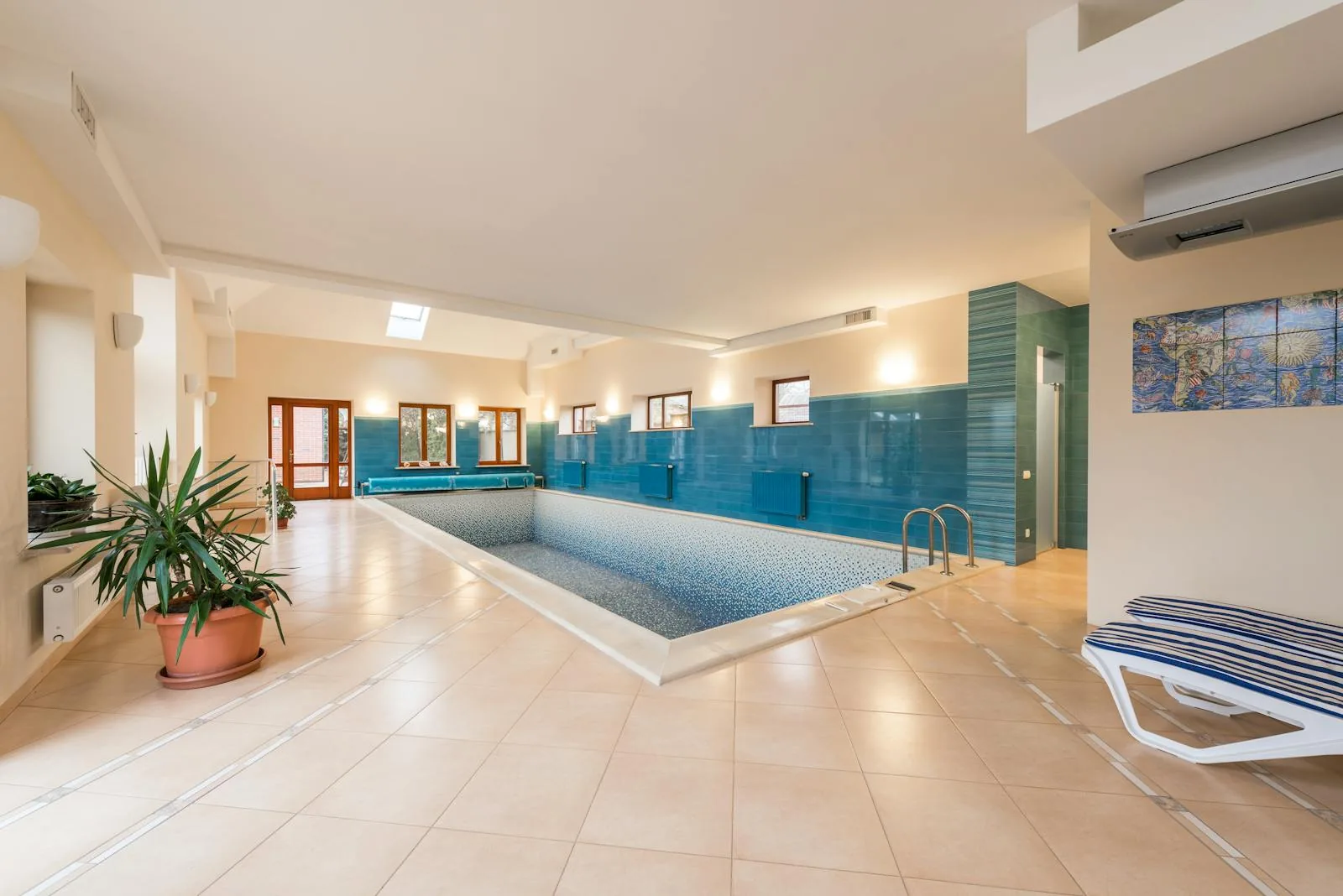
The Scottish property market for houses with pools
Swimming pools in Scottish residential property are almost exclusively indoor — the Scottish climate (mean summer temperatures of 13–18°C, significant rainfall, and limited sunshine hours relative to the south of England) makes outdoor residential pools impractical for most of the year. Indoor pools are typically part of purpose-built leisure suites in large detached or country house properties, combined with saunas, steam rooms, and gym areas. According to Green Acres, 230+ properties with swimming pools are currently listed for sale in Scotland. In the premium segment, JamesEdition’s Scottish pool property listings cover modern houses and country estates with private pool facilities.
Price point: Scottish properties with private indoor swimming pools typically start around £750,000–£1,200,000+ depending on location and pool specification, though the pool itself is a significant capital investment in a property. An example: a 6-bedroom detached property in Bothwell, South Lanarkshire, with a large heated indoor swimming pool, sauna, and shower area was listed for approximately £1.15 million. A Charleton Estate property in Angus included a 4-bedroom main house with a detached annex housing an indoor swimming pool, triple garage, and self-contained apartment. For buyers, Savills Scotland and Rightmove’s “indoor pool” filter in Scotland return the most relevant premium listings. Running costs for a private indoor pool in Scotland — heating, water treatment, maintenance — typically add £3,000–£8,000 per year depending on pool size and usage frequency.
Pools to Rent in the UK — Private Pool Hire by the Hour
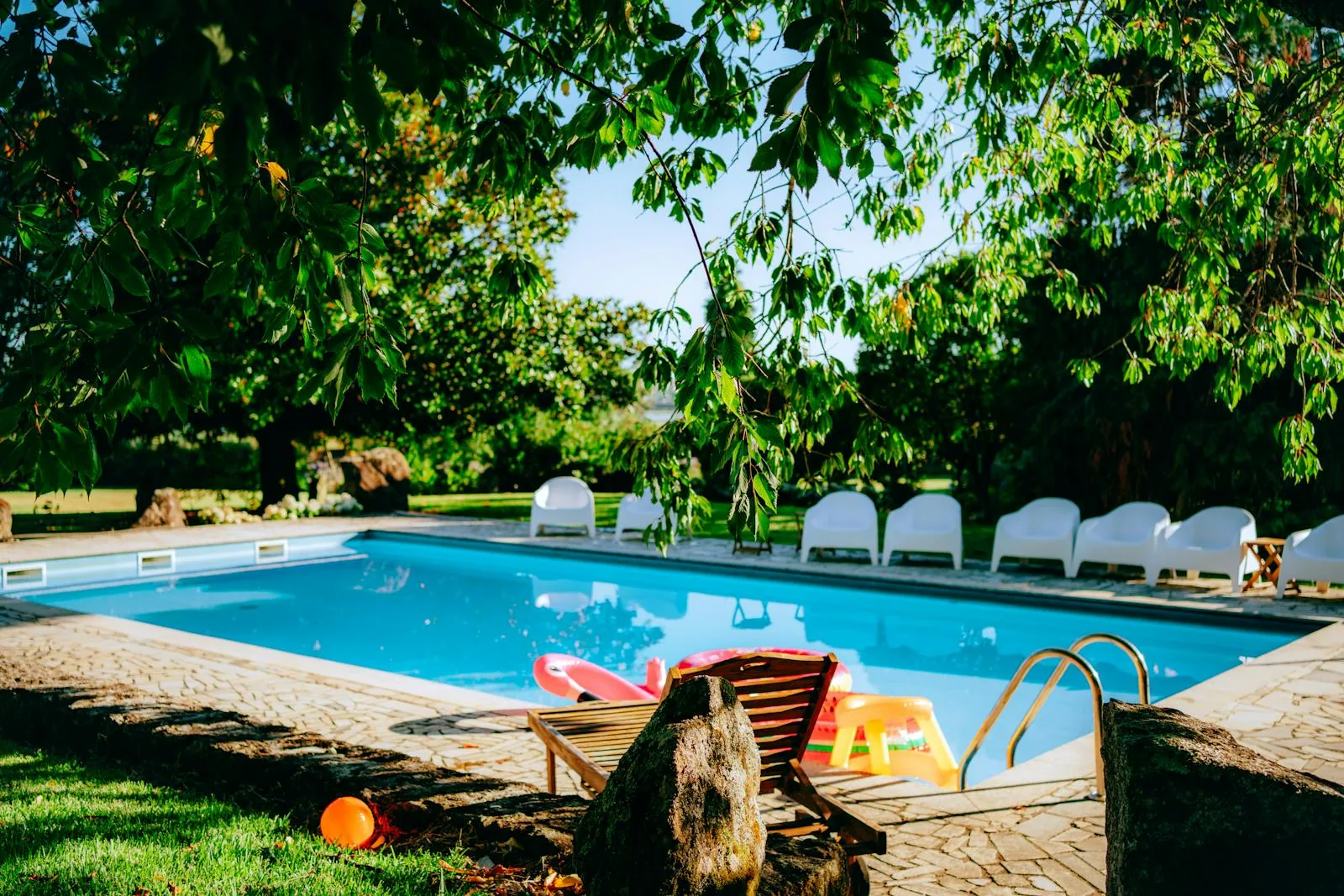
How private pool hire works and the main platforms
Private pool hire — booking a pool for exclusive use by the hour or half-day — has grown as a category in the UK, driven by demand for private children’s parties, adult leisure sessions, corporate events, and wellness experiences that a public leisure centre cannot provide. The main platforms and services operating in the UK are:
- Swimple: a UK-focused platform connecting swimmers with luxury private pools bookable by the hour. Listings include residential pools, spa pools, and hotel/club pool facilities that offer exclusive hire sessions.
- Peerspace: lists 36+ pool venues in London bookable by the hour, ranging from urban spa pools to residential properties with outdoor pools. Peerspace pricing is per-hour for the venue rather than per-person. Venues are searchable by location and capacity.
- Venue-specific hire: a significant number of private pool hires occur through direct booking with leisure centres, hotel spa facilities, or purpose-built hire venues. Firtree Swimming near Durham offers private pool hire for families and groups. Arkley Leisure in Cumbria provides private pool hire. Many UK hotel spa pools offer lane hire or exclusive pool sessions for non-guests on a direct booking basis.
Typical pricing ranges from approximately £38 per hour (maximum 8 people) to £12 per person per hour, with minimums around £28 per session. Most pool hire sessions run for 1–2 hours including changing time. For pool parties with children, private hire avoids the inflexibility of public leisure centre time slots, allows decoration and music, and provides exclusivity that a shared public pool cannot. For lane swimming specifically, some hotel and private pools offer solo or small-group lane hire at prices competitive with leisure centre membership on a per-session basis. Swimple’s pool hire directory is the most comprehensive starting point for finding private pool hire in a specific UK location.
Frequently Asked Questions
What is the fear of swimming pools called?
The fear of swimming pools is a specific phobia within aquaphobia — the fear of water. Aquaphobia is distinct from not knowing how to swim, though the two often co-occur. Nearly 1 in 5 UK adults admits to some fear of water (Swim England), and 12.8 million people in the UK will not enter a swimming pool due to fear. Causes include traumatic water-related experiences in childhood, never learning to swim with professional support, and parental anxiety modelling. The specific fear of pool environments (as opposed to open water) may be related to depth cues, loss of footing, or the sensory environment of an indoor pool.
How do I overcome my fear of swimming pools?
Gradual structured exposure — starting with standing in shallow water, progressing to floating with support, then independent movement — is the most effective first step, ideally with a specialist instructor trained in water confidence rather than in a standard group lesson. Private adult swimming lessons for nervous swimmers are available at most Better/GLL leisure centres and specialist providers including Love to Swim. For persistent anxiety where fear occurs even when thinking about water, CBT with a therapist experienced in phobia treatment is recommended. Breathing techniques (diaphragmatic breathing, progressive relaxation) help manage acute anxiety symptoms during pool entry.
Can you buy a house with a swimming pool in Scotland?
Yes — 230+ houses with swimming pools are listed in Scotland on Green Acres, and Savills, Rightmove, and JamesEdition also list premium Scottish properties with pools. Indoor pools are far more common than outdoor in Scottish residential properties due to the climate. Properties with private indoor pools typically start at £750,000–£1,200,000+. Running costs for a private indoor pool in Scotland are typically £3,000–£8,000 per year. Most pool-equipped Scottish properties include a full indoor leisure suite (sauna, steam room, gym) alongside the pool rather than a standalone pool.
How do I hire a private swimming pool in the UK?
The main platforms for private pool hire in the UK are Swimple (swimple.co.uk — luxury pools by the hour), Peerspace (36+ pool venues in London bookable by the hour), and venue-specific direct bookings with hotel spas, private leisure centres, and purpose-built hire venues. Typical pricing is £38/hour (max 8 people) to £12/person/hour. Most sessions are 1–2 hours including changing. For children’s pool parties, private hire provides exclusivity and flexibility unavailable at public leisure centres. Swimple’s directory is the most comprehensive UK-wide starting point; Peerspace has the largest London-specific selection.