Searching for rock pools “near me” in the UK yields different answers depending on whether you are in Devon, Yorkshire, Scotland or Wales — and the quality of the experience varies enormously based on where exactly you go and when you arrive. The UK’s coastline has some of the most biodiverse intertidal rock pool habitats in Europe: the combination of Atlantic exposure, tidal range and varied geology (chalk in Yorkshire, slate in Cornwall, limestone on the Isle of Wight, basalt in Northern Ireland) means that each regional coastline supports different species and pool formations. This guide covers the best rock pooling locations across the UK by region, what species you can realistically expect to find, and the practical advice — tide timing, equipment and conservation rules — that makes the difference between a frustrating low-water scramble and a genuinely productive session.
- Wembury Bay, Devon is consistently rated the best rock pooling spot in the UK — a Marine Conservation Area since 1981 with a free Marine Centre (open daily 10am–4pm) offering guided Rockpool Safaris.
- Arrive 1–2 hours before low tide — spring tides (around full and new moons) expose the deepest pools and the widest species range, including lobsters and spider crabs not visible at neap tides.
- Common finds across all UK rock pools: shore crabs, beadlet anemones, limpets, common periwinkles, blennies, gobies and common prawns. Less common: starfish, pipefish, sea urchins, seahorses.
- Conservation rule: always return rocks to their original position, never remove creatures, and never use a net — small animals get trapped and injured in mesh.
- Scotland’s Killiedraught Bay (St Abbs and Eyemouth Voluntary Marine Reserve) is the finest rock pooling site in Scotland; Wales’s best is Caswell Bay on the Gower peninsula.
The Best Rock Pooling Locations in the UK by Region
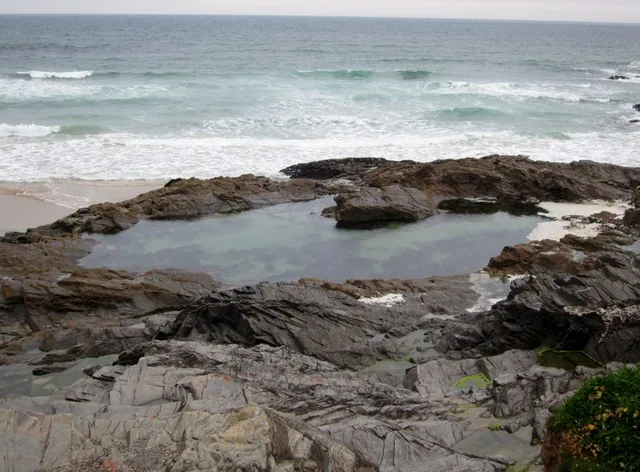
The UK’s best rock pooling sites share a consistent set of characteristics: exposed bedrock platforms at low tide, mixed geology that creates varied pool depths and hiding places, and relatively clean water with low silt load. What varies between regions is the species composition — Atlantic-facing southwestern sites tend to be richer, with greater water temperature variance supporting more diverse fauna. The locations below are the most consistently productive sites in each region, based on Wildlife Trusts, National Trust and Discover Wildlife rankings.
Devon and Cornwall: Wembury Bay, Treyarnon Cove and Helford Passage
Wembury Bay in South Devon is the most recommended rock pooling location in the UK. The bay’s slate reefs and massive wave-cut rock platforms create a habitat that naturalist Bill Oddie voted the best rock pool site in Britain. Wembury Marine Centre, run by Devon Wildlife Trust, is open year-round every day from 10am–4pm and offers interactive displays, aquaria and Rockpool Safaris through the summer season. The bay has been designated a Marine Conservation Area since 1981. Species reliably found here include limpets, beadlet anemones, shore crabs, pipe fish, sea scorpions, spiny starfish, Cornish sucker fish and edible crabs. In Cornwall, Treyarnon Cove near Padstow is notable for a natural tidal pool 9 metres long and 2.5 metres deep — large enough to swim in at high tide, then transformed into a sheltered rock pool habitat at low water. Helford Passage near Helford village, also in Cornwall, has calmer, more sheltered pools and is particularly good for observing prawns and small fish without disturbing them. Kimmeridge Bay in Dorset sits within the Jurassic Coast World Heritage Site, offering the unusual combination of exceptional rock pooling (kelp forests visible from the cliff-top underwater observatory) alongside fossil hunting — an activity that makes it a particularly good all-day destination for families.
Yorkshire, East Sussex and Isle of Wight: Robin Hood’s Bay, Birling Gap and St Helens Duver
Robin Hood’s Bay in North Yorkshire is one of the most accessible and family-friendly rock pooling sites in England. The National Trust runs guided rockpooling sessions here every school holiday, including half terms — led by experienced guides with free Tracker Packs including fossil and wildlife identification guides from the Old Coastguard Station. Species found include shore crabs, periwinkles and starfish. Flamborough Headland, also in East Yorkshire, offers a dramatically different landscape — white chalk boulders that create a complex pool system, and at spring low tides a substantial kelp forest is exposed. Further south, Birling Gap near Eastbourne in East Sussex is positioned at the base of the Seven Sisters chalk cliffs and is the closest quality rock pooling site to London — approximately two hours by road. The National Trust manages a café with baby-changing facilities on site, making it particularly practical for families with young children. On the Isle of Wight, the best rock pooling is at Node’s Point (St Helens Duver), where limestone crevices shelter whelks, limpets and periwinkles. The pools at this site are notable for an unusual local population: the occasional seahorse, which hides in seagrass beds near the pool margins. Blennies and gobies are common year-round.
Scotland, Wales and Northern Ireland: Killiedraught Bay, Caswell Bay and Strangford Lough
Killiedraught Bay, within the St Abbs and Eyemouth Voluntary Marine Reserve in the Scottish Borders, is consistently described as the finest rock pooling site in Scotland. At low tide the exposed rock reveals seaweeds including bladderwrack and kelp, with animals including the breadcrumb sponge, bootlace worm and butterfish — species that require clean, well-oxygenated water and are good indicators of site quality. The Isle of Mull (Calgary Beach) offers otters on the shore alongside standard rock pool species including urchins, starfish, crabs and squat lobsters. In Wales, Caswell Bay on the Gower peninsula near Swansea has a wide tidal platform that exposes extensive rocky outcrops at low water; the beach is fully wheelchair and buggy accessible. Rhossili Bay, also on the Gower, has deep plunge pools and sea arches in addition to standard pool habitat. In Northern Ireland, Strangford Lough — the largest sea lough in the British Isles — provides rock pooling access at Kearney, Ballymacormick and Orlock on the Ards Peninsula, managed by the National Trust.
What to Find in UK Rock Pools: Species Identification
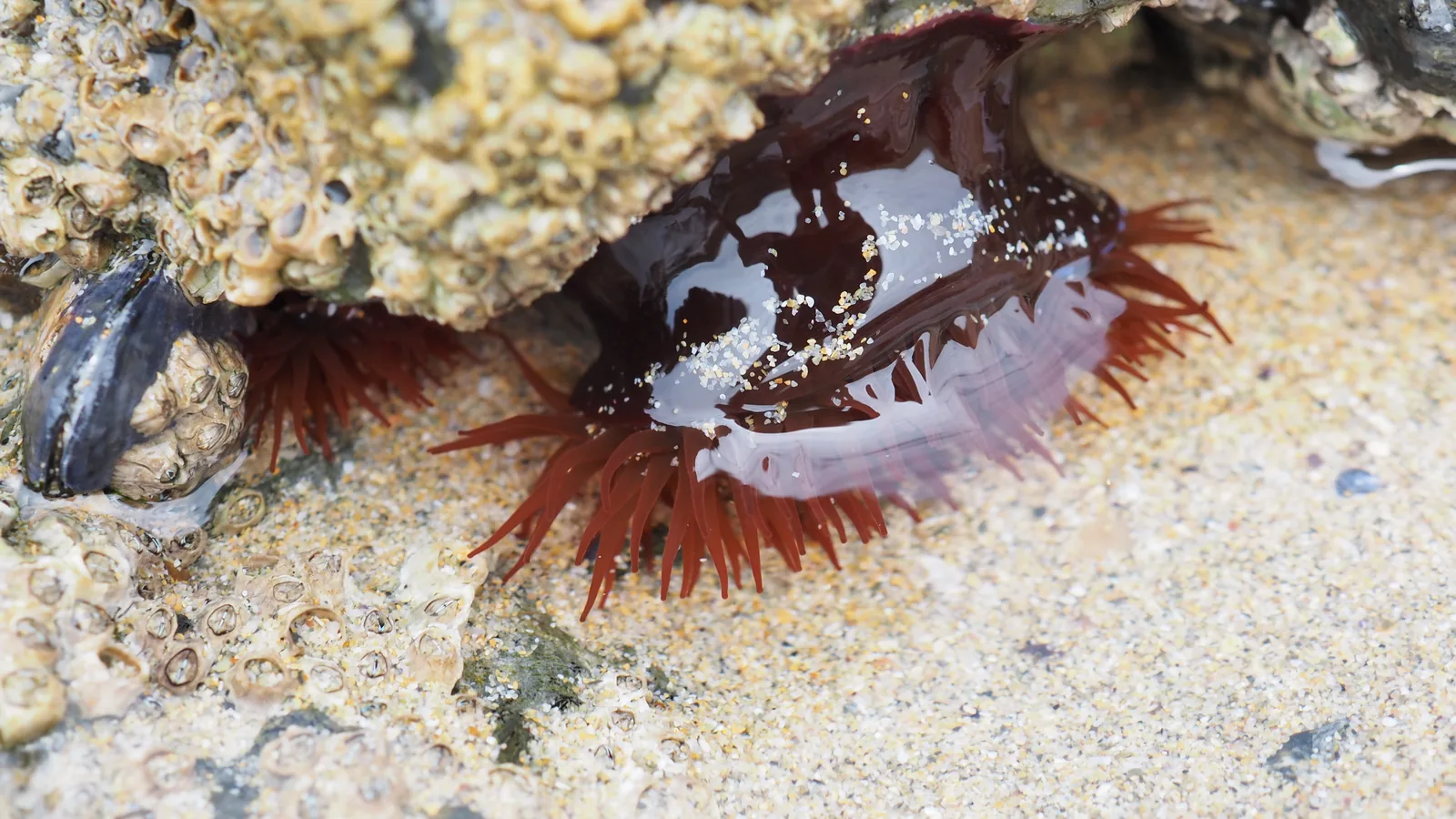
The species composition of any rock pool depends on its position on the shore (upper, middle or lower shore), the local water temperature, the substrate geology, and the proximity to open water. That said, a core set of species is reliably present in rock pools across the UK, and understanding what to look for makes the difference between seeing a pool as a dark, apparently empty puddle and recognising it as a habitat supporting dozens of organisms.
Crabs, anemones and molluscs: the most reliably found species
The common shore crab (also called the green shore crab) is the most likely crab encounter at any UK rock pool. Its shell reaches up to 9 centimetres across, with five spikes on either side of the eyes and three rounded lobes between the eyes; the shell is typically greenish but can be orange or red depending on age. It hides under rocks and in crevices — turn a rock over carefully and you will often find one. Hermit crabs occupy empty mollusc shells and can be observed carrying their borrowed homes across pool floors. Beadlet anemones and snakelocks anemones are the most common anemone species: at low tide they retract into blobs of red or orange jelly; when covered by water their tentacles extend to catch prey. Beadlet anemones reach up to 5cm across when fully open. Among molluscs, limpets clamp to exposed rock surfaces, common periwinkles graze algae (their shell reaching up to 5cm in height), and common mussels cluster in dark blue-purple beds above the low water mark. Wikipedia’s comprehensive list of British Isles rockpool life documents over 100 species commonly encountered in intertidal zones across the British Isles.
Rock pool fish: gobies, blennies and rockling
Fish are often the most exciting rock pool discovery, and distinguishing between the two most common families requires a single observation: if there are two dorsal fins, it is a goby; one continuous dorsal fin indicates a blenny. The rock goby is mottled brown with dark bands and grows to approximately 12cm — often spotted motionless on the pool floor, pressed against the substrate. The shanny (common blenny) reaches up to 15cm and has a characteristic habit of sitting partially out of the water in upper-shore pools, using its fins to grip wet rock. The tompot blenny is the most distinctive species: up to 30cm long, orange-brown with two-branched tentacles above its eyes. At sites like Wembury and Treyarnon Cove, pipefish (related to seahorses) are occasionally spotted hanging vertically among seaweed. Common prawns are extremely fast and nearly transparent when stationary — they become visible mainly when moving. At spring low tides at richer sites, Countryfile’s guide notes that species normally found in subtidal areas — lobsters and spider crabs — are occasionally accessible in the deepest exposed pools.
Seasonal species and less-common finds
Late spring to early autumn is the richest period for UK rock pooling: warmer water temperatures bring out more species and increase activity levels. Starfish become more visible from spring onwards, though they should never be handled — even brief air exposure can cause fatal desiccation stress. Mermaid’s purses (the egg cases of dogfish and rays, washed into pools or found on adjacent shoreline) are year-round finds. On the Isle of Wight and at a small number of sites in Wales and Ireland, spiny seahorses occasionally inhabit seagrass margins adjacent to rock pools. Sea urchins are most common in Scottish and Cornish sites with cleaner, colder water. Sea slugs, in striking orange and white colourations, are found at sites like Saltburn-by-the-Sea in North Yorkshire. Cushion stars (small five-armed starfish with a distinctive orange colouration) are found at many south-west England sites and are safer to observe than larger starfish as they are more resilient. For a broader context on UK natural water habitats and the species that inhabit them, see our guide to natural swimming pools in the UK.
How to Rock Pool: Timing, Equipment and Conservation Rules
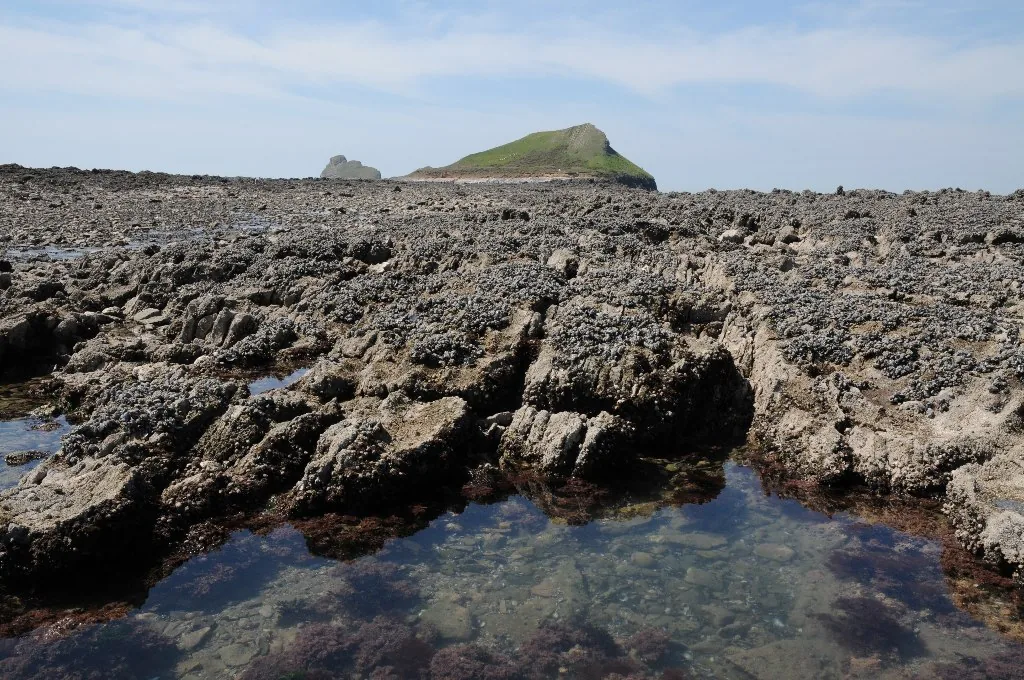
The single biggest factor determining whether a rock pooling visit yields interesting finds is not the location but the timing relative to the tide. A good site at the wrong tide state is empty sand and inaccessible rock; the same site at spring low tide reveals a landscape that is genuinely extraordinary. Beyond timing, the equipment you bring and the way you handle the environment directly affects both your success and the health of the habitat you are visiting.
Tide timing: spring tides and arriving one hour before low water
Rock pools are only accessible at or around low tide, and not all low tides are equal. The UK’s tidal range varies significantly between locations — from under a metre at some Scottish island sites to over 14 metres in the Bristol Channel — and the extent of exposure at any given low tide varies with the lunar cycle. Spring tides, which occur around each full moon and new moon, produce the lowest low-water levels and expose rock platforms that remain submerged during ordinary (neap) tides. The Camping and Caravanning Club’s rockpooling guide notes that spring tides “reveal the very best pools and the best wildlife — species which you normally only find underwater, such as lobsters, spider crabs and small fish.” The recommended approach is to arrive one to two hours before low tide, which gives you two to three hours of productive viewing as the water continues to recede and before the tide turns. Tide tables are freely available from the BBC Weather tide tables and many local beach authority websites. Spring tides specifically are labelled in most tide tables and are the ones to target for serious rock pooling.
Equipment: what to bring and what footwear to wear
Rock pooling requires minimal specialist equipment, but the basics matter. The single most important item is sturdy waterproof footwear — rocky shores are sharp and slippery, and flip-flops provide no grip on wet algae-covered surfaces. Wellies, wetsuit boots or waterproof hiking shoes are all appropriate. Beyond footwear, the Rock Pool Project’s guide recommends: a transparent bucket or clear container for temporarily holding and observing creatures (the transparency allows observation without repeated reaching into the pool); a hand lens or magnifier for seeing small invertebrates clearly; sun cream and a hat (water reflects UV radiation and burns are common on bright days); and a waterproof identification guide. Avoid using fishing nets — mesh traps and injures small creatures. A phone in a waterproof case serves both as a camera and a tide-table checker. For children, consider a change of clothes as standard practice — wet rock surfaces produce reliably wet children regardless of intention.
Conservation rules: handling correctly, returning rocks and taking nothing
Rock pooling is a high-impact activity if done carelessly: a single overturned rock left face-down kills the organisms living on its underside by smothering them. The Wildlife Trusts sets out the core rules clearly: always return rocks to their original position and orientation after looking underneath them — the animals attached to the underside are adapted to that surface and will die if left exposed. Never take creatures home — this applies even to shells with living inhabitants (hermit crabs are frequently removed by children who do not realise the shell is occupied). Starfish must not be handled: brief air exposure causes osmotic stress that can be fatal, and many are already under pressure from coastal development and warming water temperatures. Handle crabs by gripping the shell from behind the pincers, supporting the body — do not hold them by the legs. Return all creatures to the pool they were found in, not to a different pool, as populations are locally adapted. Do not pour buckets of water from one pool to another, as this can transfer parasites between isolated communities. Following the Marine Conservation Society’s three-item rule — picking up three pieces of marine litter every visit — makes each visit a small net positive for the shoreline as well as an enjoyable one.
Frequently Asked Questions
Where are the best rock pools near me in the UK?
The best rock pools depend on your region. In South West England: Wembury Bay (Devon), Treyarnon Cove and Helford Passage (Cornwall), Kimmeridge Bay (Dorset). In Yorkshire: Robin Hood’s Bay and Flamborough Headland. In East Sussex: Birling Gap. In Scotland: Killiedraught Bay (St Abbs, Borders). In Wales: Caswell Bay (Gower). In Northern Ireland: Strangford Lough (Kearney, Ballymacormick, Orlock).
What is the best time to go rock pooling?
Arrive one to two hours before low tide — this gives you the widest pool exposure and two to three hours of productive viewing before the tide turns. Spring tides (around full and new moons) expose the lowest-level pools and the greatest species diversity, including some species normally found only underwater. Check tide tables before visiting.
What can you find in rock pools in the UK?
Common finds across UK rock pools include shore crabs, hermit crabs, beadlet anemones, limpets, common periwinkles, common mussels, common prawns, rock gobies and shannies (blennies). Less common: starfish, sea urchins, pipefish, tompot blennies, sea slugs, cushion stars and mermaid’s purses (dogfish egg cases). At spring low tides at rich sites: spider crabs and lobsters.
Is Wembury the best rock pooling beach in the UK?
Wembury Bay in South Devon is consistently ranked the UK’s best rock pooling site — a Marine Conservation Area since 1981 with a free Marine Centre (open daily 10am–4pm) and guided Rockpool Safaris. It offers one of the most biodiverse intertidal zones in England, with species including pipefish, sea scorpions, edible crabs and Cornish sucker fish alongside the common species found elsewhere.
What equipment do you need for rock pooling?
Essentials: sturdy waterproof footwear (wellies or wetsuit boots — flip-flops are dangerous on slippery rock), a clear transparent bucket or container for observation, sun cream and a hat. Optional but useful: a hand lens or magnifier, a waterproof species identification guide, and a phone in a waterproof case for photos and tide tables. Do not use fishing nets — they trap and injure small creatures.
Are there rules for rock pooling in the UK?
Yes. Always return rocks to their original position after looking underneath — organisms on the underside will die if left exposed. Never take creatures home. Do not handle starfish (air exposure causes fatal stress). Handle crabs from behind the pincers supporting the body. Return all creatures to the pool they came from. Take all litter home and remove three pieces of marine litter per visit — the Marine Conservation Society’s recommended rule.