Swimming pools look blue because of two things working together: the physics of how water absorbs light, and the deliberate design choices pool builders make. Neither is the full story on its own. This article explains both — and why a pool that’s turned green or brown is telling you something has gone wrong with the water chemistry.
- Water genuinely absorbs red and orange wavelengths of light — this is an intrinsic physical property, not an illusion
- The absorption peaks at around 740nm (red), leaving blue as the dominant reflected colour
- This blue is only visible when light travels through enough water depth — a glass of water looks clear, a pool looks blue
- Chlorine is colourless at normal pool concentrations (1–3 ppm) and does not cause the blue colour
The Physics of Why Water Looks Blue
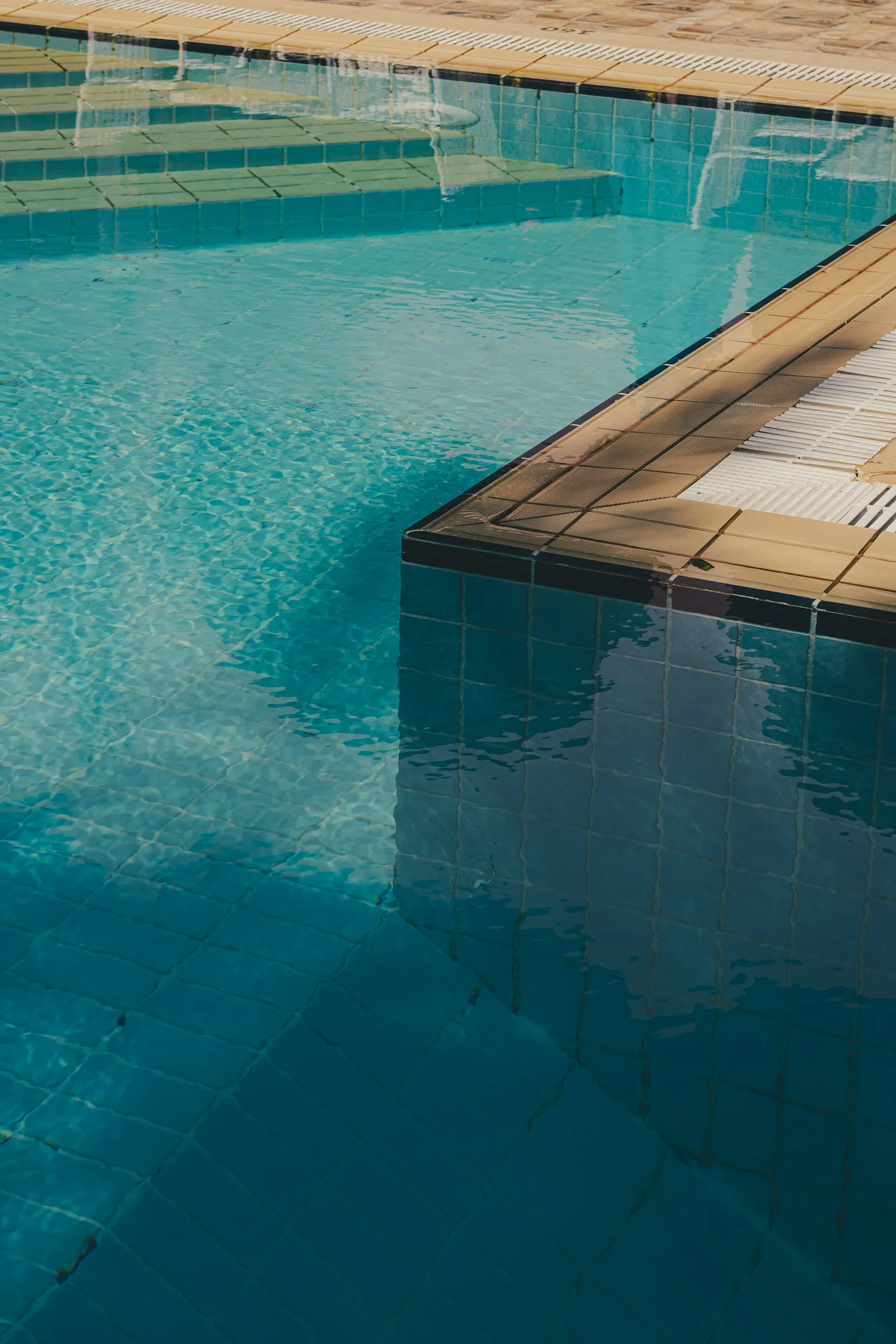
How water absorbs light
Pure water is not truly colourless — it is a very pale blue. This is a genuine optical property of water molecules, not an effect of dissolved chemicals or reflections. The explanation comes from physics: water molecules absorb light most strongly at the red end of the visible spectrum, around 698–740 nanometres. Because red light is absorbed and blue light (roughly 450–480nm) is reflected and transmitted, large volumes of water appear blue to our eyes.
This phenomenon was precisely documented in a 1993 paper by chemists Charles Braun and Sergei Smirnov in the Journal of Chemical Education, which established that water’s blue colour is the only known example in nature where colour arises from vibrational transitions in molecules — the water molecules vibrate in response to absorbing the red photons. At room temperature (around 20°C), hydrogen bonding between molecules shifts the peak absorption slightly, producing red absorption at 740nm, with secondary peaks at 660nm and 600nm.
Why depth matters
A glass of water looks clear because the light path through it is only a few centimetres — far too short for the red wavelengths to be absorbed in any detectable amount. In a swimming pool 1.5 metres deep, however, light passes through enough water for the selective absorption to become visible. The deeper the pool, the richer and darker the blue. Olympic competition pools are typically 3 metres deep, which produces the vivid deep blue familiar from television broadcasts of swimming events.
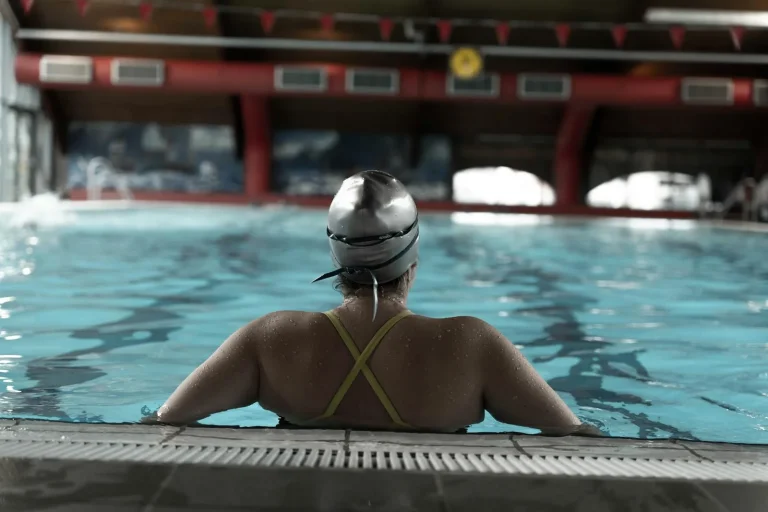
Indoor pools with white or pale-coloured walls demonstrate this particularly clearly. Because there is no blue sky above to reflect, and the pool bottom is white rather than blue, the colour you see is entirely from the water’s own absorption properties — direct evidence that the blueness is intrinsic to water, not a reflected sky or a painted surface.
Why chlorine is not responsible
Chlorine is added to pools at concentrations of 1–3 parts per million, which is the equivalent of about one or two drops in 100 litres of water. At these concentrations, chlorine dissolved in water is effectively colourless. The strong smell some pools have is not from chlorine itself but from chloramines — compounds that form when chlorine reacts with organic matter such as sweat and urine. A strong smell often means the pool is less clean, not more so, and does not affect the visual blue colour.
How Pool Design Amplifies the Blue Colour
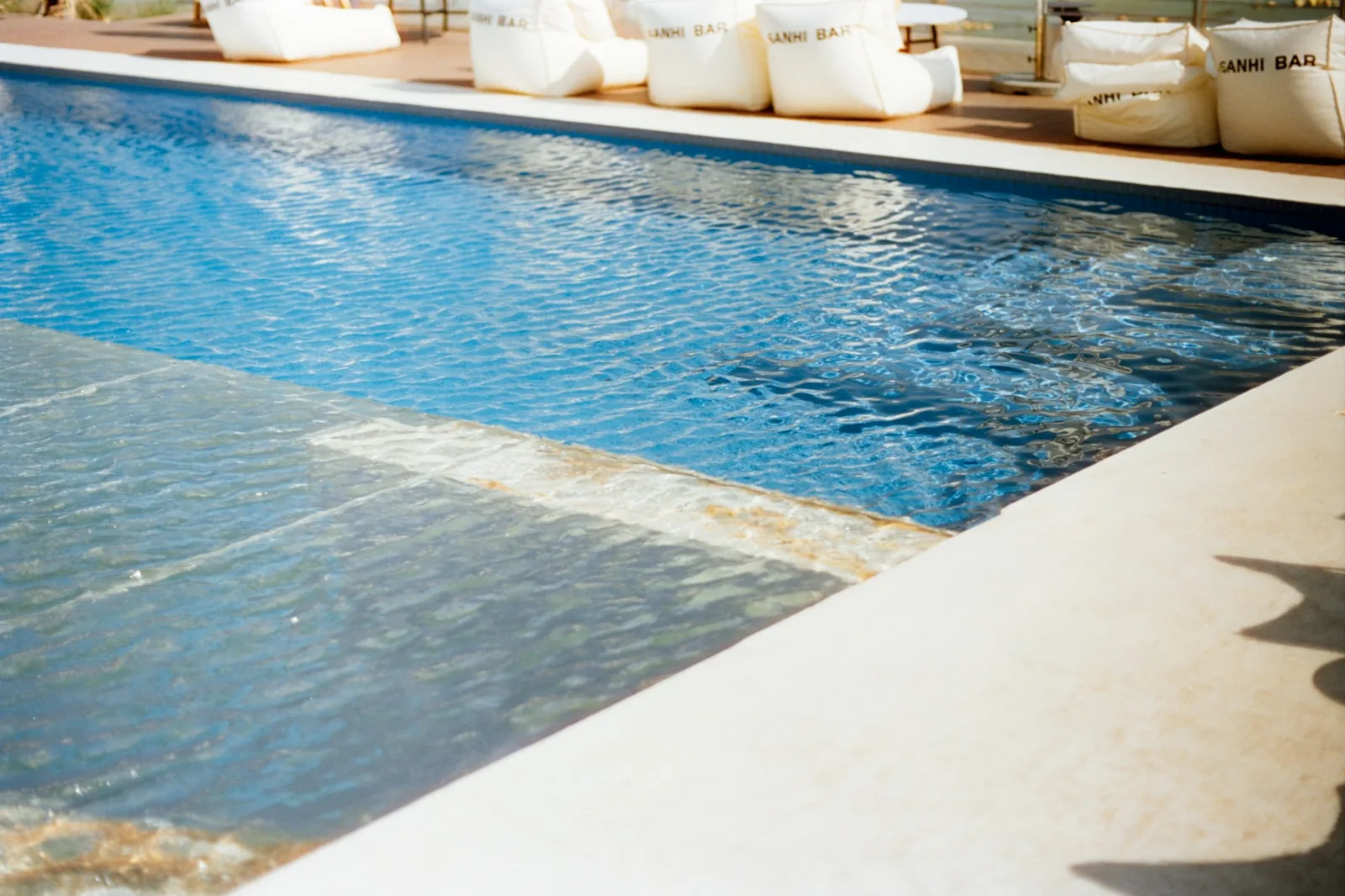
Tile and liner colour choices
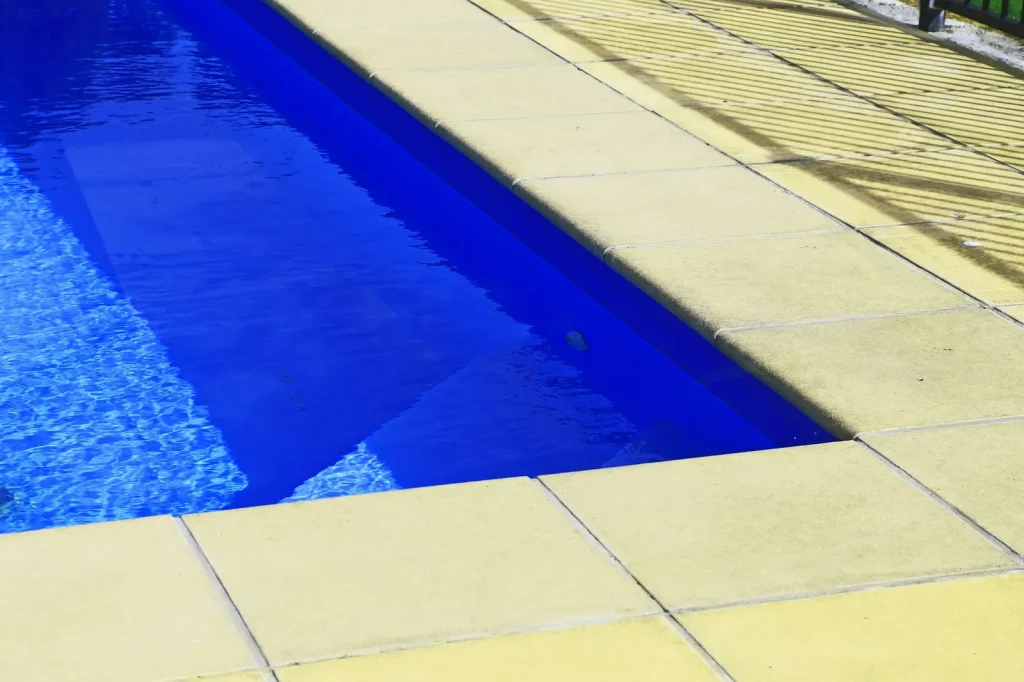
Pool builders and designers lean into water’s natural blue tendency with material and colour choices. Light blue, white, or pale grey tiles on the walls and floor of a pool enhance the perceived blueness by reflecting more light back up through the water column. A pool with dark brown or black tiles would look dramatically different — the water’s colour would appear darker, less blue, and more ambiguous.
Blue mosaic tiles in particular became standard in commercial and residential pools during the mid-20th century, partly because they matched the colour people expected water to be, and partly because the colour is associated with cleanliness and freshness. Once established as the norm, the convention reinforced itself: a blue pool “looks right” in a way that a beige or terracotta-tiled pool does not, even if both contain identically clean water.
The role of lighting and environment
Outdoor pools can take on slightly greenish or turquoise tones depending on the surrounding environment. Overhanging trees, reflected grass, or a heavily overcast sky can shift the apparent colour. Artificially lit indoor pools often appear more intensely blue because the controlled lighting removes the competing colour casts from natural surroundings.
Underwater lighting further intensifies the blue-white visual. Many leisure centres and hotel pools fit blue or white LED lighting below the waterline, which both improves visibility and enhances the saturated blue that visitors associate with an appealing, clean pool environment. The lighting choice is a deliberate aesthetic decision with no effect on water chemistry or safety.
Sky reflection and surface appearance
From a distance or at certain angles, an outdoor pool surface can reflect the sky above it, contributing additional blue. This is a separate effect from the intrinsic absorption described above — it is a mirror effect at the water’s surface rather than a property of the water’s depth. On a grey, overcast day, this sky reflection disappears, but the pool still looks blue when you look into the water rather than at its surface, confirming that the absorption effect is the primary driver.
Why Swimming Pools Are Sometimes Not Blue
Green water: algae and chemistry problems
The most common colour change pool owners encounter is green water. This happens when free chlorine falls below approximately 1 ppm or when pH rises above 7.8, both of which allow algae to grow. Algae produce green pigments (chlorophyll and related compounds) that colour the water. Green water is not safe to swim in and indicates a chlorine or pH management failure. Restoring chlorine to 2–4 ppm and adjusting pH typically clears the green within 24–72 hours.
A second cause of green tints is dissolved copper, which can enter pool water from copper pipes, heat exchangers, or copper-based algaecides. Unlike algae-green water, copper-green water is clear but tinted — not cloudy. A simple test kit differentiates the two.
Brown, cloudy and other colour problems
Brown or rust-coloured water typically indicates iron contamination. Wikipedia’s article on the colour of water covers the full optical chemistry behind these variations. In pool contexts, this usually enters via well water or from corroded metal components in the pool’s plumbing or fittings. Iron oxidises in the presence of chlorine and precipitates out as a brownish tint. Treatment involves metal sequestering agents and filtration rather than additional chlorine, as more chlorine accelerates the oxidation and worsens the discoloration.
Cloudy or milky water is not a colour problem but a clarity one, usually caused by poor filtration, chemical imbalance, high total dissolved solids, or the early stages of algae growth before the water turns visibly green. All of these colour and clarity issues represent water chemistry problems — a well-maintained pool at correct pH (7.2–7.6) and chlorine levels (1–3 ppm) consistently produces clear blue water, validating the original physics.
For more on how pool water chemistry affects health and experience, see our guide on swimming pools and UTIs. If you’re interested in alternatives to chlorine pools, our natural swimming pools guide covers biological filtration systems used in the UK.
Frequently Asked Questions
Why does pool water look blue when water in a glass looks clear?
The blue colour of water requires enough depth to become visible. In a glass, the light path is only a few centimetres, which is not enough for the red wavelengths to be significantly absorbed. In a pool 1.5 metres or more deep, enough red light is absorbed to make the complementary blue visible. The same water, the same physics — just a much longer path length.
Does chlorine make pool water blue?
No. Chlorine at normal pool concentrations (1–3 ppm) is effectively colourless in water. The blue colour is an intrinsic property of water itself, arising from the absorption of red-wavelength light by water molecules. Chlorine plays no role in the colour under normal conditions.
Why do some pools look more blue or green than others?
Tile and liner colour, pool depth, surrounding environment, and water chemistry all affect the apparent shade. Blue or white tiles produce a more vivid blue. Deeper pools look darker. Green water indicates algae growth (low chlorine or high pH) or dissolved copper. Clear, properly maintained water in a blue-tiled pool will always look distinctly blue.
Why are most swimming pools painted or tiled blue?
Blue tiles and paint reinforce the water’s natural colour, producing a more vivid visual effect than neutral colours would. The design convention also became self-reinforcing: blue is widely associated with cleanliness and water, so a blue pool matches public expectations of what a pool should look like. White-bottomed pools look slightly less blue but clearly demonstrate water’s own colour when there is no reflective blue tile to confuse the effect.
Is green or cloudy pool water safe to swim in?
No. Green water indicates algae growth, which means chlorine has fallen below safe levels. Algae can harbour harmful bacteria and the lack of adequate disinfection makes the water unsafe. Cloudy water also indicates a chemistry imbalance. Pools should be clear and blue before swimming resumes. Test pH and chlorine levels, treat accordingly, and wait until the water is visibly clear.