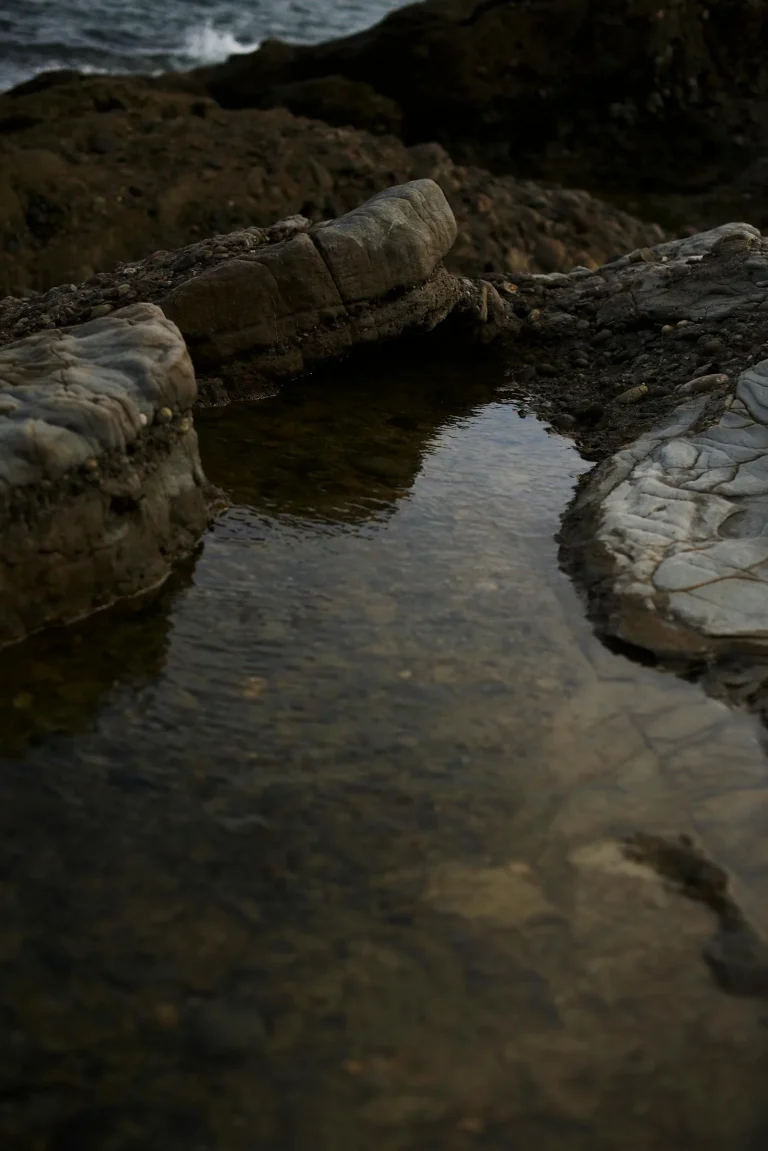
Tide pools — called rock pools or tidal pools in British English — are shallow pools of seawater that form in depressions on rocky shores when the tide recedes and leaves trapped water behind. They exist throughout the UK’s coastline, from Cornwall and Devon to the Gower Peninsula, Northumberland and the Scottish islands, and are among the most accessible places to observe marine wildlife without any equipment. The UK’s best locations include Wembury in Devon, Treyarnon Bay in Cornwall, and Caswell Bay in Wales, all of which have Marine Conservation Zone protections or Wildlife Trust guidance for exploring responsibly. If you are looking for man-made tidal sea pools and lido-style rock pools rather than natural intertidal habitat, those are covered separately.
- Tide pools form in the intertidal zone — the area of rocky shore exposed at low tide and submerged at high tide. The four zones (splash, high, mid and low intertidal) each support distinct communities of species adapted to their specific exposure.
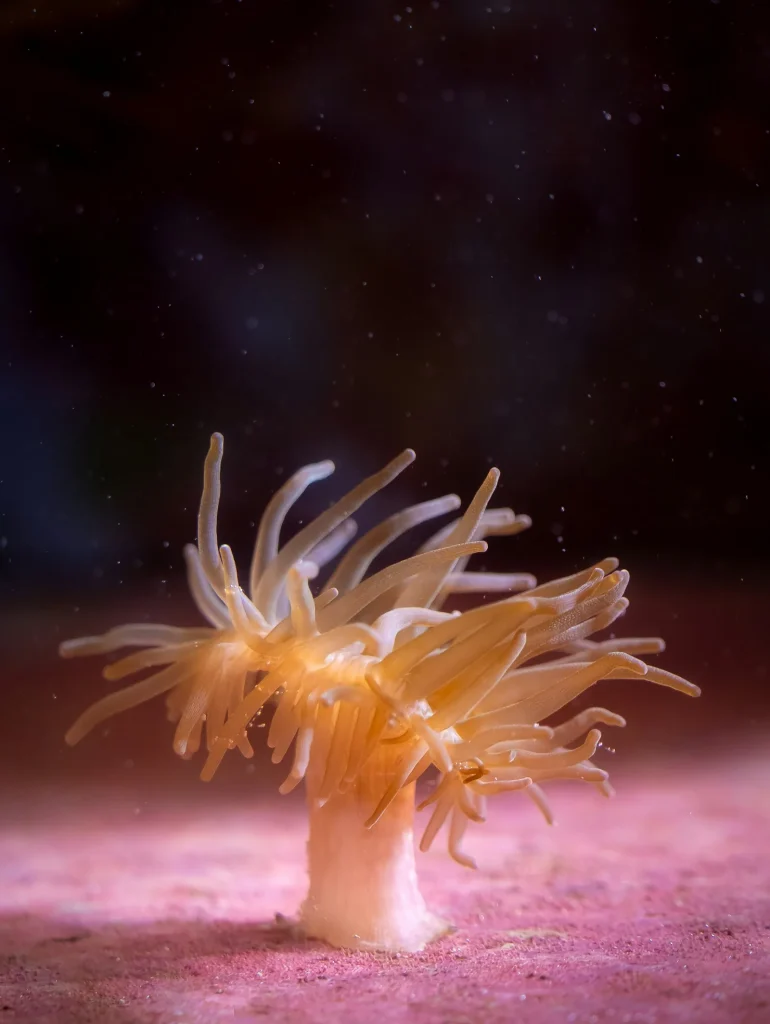
- The beadlet anemone (Actinia equina) is the most common UK rock pool anemone. At low tide it retracts its tentacles into a red blob to conserve moisture, reopening when covered by water.
- Barnacles seal themselves with impermeable calcite shells and two sliding plates to survive hours of exposure — one of the most effective adaptations in the intertidal zone.
- Best time to visit UK tide pools is two hours either side of low tide on a spring tide (occurring near new and full moon), when the lowest tides expose the richest lower-shore pools.
Tide Pool Zones: How the Intertidal Shore Is Divided
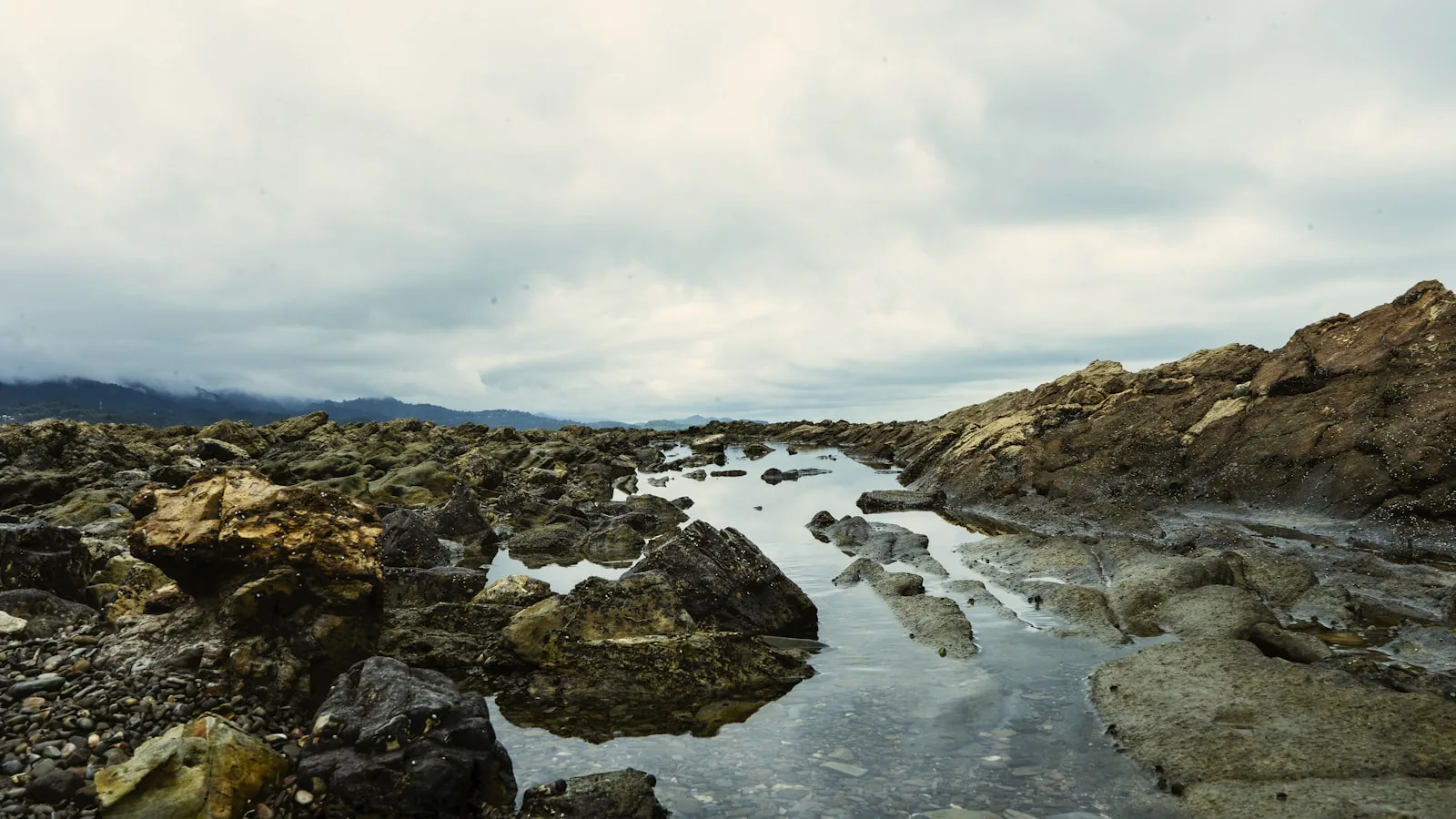
Marine biologists divide the rocky shore into four zones based on the degree of tidal exposure, each with distinct species assemblages adapted to the conditions. The pattern is visible on any exposed rocky coastline in the UK: dark lichen near the top, followed by barnacle-encrusted rock, then a band of mussels and anemones, then rich kelp-covered pools at the bottom.
Splash Zone
The splash zone sits above the high-tide mark and is never fully submerged, but is regularly wetted by wave spray and storm wash. Black and orange crustose lichens are the characteristic organisms here, along with sea slaters (Ligia oceanica) — littoral woodlice that graze on decomposing organic material on the rock surface. Very few true marine animals can survive the extended air exposure of this zone.
High Intertidal Zone
The high intertidal zone is covered only by the highest tides and spends most of the day exposed to sun, wind and rain. It is dominated by barnacles (Semibalanus balanoides), which possess impermeable calcite shells and two sliding plates they draw across their opening to prevent desiccation and resist predation. Limpets (Patella vulgata) are also characteristic here — they graze algae-covered rock and return to the same depression (their “home scar”) after each feeding sortie. Common periwinkles (Littorina littorea) and dog whelks complete the high-zone community.
Mid Intertidal Zone
The mid zone is covered and uncovered with each tide and supports greater biodiversity than the higher shore. Mussels (Mytilus edulis) often form dense beds here. Beadlet anemones (Actinia equina) — the most common UK rock pool anemone — retract their tentacles and seal themselves into red or green blobs at low tide to retain moisture, reopening when submerged. Shore crabs (Carcinus maenas), the most frequently encountered UK rock pool crab, hide beneath overhanging rock and seaweed. Shannies (common blennies, Lipophrys pholis) are the fish most likely spotted in mid-shore pools — blunt-headed, camouflaged and adapted to survive brief air exposure. Bladderwrack and serrated wrack are the dominant seaweeds of this zone.
Low Intertidal Zone
The low intertidal zone is submerged most of the time and is only exposed during the lowest spring tides. It is the richest zone, supporting species that cannot tolerate more than brief exposure: common starfish (Asterias rubens), which can regenerate a lost arm entirely; green sea urchins (Psammechinus miliaris); snakelocks anemones (Anemonia viridis), which unlike beadlet anemones cannot retract their tentacles and so must remain submerged; stalked kelp, sea lettuce, coral weed, and diverse sponges, sea slugs and brittlestars. The low shore at sites such as Wembury Beach, Devon — a Marine Conservation Zone — is among the most species-rich intertidal habitat in England.
Tide Pool Wildlife: Common UK Species and How to Find Them
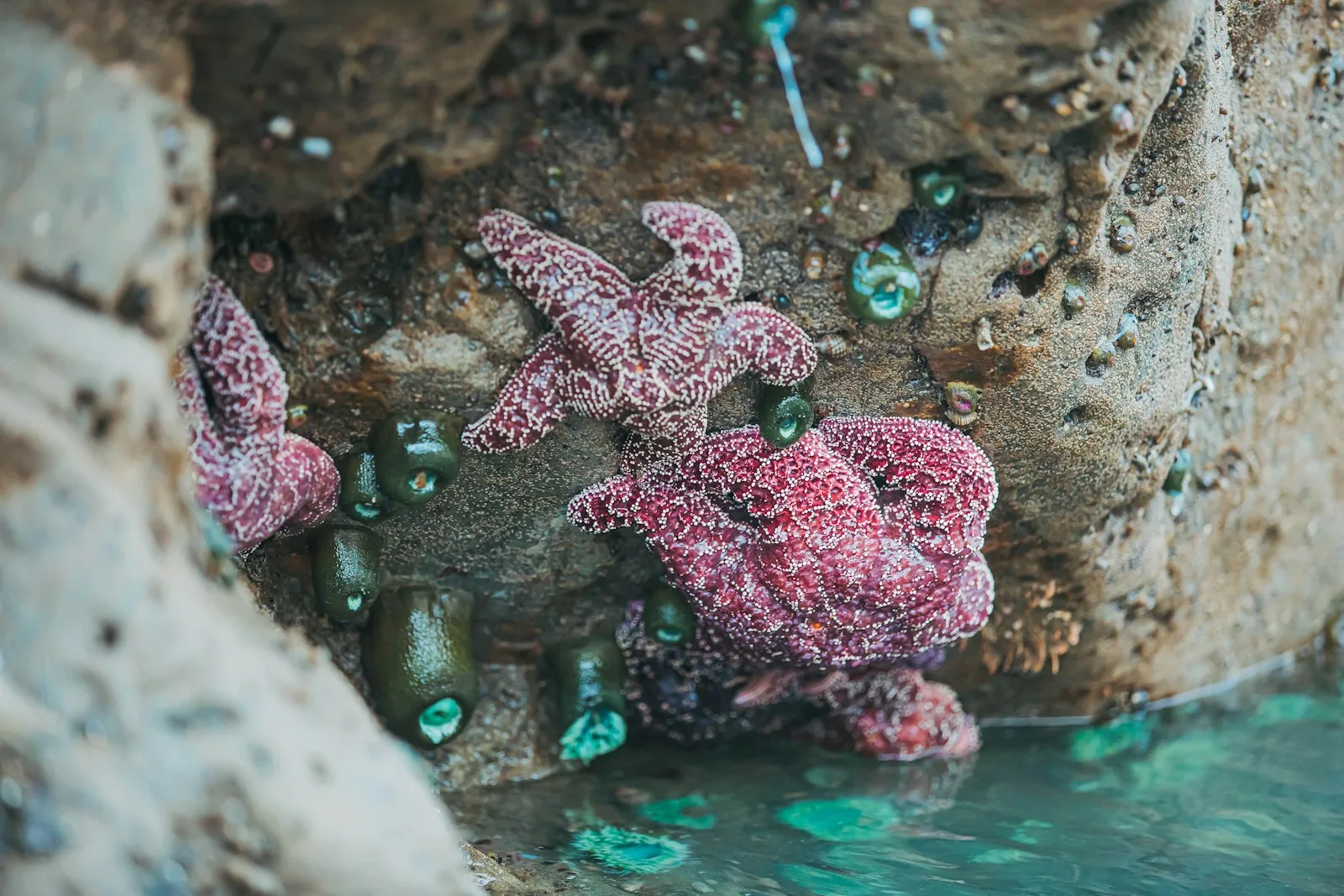
The UK’s rocky coastlines support some of the most accessible marine biodiversity in Europe, with over 10,000 species of marine animal recorded in British waters. Rock pools are the entry point to that biodiversity — observable without a wetsuit or diving equipment, just at low tide with a torch.
Key Species to Look For
Beadlet anemone (Actinia equina) — Usually red or occasionally green, with a ring of blue spots (acrorhagi) around the base of the tentacles. Found throughout the mid and low zones. Snakelocks anemone (Anemonia viridis) — Longer tentacles, grey-green with purple tips, found in sunlit low-shore pools; its symbiotic algae require light. Shore crab (Carcinus maenas) — The commonest UK rock pool crab, variable in colour, distinguished by three blunt teeth on each side of the carapace. Hermit crabs inhabit borrowed periwinkle or dog whelk shells; watch them at the water’s edge. Common starfish (Asterias rubens) — Orange or pale, five-armed, found in lower pools; their tube feet allow them to prise open mussel shells. Spiny sea urchin — round, spine-covered and often found tucked in crevices in the low zone.
Best UK Locations for Tide Pool Exploration
Wembury Beach, Devon — A designated Marine Conservation Zone with an on-site Marine Centre (seasonal) offering guided rock pool events. The lower shore supports exceptional biodiversity including sea slugs, cushion stars and snakelocks anemones. Treyarnon Bay, Cornwall — Accessible tidal pools suitable for families; blennies and shore crabs common. Caswell Bay, Gower, Wales — Shore crabs, periwinkles, topshells, blennies and anemones; has recorded occasional octopus. Cresswell Shore Nature Reserve, Northumberland — Five species of crab recorded including porcelain crab; organised rockpooling events available. Loch na Keal, Isle of Mull, Scotland — Freshwater and saltwater pools; otters may be observed feeding at the tide’s edge.
Exploring Responsibly
Arrive two hours before predicted low tide (check tide tables at BBC Tides or the EA Flood Warning service). Spring tides — occurring near new and full moon — give the lowest water and expose the richest lower pools. Replace every rock exactly as found with the same face upward; the underside community takes years to establish. Do not collect animals or seaweed. Keep a clear eye on the tide direction — the sea can cut off headlands faster than expected on a flooding tide.
| Zone | Exposure | Characteristic Species |
|---|---|---|
| Splash zone | Never submerged; spray only | Black/orange lichens, sea slaters |
| High intertidal | Covered only at high tide | Barnacles, limpets, periwinkles, dog whelks |
| Mid intertidal | Covered and uncovered each tide | Mussels, beadlet anemones, shore crabs, shannies |
| Low intertidal | Mostly submerged; exposed at spring tides | Starfish, sea urchins, snakelocks anemones, sponges, sea slugs |
Frequently Asked Questions
What is a tide pool?
A tide pool is a shallow pool of seawater trapped in a rocky depression when the tide retreats. They are found throughout the UK on rocky coastlines and are called rock pools or tidal pools in British English. The term “tide pool” is standard in American English for the same habitat. Tide pools range from a few inches to several feet deep and support distinct communities of marine animals and plants adapted to the fluctuating conditions of the intertidal zone.
What animals live in tide pools?
UK tide pools support sea anemones (beadlet and snakelocks), shore crabs, hermit crabs, limpets, barnacles, periwinkles, dog whelks, starfish, sea urchins, blennies (shannies), butterfish, prawns, sea slugs, sponges and diverse seaweeds. The species vary by zone: barnacles and limpets dominate the high shore; mussels, anemones and crabs occupy the mid shore; starfish and snakelocks anemones are found in the richer low-shore pools exposed only at spring tides.
What is the difference between a tide pool and a rock pool?
“Rock pool” and “tide pool” refer to the same thing: a pool of seawater on a rocky shore, isolated from the sea at low tide. “Rock pool” is the standard British English term; “tide pool” is the American English equivalent. “Tidal pool” is also used in British English. All three terms describe naturally formed intertidal pools, distinct from man-made tidal swimming pools or sea lidos.
When is the best time to visit tide pools in the UK?
The best time to visit UK tide pools is two hours before the predicted low tide on a spring tide (occurring near new and full moon). Spring tides produce the lowest water levels of the month, exposing the richest lower intertidal pools. Check local tide tables before visiting — the BBC Tides service or the EA Flood Warning service provide UK-wide predictions. Morning low tides on calm days give the best conditions.
Where are the best tide pools in the UK?
The best UK rock pools for wildlife include Wembury Beach in Devon (a Marine Conservation Zone with an on-site Marine Centre), Treyarnon Bay and Helford Passage in Cornwall, Caswell Bay on the Gower Peninsula in Wales, Cresswell Shore Nature Reserve in Northumberland, and Loch na Keal on the Isle of Mull in Scotland. National Trust properties along the Jurassic Coast in Dorset and Gower Peninsula also have excellent intertidal access at low tide.
Are tide pools safe to explore?
Tide pools are safe to explore if you watch the tide carefully. Always check tide times before visiting, arrive before low tide, and keep an eye on the flooding tide. Rocky shores can become slippery — wear shoes with grip. Never turn your back to the sea on exposed headlands. Replace rocks exactly as you find them to protect the communities underneath. Do not collect animals, and avoid using nets, which can injure small fish and invertebrates.