Spain overtook France as the most popular overseas destination for UK holiday villa rentals a decade ago and has held that position comfortably since. The draw is straightforward: reliable hot summers, an enormous inventory of privately-owned villas with pools across a dozen distinct regions, good-value flights from most UK airports, and a climate that makes an outdoor pool genuinely useful from late April through October. This guide covers the regions that work best, what the Spanish pool market actually looks like on the ground, and how to approach booking for good value.
- Murcia (Costa Cálida) is consistently around 25% cheaper than southern Costa Blanca for equivalent pool villa rentals
- Spain has no mandatory national law requiring private pool fencing — unlike France’s Raffarin Law — though tourist rental properties must comply with water quality standards under Real Decreto 742/2013
- Mid-range villa rentals sleeping 6–8 guests with a private pool cost approximately £1,200–£4,000 per week in peak July–August
- June and October offer the best balance of warm weather, open pools, and shoulder-season pricing — avoiding the school-holiday premium entirely
Best Regions in Spain for a Villa with a Private Pool
Costa Blanca and the Murcia Coast
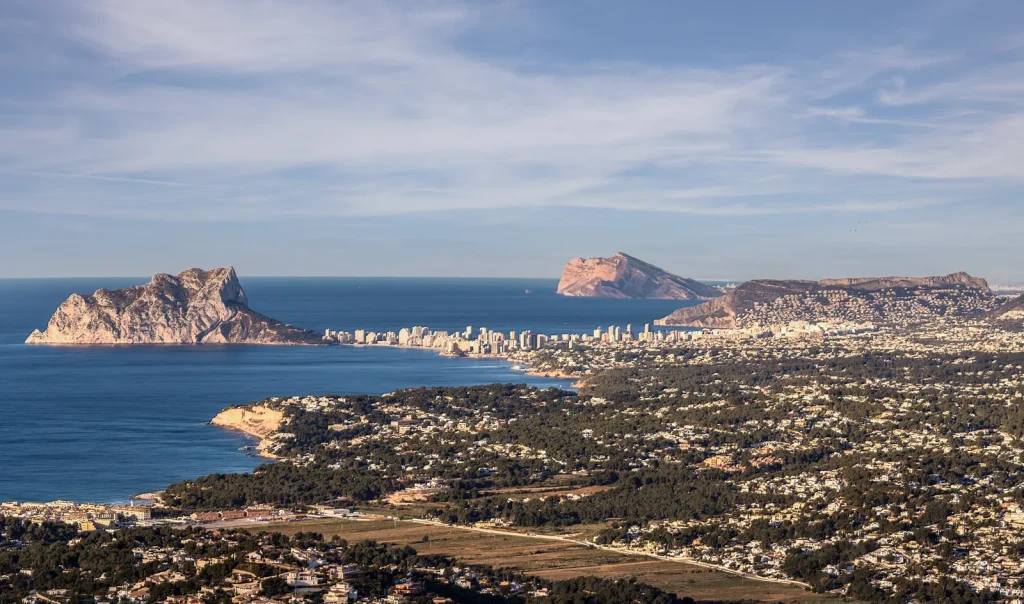
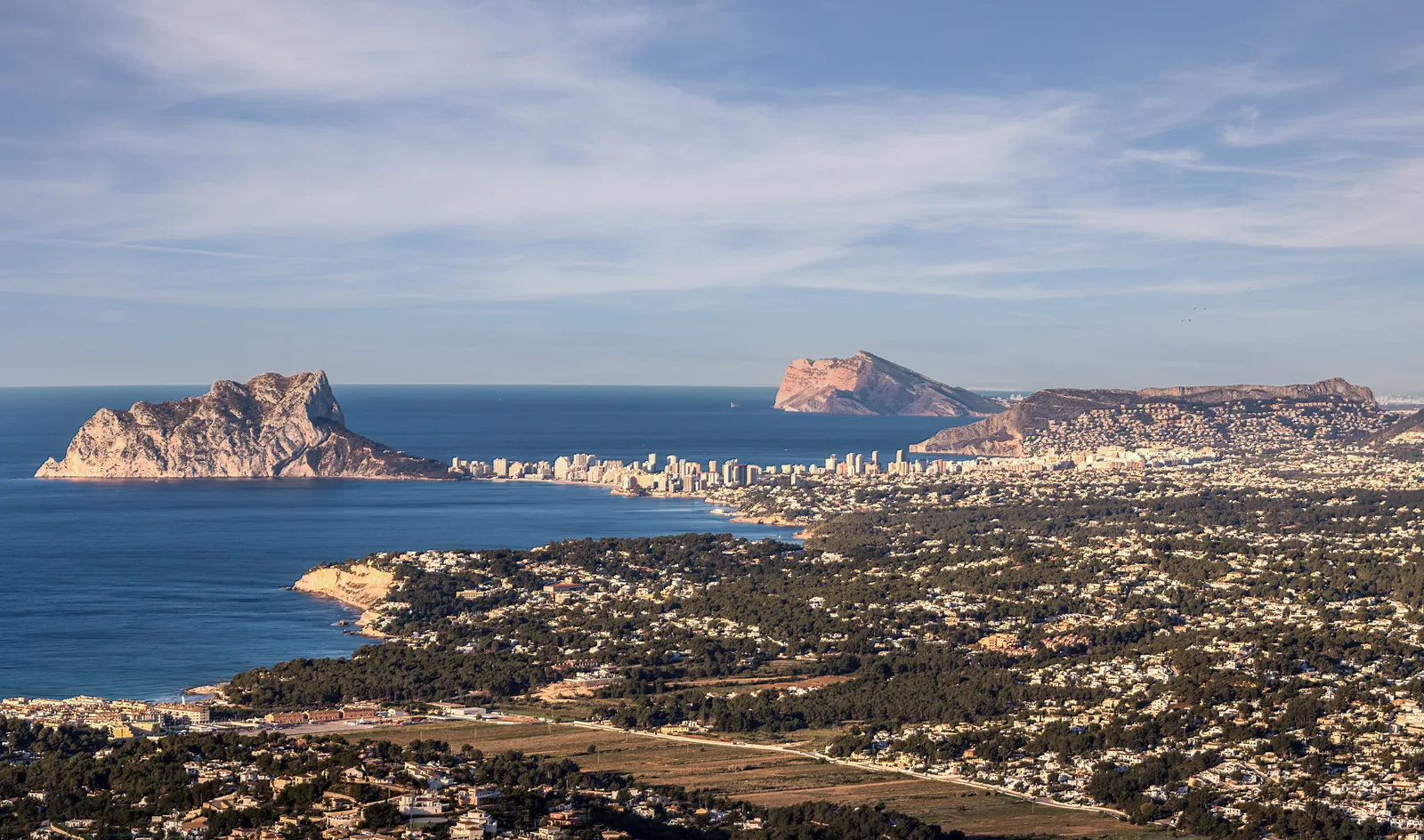
The Costa Blanca — stretching from Denia in the north down to Torrevieja and Villamartin in the south — is the most popular destination for UK families renting pool villas in Spain, and the market is correspondingly large. Southern Costa Blanca towns like Torrevieja, Ciudad Quesada, and Villamartin have an extensive inventory of privately-owned detached villas with private pools, many built specifically for the holiday rental market. The region has excellent UK flight connections, particularly from regional airports such as Birmingham and Manchester into Alicante (ALC).
Immediately south of Costa Blanca, the Murcia region — marketed as the Costa Cálida around its coastal towns of San Javier, Los Alcázares, and the golf resorts near Murcia city — offers a meaningful price advantage. A Place in the Sun notes that the Costa Cálida is approximately 25% cheaper than southern Costa Blanca for equivalent villas with private pools. The region shares the same reliable summer climate — hot, dry, and sunny from May through September — but with fewer UK visitors and correspondingly lower prices on the rental market. Families who want the Costa Blanca experience at Murcia prices increasingly look at San Javier and the area around the Mar Menor lagoon, which offers shallow, warm, sheltered water perfect for children.
Andalusia and the Costa del Sol
Andalusia spans the entire southern coast from Almería in the east to the Algarve border in the west, with the Costa del Sol running from Málaga to Gibraltar at its centre. The Costa del Sol — specifically the stretch from Torremolinos through Marbella — commands premium prices for pool villas, with many properties sleeping 6–8 adults starting at £1,900–£3,500 per week in peak season. Marbella and the Golden Mile represent the prestige end of the Spanish rental market: well-maintained modern villas with heated infinity pools are available, but at rates that rival the Côte d’Azur.
Inland Andalusia, particularly Almería province — towns like Albox, Arboleas, and Huércal-Overa in the Almanzora Valley — offers the cheapest private pool villas in mainland Spain. These are far from the beach but within an hour or two of the coast, and the surrounding landscape of olive groves, orange orchards, and Andalusian hill towns gives a very different experience from the coastal strip. Platforms such as Oliver’s Travels carry a good selection of inland Andalusian villas with pools at significantly lower prices than equivalent coastal stock.
Mallorca and the Balearic Islands
Mallorca is the most mature of Spain’s island villa rental markets and offers the widest range of property types: whitewashed fincas in the interior, modern villas overlooking the sea near Pollença and Alcúdia in the north, and resort-area properties near Palma. CV Villas and similar specialist agencies hold extensive Mallorca inventories covering everything from modest 3-bedroom properties with small private pools to large estate-style rentals sleeping 16 or more. Mallorca prices sit broadly between the Costa del Sol and Costa Blanca — neither the cheapest nor the most expensive Spanish option — and the island’s good transport links from UK airports (Palma has direct flights from over 30 UK airports in summer) make it a consistently popular choice. Menorca is quieter, more family-oriented, and somewhat cheaper than Mallorca; Ibiza sits at the premium end.
For families prioritising a calm, child-friendly pool environment over proximity to nightlife or large resort infrastructure, the northern Mallorca coast around Alcúdia and Pollença is well-regarded: the sea is sheltered, the towns are attractive, and the private villa market is well-developed.
Private Pools in Spanish Holiday Villas: What to Know
Pool types, heating, and the Spanish climate
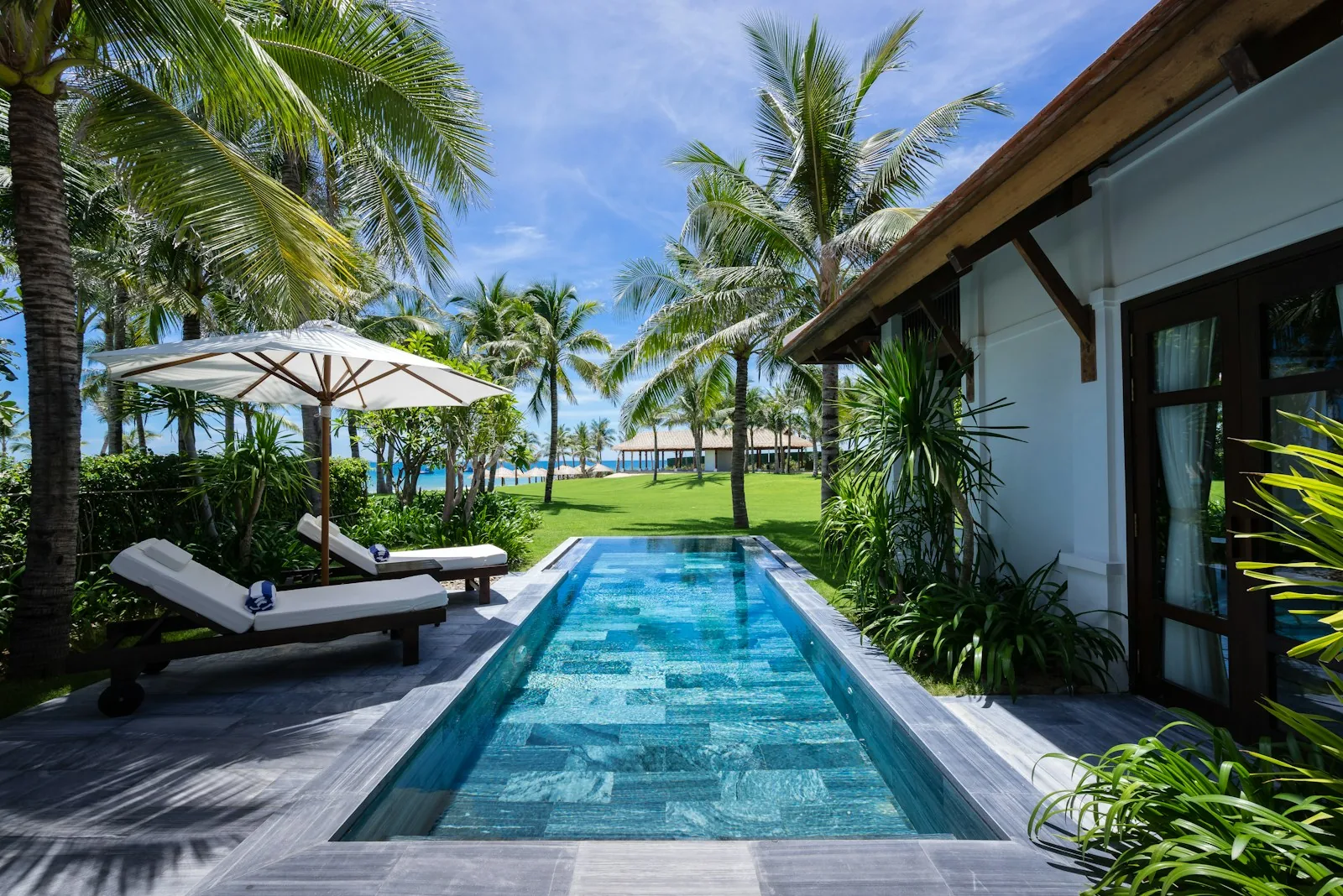
Spain’s climate means that unheated private pools are genuinely usable for a longer season than France. On the mainland — Costa Blanca, Costa del Sol, Murcia — outdoor pools reach comfortable swimming temperatures (24–28°C) naturally from late May through early October. In July and August, unheated pools can reach 30°C or more in southern regions without any mechanical heating. This means the heating question is less pressing for Spain than for France or the UK: for most families visiting in July or August, an unheated pool is entirely adequate.
Heated pools are available as a premium feature in Spain, particularly at higher-specification properties, and add typically €100–€250 per week to the rental cost. Heat pump systems are the most common in newer builds. If you are planning a May or October visit, checking whether the pool is heated is worth doing — even in Andalusia, water temperatures in late October can drop to 22–24°C, which some swimmers find marginal. The Canary Islands (Tenerife, Gran Canaria) are the exception: year-round warm temperatures mean pool water stays at 20–24°C even in winter, and the islands are the primary destination for Spaniards and Europeans seeking pool villa holidays outside the mainland summer window.
Pool safety law in Spain — how it differs from France
Spain’s approach to private pool safety differs significantly from France. Unlike France, which has the Raffarin Law requiring all in-ground outdoor pools to have a mandatory approved safety barrier, alarm, cover, or shelter, Spain has no equivalent national mandatory fencing law for privately-owned pools. As pool law specialists Advasol Solutions note, there are currently no laws that state a privately owned or rental villa pool must be fenced, though Spain is anticipated to align more closely with the French standard in future.
What Spain does require for holiday rental properties relates to water quality rather than physical barriers. Real Decreto 742/2013 sets national technical and hygiene standards for swimming pools used by the public, including tourist rental properties, requiring pH levels of 7.2–7.8, adequate disinfection, and documented records of regular chemical testing. Some autonomous communities — notably Andalusia — have adopted additional communal pool regulations, including safety requirements for pools serving developments of 20 or more dwellings.
The practical implication for families renting a Spanish villa with a private pool is that there is no legal guarantee of a safety fence, unlike a French rental. Families with young children should specifically ask the property owner or rental agency whether the pool is fenced, and confirm this before booking — particularly when using smaller platforms or booking direct with owners. Properties managed by major UK-facing agencies such as Solmar Villas typically list pool safety features, including fencing, as part of the property description.
Pool maintenance and what is typically included
Most private pool villa rentals in Spain include weekly pool maintenance by a local service technician as part of the rental price. This is standard practice across the Costa Blanca, Costa del Sol, and Balearics: a pool technician will visit mid-week to check chemical levels, clean filters, and skim the pool. Renters are generally expected to run the pool pump on the schedule set by the owner (typically 6–8 hours per day in summer), use the net provided to remove leaves and debris, and avoid introducing contaminating products. Saltwater pools are common in newer or higher-specification Spanish villas and require less manual chemical adjustment than chlorinated pools.
Booking and Cost Guide for Spanish Pool Villas
Price expectations by region and season
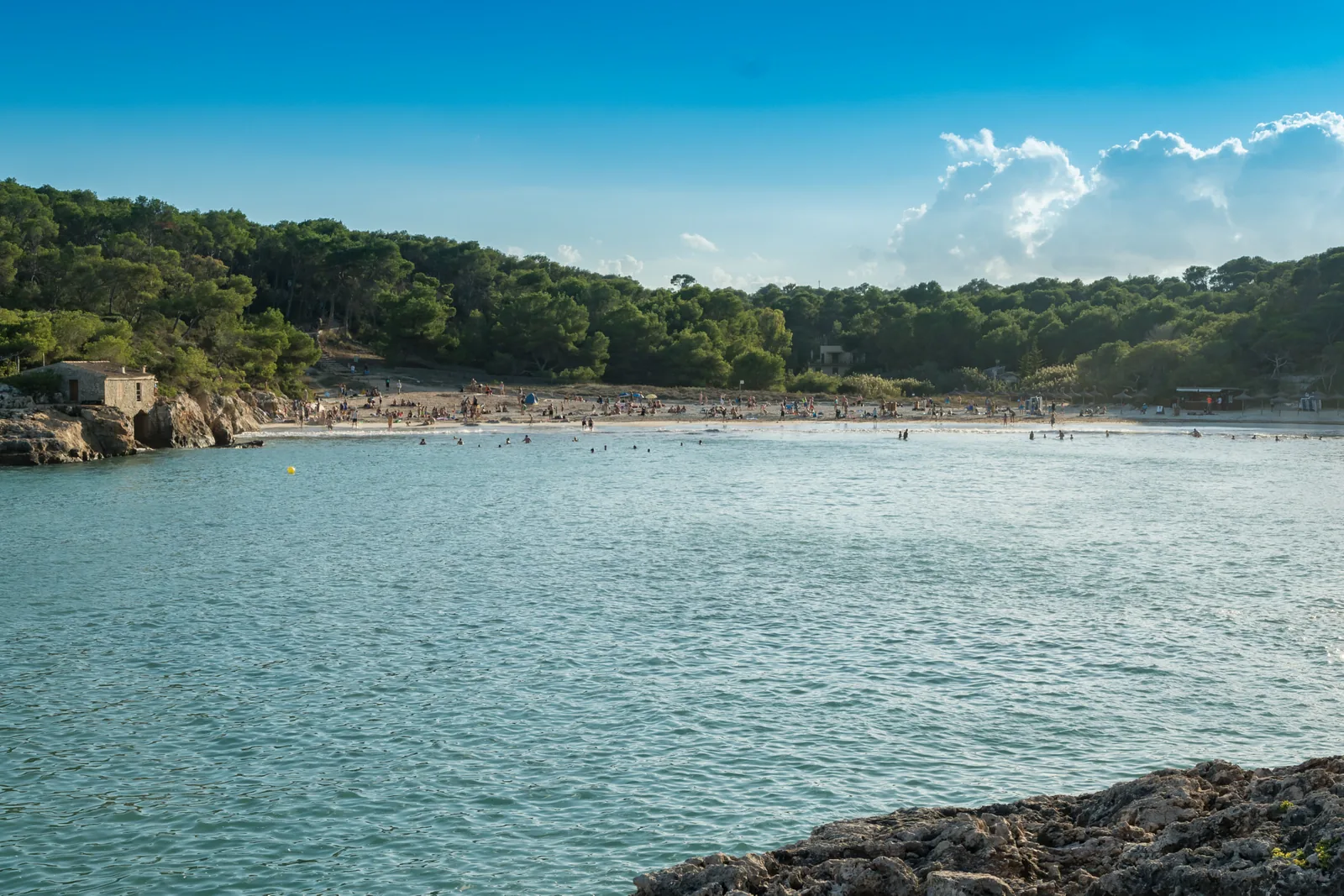
Villa prices in Spain with private pools vary enormously by region, property size, and season. For UK families as a rough guide: budget pool villas sleeping 4–6 guests in Murcia or inland Andalusia start at around £600–£900 per week in June or September/October. The same weeks in peak July–August will typically cost £1,000–£2,000 for a similar property. On the Costa Blanca — southern resort towns like Torrevieja and Villamartin — mid-range properties sleeping 6–8 guests with a larger pool cost £1,200–£3,000 per week in peak season.
The Costa del Sol and Marbella area command a premium: well-equipped pool villas sleeping 6 guests start at around £1,900–£2,500 per week in July. Mallorca peaks at £2,000–£5,000 for mid-range properties and considerably more at the luxury end. The Canary Islands are priced year-round — Tenerife pool villa prices are broadly similar to Costa Blanca in summer and do not drop significantly in winter, given constant demand. For large group rentals sleeping 10 or more, Costa Blanca offers the most options at the most competitive prices.
When to book and what to check
Peak July and August weeks at popular Costa Blanca and Mallorca pool villas book out between December and March for the following summer. If you have a specific region and sleeping configuration in mind, booking 6–9 months in advance is necessary — particularly for properties sleeping 10 or more where availability is limited. June and September offer meaningfully lower prices for virtually identical properties and experience, with the additional benefit of avoiding school-holiday surcharges and overcrowded resort pools.
Before booking any Spanish villa with a private pool, verify: whether the pool is fenced (essential for families with young children given the absence of mandatory national requirements); pool dimensions; whether a pool cover is provided for heat retention in shoulder months; whether there is shade near the pool for the intense 1pm–4pm Spanish sun; and whether pool maintenance is included in the rental price or charged separately. For villa-to-villa comparisons, checking whether the property is direct-owner-listed (typically cheaper but with less recourse if problems arise) versus agency-managed makes a meaningful difference in both price and consumer protection.
Specialist UK agencies serving the Spanish villa market include Solmar Villas, Oliver’s Travels, CV Villas, Vintage Travel, and James Villas. Booking.com and Airbnb have large Spanish inventories but mix self-managed and agency properties without always making the distinction obvious.
For a comparison with the French pool villa market — which has mandatory fencing requirements and a different regional character — see our guide to French villas to rent with private pools. For those considering a UK alternative or a home pool installation, our natural swimming pools UK guide covers the biological filtration option increasingly popular across southern Europe.
Frequently Asked Questions
What is the best region in Spain for a villa with a private pool?
For value and reliability, Murcia (Costa Cálida) and inland Andalusia are the best-value regions for UK families. The Costa Blanca is the most popular and best-connected, with the largest inventory of pool villas at varying price points. Mallorca suits those who want the Balearic island experience with a well-developed rental market. For year-round swimming, the Canary Islands — Tenerife in particular — offer warm pool temperatures outside the mainland summer window.
Does Spain require pool fencing at holiday villas?
No — Spain has no national mandatory law requiring private pool fencing, unlike France’s Raffarin Law. Pool water quality is regulated under Real Decreto 742/2013 for tourist rental properties, requiring balanced pH and documented maintenance records. However, physical barriers are not legally mandated at the national level. Families with young children should specifically confirm whether a pool is fenced before booking, and not assume compliance with any fencing standard.
How much does a Spanish villa with a private pool cost per week?
Budget pool villas sleeping 4–6 guests cost approximately £600–£1,500 per week in Murcia or inland Andalusia in June or September. Peak July–August prices for similar properties are typically £1,000–£2,500. Mid-range properties sleeping 6–8 cost £1,200–£4,000 per week in peak season on the Costa Blanca or Mallorca. Premium Costa del Sol and luxury Mallorca villas can exceed £8,000–£20,000 per week.
Do Spanish villas have heated pools?
In July and August, heated pools are unnecessary across mainland Spain — the sun raises water temperatures to 26–30°C naturally in southern regions. For May, June, September, or October visits, an unheated pool may be 20–24°C — comfortable for most adults but potentially cool for young children. Heated pool villas are available, typically adding €100–€250 per week. The Canary Islands maintain pool temperatures of 20–24°C year-round without mechanical heating.
What is the difference between a villa and a finca in Spain?
In Spanish usage, a finca is a rural property — often a converted farmhouse, country house, or estate set in agricultural land. A villa typically refers to a modern residential or purpose-built holiday property, often in a resort or coastal development. Both may have private pools. Fincas tend to be in inland or rural locations and are more likely to be independently owned; villas are more commonly found in coastal resort areas and managed by agencies. When searching, both terms are used by platforms, so check the actual location and property type rather than relying on the label.