A full-size swimming pool requires a substantial garden and a substantial budget — but for UK homeowners who want to swim at home, exercise in water, or have a space for cooling off in summer, several compact alternatives are genuinely practical. Plunge pools, swim spas, and smaller fibreglass shells can fit into gardens where a 9-metre pool would be impossible, at costs starting well below those of full in-ground installations. This guide covers the main types of small pool available in the UK, what they actually cost, and what to know before committing to one.
- Plunge pools typically measure 2–7 metres in length and 1.5 metres in depth — significantly smaller than a standard swimming pool but large enough for immersion, exercise, and hydrotherapy
- Most outdoor domestic swimming pools in England do not require planning permission under permitted development rights, provided they do not cover more than 50% of the garden and are not in a designated area
- Installation costs for small in-ground fibreglass pools start at approximately £30,000–£40,000 including groundworks; swim spas start from around £10,000–£20,000 for self-contained units
- Annual running costs for a small heated pool — chemicals, filtration, and energy — typically range from £1,500 to £4,000 depending on pool size, usage, and heating method
Types of Small Pools for UK Gardens
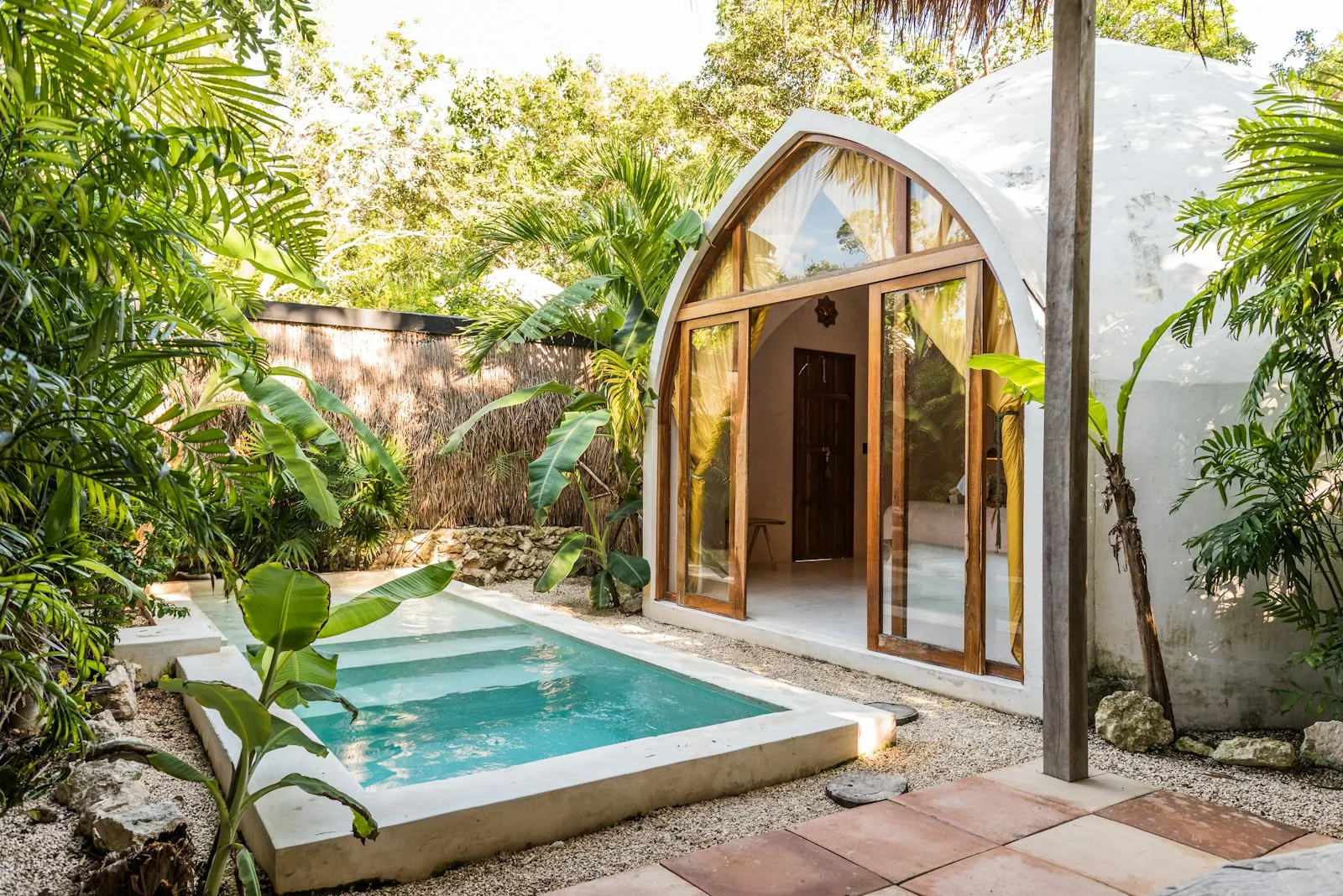
Plunge pools
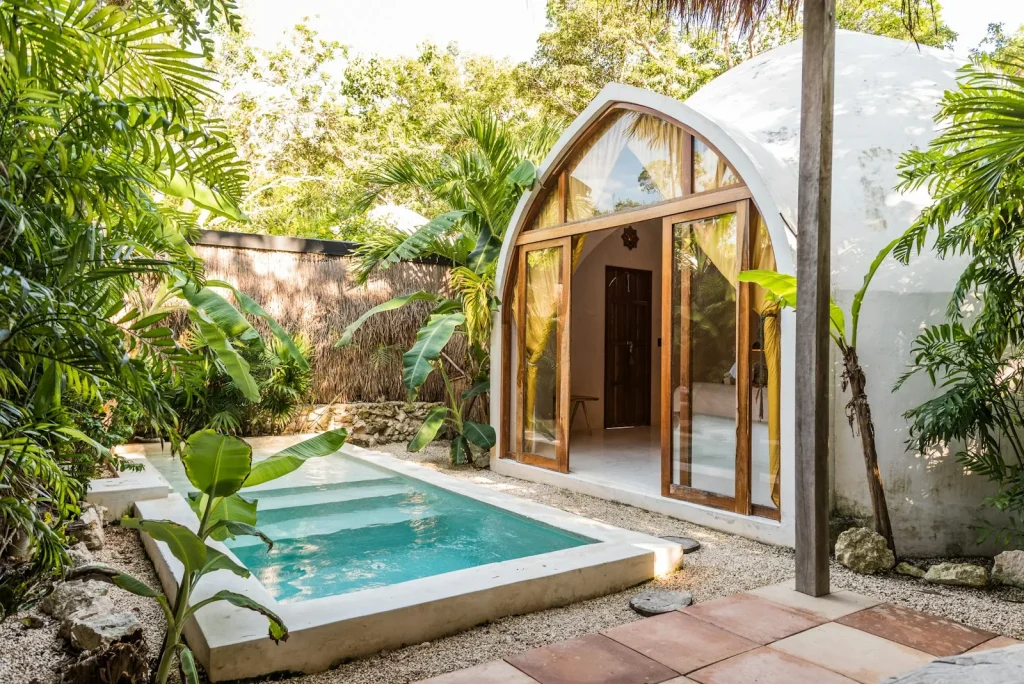
A plunge pool is a compact, deep pool designed for immersion rather than lap swimming. Typical plunge pool dimensions range from 2 metres to 7 metres in length, 1 to 4 metres in width, and approximately 1.5 metres in depth — with no deep end, the depth is uniform throughout. This distinguishes them from full swimming pools and makes them practical for gardens where a longer pool would dominate the available space. An 8ft × 8ft (approximately 2.5 × 2.5 metres) plunge pool is often cited as suitable for a family of four. Plunge pools are available as in-ground fibreglass shells, stainless steel installations, concrete constructions, or above-ground raised units. They can be heated to swimming temperature (typically 25–28°C) or to hot tub temperature (37–40°C), and some models include jets for resistance swimming or hydrotherapy. Cold plunge pools — chilled rather than heated — are a growing category in the UK, driven by interest in the same cold-water immersion benefits associated with wild swimming.
Plunge pools suit gardens that lack the length for a standard pool, homeowners who want the maintenance simplicity of a smaller water volume, and those whose primary use case is relaxation, hydrotherapy, or post-exercise recovery rather than sustained lap swimming. Their limitation is that they are not practical for swimming lengths: a 4-metre plunge pool gives little room for actual strokes, which is why exercise-focused buyers typically look at swim spas instead.
Swim spas and compact exercise pools
A swim spa is a self-contained unit that combines a swimming pool with a spa, using powerful opposing jets to generate a current that the swimmer swims against — allowing indefinite swimming in a fixed position without the length of a full pool. Most swim spas measure 12–20 feet (approximately 3.7–6 metres) in length. Dual-zone models are common, with one end optimised for swimming (deeper, cooler, with stronger jets) and the other for relaxation (shallower, hotter, with softer jets). Swim spas from suppliers such as Endless Pools can be installed indoors or outdoors, above-ground or in-ground, and are popular with serious swimmers who have limited garden space. They are self-contained units — no excavation required for above-ground models — which makes them a significantly faster and simpler installation than a built pool.
Compact fibreglass pool shells are a third option: smaller versions of standard in-ground pools, manufactured in lengths from approximately 5 to 7 metres, and installed in exactly the same way as their larger counterparts. These offer the aesthetics and durability of a proper pool in a smaller footprint, with the added benefit of fibreglass’s low maintenance surface. Suppliers such as Compass Pools offer carbon fibre ceramic composite shells with 50-year warranties, and the single-piece construction means installation is faster than concrete — typically delivered and installed within days once groundworks are complete.
Costs, Planning Permission, and Installation
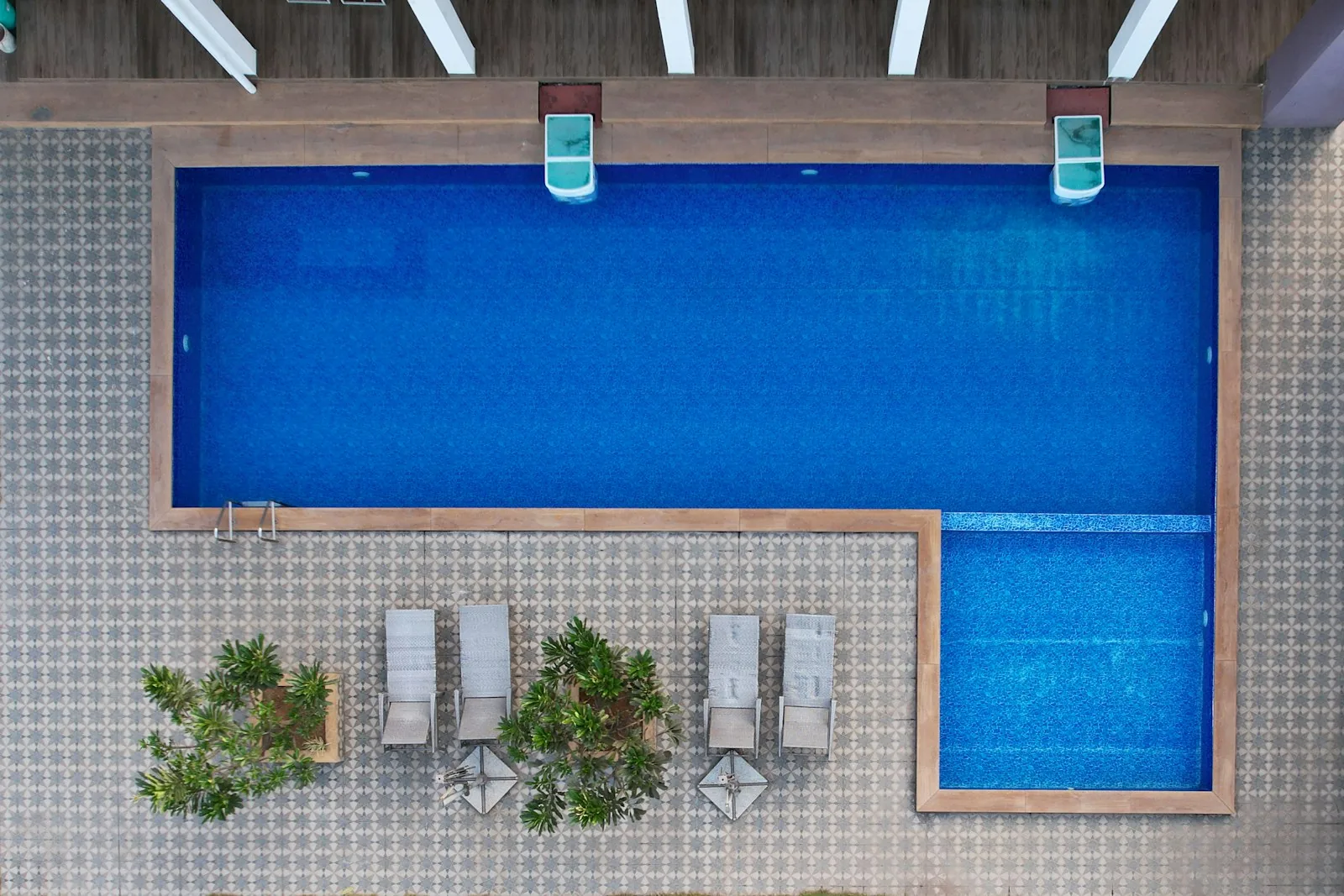
What small pools cost in the UK
The cost of a small pool in the UK varies significantly by type. Above-ground pool options — steel-framed pools with liner systems — start from around £5,000–£10,000 installed, though these are seasonal in the UK climate and rarely provide a high-quality permanent result. Self-contained swim spas start at approximately £10,000–£20,000 for entry-level models; premium dual-zone systems from established manufacturers cost £25,000–£40,000. Stainless steel plunge pools start from around £40,000 fully installed; fibreglass plunge pools cost approximately £15,000–£30,000 depending on size. Small in-ground fibreglass pool shells (5–7 metres) typically cost £30,000–£50,000 fully installed, including groundworks (£5,000–£15,000), electrical installation (£800–£3,000), and a heating system (£2,000–£10,000). Concrete small pools start from a higher base — approximately £32,500 for a plunge pool — and offer greater design flexibility at the cost of longer installation times and higher maintenance demands.
Planning permission and permitted development
Most outdoor domestic swimming pools and plunge pools in England do not require planning permission under permitted development rights, as they are treated as incidental to the enjoyment of the dwelling. The key conditions are that the pool should not cover more than 50% of the total garden area, should be for domestic use only, should not be positioned in front of the principal elevation of the house, and should not be located within a designated area such as a National Park, Area of Outstanding Natural Beauty, listed building curtilage, or conservation area. For properties in any of these designated categories, planning permission is typically required. Rules differ between England, Wales, Scotland, and Northern Ireland; checking with the local planning authority before proceeding is always advisable. Building regulations — covering insulation, electrical safety, and heating systems — apply regardless of planning permission.
Installation timelines and what to expect
Self-contained swim spas above ground can be installed in a single day once the site is prepared and an electrical supply is in place — the unit is craned or lifted into position, connected, and filled. Fibreglass pool shells — including plunge pools — require groundworks first (typically 1–2 weeks for excavation, any structural work, and groundwater management), then shell delivery and installation (1–2 days for the shell itself), followed by fitting out, filling, and commissioning (1–2 weeks). Total project time for an in-ground fibreglass pool or plunge pool is typically 4–8 weeks from start to swim-ready. Concrete pools take longer at 6–12 weeks minimum. Most installers require access to the garden sufficient to bring in excavation equipment and, for fibreglass shells, a crane for positioning.
Heating, Running Costs, and What to Know Before Buying
Heating options for small UK pools
Heating is not optional for most UK small pools — the British climate means unheated outdoor pools are comfortable for perhaps 8 weeks per year at most, typically July and August in southern England. For year-round use, a heat pump is the most cost-efficient mechanical heating option: they are typically 3–5 times more efficient than electric resistance heaters, using ambient air temperature to generate heat at a coefficient of performance (COP) of 4–6 — meaning 1 unit of electricity produces 4–6 units of heat. Inverter heat pumps are the most efficient current technology and are increasingly standard on new pool installations. Gas boilers are faster to heat but cost more to run, and gas connections to outbuildings require professional installation. Solar thermal heating — where pool water circulates through roof-mounted collectors — can provide free heating for several months of the year as a supplement to a primary heating source, but cannot maintain temperature in winter without assistance. For cold plunge pools, a chiller unit is required to maintain water below 15°C.
For small pools, heating costs are meaningfully lower than for full-sized pools due to the smaller water volume. A 4-metre plunge pool (approximately 10,000–15,000 litres) costs significantly less to heat to 38°C than a 9-metre family pool (approximately 50,000–80,000 litres). Annual running costs for a heated small pool — including energy, chemicals, and filter maintenance — typically fall in the range of £1,500–£4,000 per year, with heat pump heating towards the lower end of this range and gas or electric resistance heating towards the upper end. Annual chemical costs for a properly balanced small pool run to approximately £300–£500; filter maintenance costs approximately £80–£250 per month if using a professional service.
Key questions before buying a small pool
The most common error when buying a small pool in the UK is underestimating total cost. The pool shell is only part of the expenditure: groundworks, an electrical supply rated for the heating and filtration equipment, a fence or cover meeting safety requirements for households with children, landscaping around the pool area, and ongoing running costs all contribute to the real cost of ownership. Before committing to any pool installation, it is worth confirming: whether planning permission is needed for your specific site; whether your soil conditions require additional groundwater management; how the pool will be fenced or covered (glass, stainless, or aluminium fencing are common choices); and whether the heating system is included in the quoted price or additional.
Swim spas and self-contained plunge pools offer lower installation complexity than in-ground builds and are generally quicker to get into the water. For buyers primarily interested in cold immersion, cold plunge pools are available as purpose-built compact units specifically designed for therapeutic use, with chillers, filtration, and ozone sanitation built in. For buyers who want to swim lengths, a swim spa is more practical than a short plunge pool, though the current-based swimming experience is different from open-water or lane swimming.
For information about public swimming facilities, see our guide to outdoor swimming pools and lidos across the UK. For natural alternatives to chlorinated pools, our natural swimming pools guide covers biological filtration systems that use no chemicals.
Frequently Asked Questions
What is the smallest swimming pool you can have in the UK?
There is no minimum legal size for a domestic swimming pool in the UK. Plunge pools start at around 2 metres in length, and cold plunge units are available in sizes of 1.5 × 1.5 metres or smaller for individual therapeutic use. The practical lower limit for a pool that multiple people can use simultaneously is approximately 2.5 × 2.5 metres. Swim spas start at around 3.7 metres in length but allow indefinite swimming using jet resistance in that compact footprint.
Do you need planning permission for a small pool in the UK?
In most cases, no. Outdoor domestic pools in England are generally permitted development provided they are for private use only, do not cover more than 50% of the total garden area, are not located in a designated area (National Park, AONB, conservation area, listed building curtilage), and are not positioned in front of the principal elevation of the house. Rules differ in Wales, Scotland, and Northern Ireland. Always check with your local planning authority before proceeding — planning regulations also differ between England’s regions.
How much does a small pool cost in the UK?
Above-ground seasonal pools start from £5,000–£10,000. Self-contained swim spas cost approximately £10,000–£40,000 depending on specification. Fibreglass plunge pools installed in-ground typically cost £15,000–£30,000 for the shell plus installation; add groundworks (£5,000–£15,000), electrical installation (£800–£3,000), and heating (£2,000–£10,000). Stainless steel plunge pools start from around £40,000. Compact in-ground fibreglass swimming pools (5–7 metres) typically cost £30,000–£50,000 fully installed.
Can you have a pool in a small garden in the UK?
Yes — plunge pools can fit in gardens as small as 5–6 metres in usable depth, and above-ground or raised units can be installed on patios or terraces where digging is not practical. The key constraint is access for delivery and installation: fibreglass shells require crane access for positioning, and excavation requires machinery. Swim spas are more flexible as they are self-contained units that can be positioned above ground. Some compact pool solutions can also be installed indoors — in a garage conversion, extension, or basement.
What is the cheapest type of small pool for a UK garden?
The cheapest installed option is an above-ground steel-framed pool with a liner, which starts at approximately £5,000–£10,000 — but these are not year-round solutions and may have limited lifespans in the UK climate. For a permanent, functional year-round small pool, an entry-level fibreglass plunge pool or swim spa represents the lowest total cost of ownership over 10+ years, despite higher upfront costs. Cold plunge pods — compact purpose-built cold water immersion units — are available from around £2,000–£5,000 for above-ground models, though these are not heated swimming pools.