Private hydrotherapy pools let you hire a warm, shallow pool exclusively for your family, physio session, or rehab — typically for an hour at a time. UK prices start at around £30 per 30 minutes for small groups and run to £45 per hour at purpose-built clinical venues. Water is kept between 32°C and 35°C, much warmer than a standard 28°C swimming pool, which is why these pools are widely used for arthritis, post-surgery rehabilitation and baby swimming. This guide explains what to expect, where to find one near you, and what you will pay.
- Hydrotherapy pool temperature is typically 32–35°C — about 6°C warmer than a standard swimming pool
- Typical private hire cost: £30 per 30 min up to £50 per hour, most mid-range venues sit around £45/hr
- UK platforms like MyPool list private pools in London, Hampshire, Sussex, the Midlands, Hertfordshire, Buckinghamshire, Warrington and Surrey
- Most clinical pools include a ramp, steps with handrails, and a body hoist (up to 127 kg)
- You do not need to know how to swim to use a hydrotherapy pool
What Is a Private Hydrotherapy Pool?
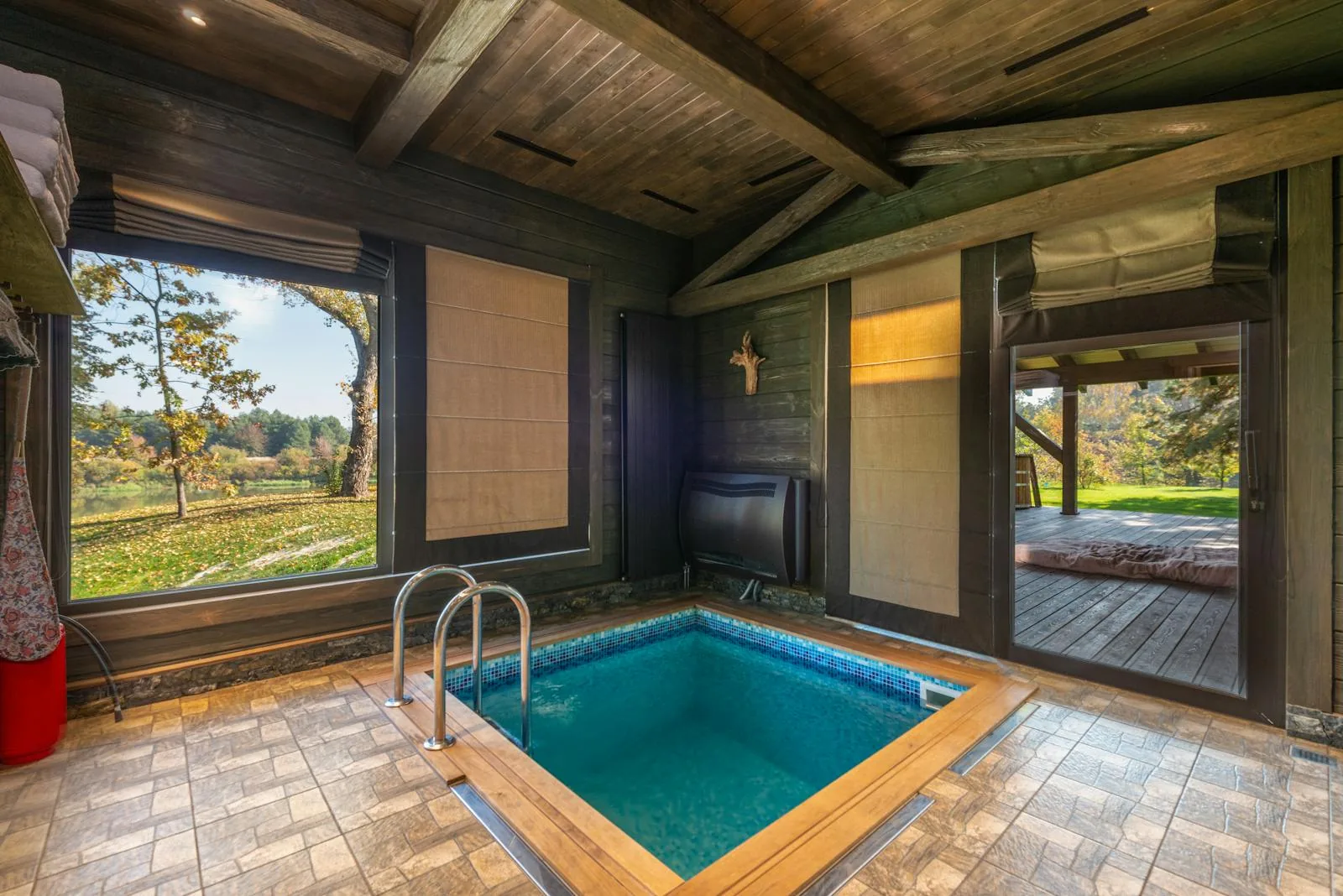
A hydrotherapy pool is a small, warm, shallow pool designed for therapeutic exercise and rehabilitation rather than for swimming lengths. “Private” means you book the whole pool for yourself, your family, or your group — no other users, no crowds, no lane etiquette. The combination of privacy and warm water is the reason these pools are in high demand.
Temperature, Depth and Design
UK hydrotherapy pools are kept between 32°C and 35°C. NHS clinical pools such as those at the Royal Orthopaedic Hospital sit at the upper end — 34–35°C. The Circle at Hadley Learning Community in Telford runs at 35°C and measures 6 × 4 metres with a maximum depth of 1.2 metres. Standard public swimming pools are usually around 28°C. Hydrotherapy temperatures let muscles relax, reduce joint pain, and allow slower, more controlled movement.
Pools are also shallow by design. A typical maximum depth of 1.0–1.4 metres means adults can stand in most of the pool, which is essential for people with limited mobility or those using the pool for physiotherapy. The water supports body weight, so exercises that are impossible on land become achievable.
Accessibility and Equipment
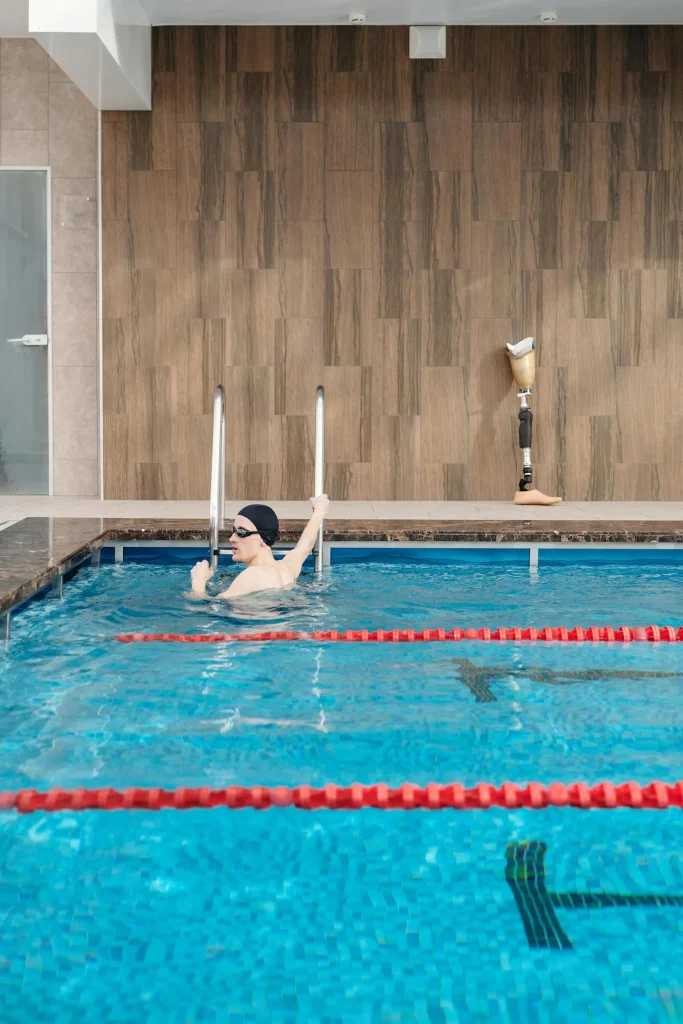
Most clinical and semi-clinical hydrotherapy pools include access equipment as standard. Typical features are steps with handrails, a gradual-entry ramp, and a body hoist. The Royal Orthopaedic Hospital’s pool has a full body hoist rated to 127 kg, along with easy steps and handrails. This is a key difference from a standard pool at a leisure centre: it means that someone unable to climb out of the water can still use the pool safely. It is also why hydrotherapy pools are used for babies, post-op patients, and older adults who are unsteady on their feet.
Who Hydrotherapy Pools Are For
You do not need to know how to swim to benefit from a hydrotherapy pool — the water is shallow enough to stand in and is heated to encourage gentle movement. Typical users include:
- People with arthritis, chronic back pain, or fibromyalgia
- Patients recovering from orthopaedic surgery — knee or hip replacements in particular
- Those with neurological conditions (MS, stroke recovery, cerebral palsy)
- Babies and young children being introduced to water — warmer temperatures reduce crying and cold stress
- Anyone who finds standard pool water uncomfortably cold
Where to Find Private Hydrotherapy Pools in the UK
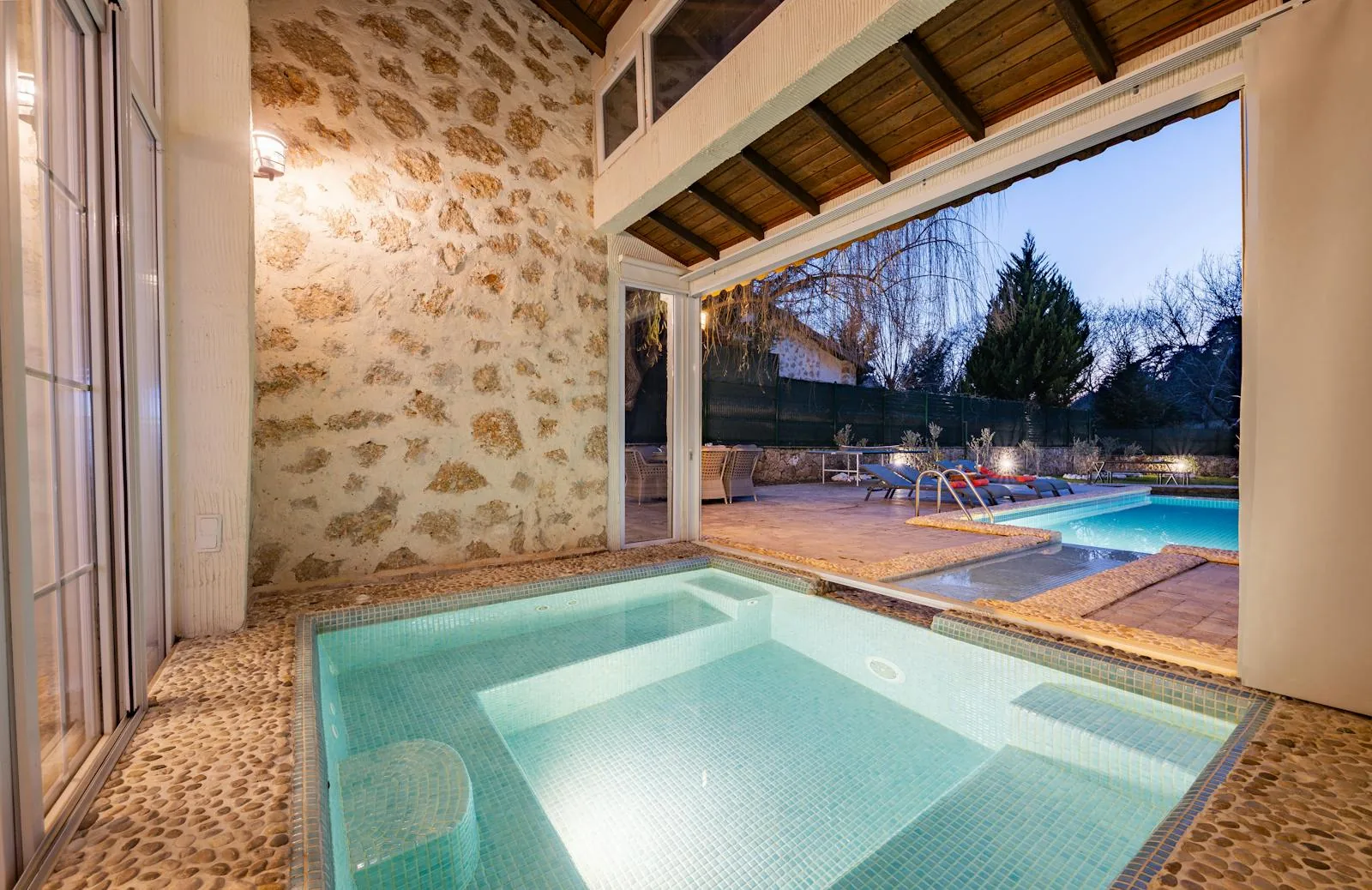
The UK has several hundred hydrotherapy pools, but private hire — where you book the entire pool — is more limited. Availability splits into three main groups: dedicated private pool platforms, NHS and clinical hospital pools, and independent venues attached to learning or care centres.
Dedicated Private Pool Hire Platforms
MyPool (mypoolswim.co.uk) is the UK’s best-known booking platform for private indoor swimming and hydrotherapy pools. It lists pools across London, Hampshire, Sussex, the Midlands, West Bromwich, Hertfordshire, Buckinghamshire, Warrington and Surrey. Pools are owned by individuals or small businesses who have converted a property with a warm indoor pool into an hourly-hire venue. Pools on the platform are usually booked in single-hour slots.
Peerspace (peerspace.com) is a more general venue marketplace that also includes some UK private pools for event hire. Pricing on Peerspace is broader — from around £75 per hour for small properties to £400 per hour for premium estates. If you are looking purely for a hydrotherapy session rather than a pool party, MyPool is typically closer to what you want.
NHS and Hospital Hydrotherapy Pools
Several NHS trusts rent out their clinical hydrotherapy pools during evenings and weekends when patient treatment has finished. The Alder Hey Children’s Hospital pool in Liverpool (Eaton Road, L12 2AP) is available for private hire by qualified hydrotherapists and rehabilitation practitioners, with flexible booking for occasional or regular slots, including evenings and weekends. Access includes hoists and specialist equipment. NHS pools typically require the person hiring to be either a qualified physio/hydrotherapist or to book through one — they are not usually available for families to book directly.
Independent Clinical and Community Pools
Many hydrotherapy pools in the UK are run by schools, learning communities, care centres and private clinics. The Circle at Hadley Learning Community in Telford is a good example — a 6 × 4 m pool at 35°C that hires out for one-hour exclusive-access slots. Alder Hey, Kernow Hydro (Cornwall), the Pioneering Care Centre (Newton Aycliffe), Twinkle House and the Hydro Hub all follow similar models. To find one, search your town name plus “hydrotherapy pool private hire” and check whether the venue requires a qualified practitioner or accepts family bookings.
If you only need warm water rather than medical-grade hydrotherapy, a gym with a swimming pool near you may also work — several UK chains heat their pools to around 30°C and run adult-only quiet sessions. For outdoor alternatives, see our guide to natural swimming pools, although these are rarely warm enough for therapeutic use.
How Much Does It Cost and How to Book

Private hydrotherapy pool hire in the UK is priced per session, not per person. Typical families pay between £30 and £50 for a 30- to 60-minute slot. The biggest variables are venue type (clinical versus community), group size, and time of day.
Typical UK Price Ranges
- Community and private venues: around £30 per 30 minutes for up to 8 people (example: Kernow Hydro, Cornwall)
- Clinical and learning-community pools: around £45 per hour for exclusive use (example: The Circle, Telford)
- Small private pool hire via MyPool: typical £30–£60 per hour depending on location
- Premium estate / event venues (Peerspace): £75–£400 per hour — usually overkill for hydrotherapy
- NHS clinical session with a qualified practitioner: priced by the physiotherapy appointment, not the pool — typically £60–£90 for a 45-minute supervised session
Some venues charge per person on top of the base rate. The quoted £50 for 45 minutes for up to four people, with £8 per additional adult and £4 per child, is a fairly typical structure at mid-size community venues. If you are booking for a large family or therapy group, confirm the maximum capacity and any per-head charge before finalising.
What to Check Before You Book
Private hydrotherapy pool hire is not a standardised product — every venue has slightly different rules. Before paying, confirm the following:
- Actual water temperature — if it matters for your condition, ask directly. Some “warm” pools are only 30°C, which is pleasant but not therapeutic
- Lifeguard — is one included, or do you need a qualified responsible adult? NHS pools always include clinical staff; community pools often do not
- Access equipment — is a hoist available, and is there a weight limit (usually 127–150 kg)?
- Changing facilities — some private pools have only a single changing room; confirm if you need accessible or family-friendly facilities
- Group size limit — most pools cap at 4–8 people for a reason; over-booking leads to cancelled sessions
- Clinical supervision requirement — NHS and some private pools require a qualified physiotherapist to be booked alongside the pool, which roughly doubles the cost
The Booking Process
Direct-booking platforms like MyPool follow a standard flow: enter your postcode, pick a pool, choose an hour slot, pay online, and receive the address and access details. NHS and clinical pools almost always require a phone or email enquiry — Alder Hey’s hydrotherapy team, for example, handles private hire via a single email contact. Expect clinical venues to ask for proof of professional qualifications if you are booking as a hydrotherapist rather than a family. Most venues require payment in full at the time of booking and charge cancellation fees if you pull out within 48 hours.
Frequently Asked Questions
What is a private hydrotherapy pool?
A private hydrotherapy pool is a small, warm (32–35°C), shallow pool that you hire exclusively for yourself, your family, or your therapy group. It is designed for rehabilitation, arthritis relief, post-operative exercise, and supervised baby swimming rather than for swimming lengths.
How much does a private hydrotherapy pool cost to hire in the UK?
Prices start at around £30 for 30 minutes at community venues and run to about £45 per hour at clinical pools like The Circle in Telford. NHS hospital pools are usually booked through a qualified physiotherapist, which pushes the combined session cost to £60–£90 for 45 minutes.
Where can I find a hydrotherapy pool near me?
Start with the MyPool platform (mypoolswim.co.uk), which lists private indoor and hydrotherapy pools across London, Hampshire, Sussex, the Midlands, West Bromwich, Hertfordshire, Buckinghamshire, Warrington and Surrey. For clinical venues, search your town plus “hydrotherapy pool private hire” and check whether a qualified practitioner is required.
How warm is a hydrotherapy pool?
UK hydrotherapy pools are kept between 32°C and 35°C. NHS clinical pools, including those at the Royal Orthopaedic Hospital, typically run at the upper end — 34–35°C — compared to around 28°C for a standard swimming pool.
Do I need to be able to swim to use a hydrotherapy pool?
No. Hydrotherapy pools are shallow enough to stand in — usually 1.0–1.4 metres deep — and the warm water is used for gentle exercise and rehabilitation rather than swimming. Non-swimmers, young children, and people recovering from surgery are all common users.