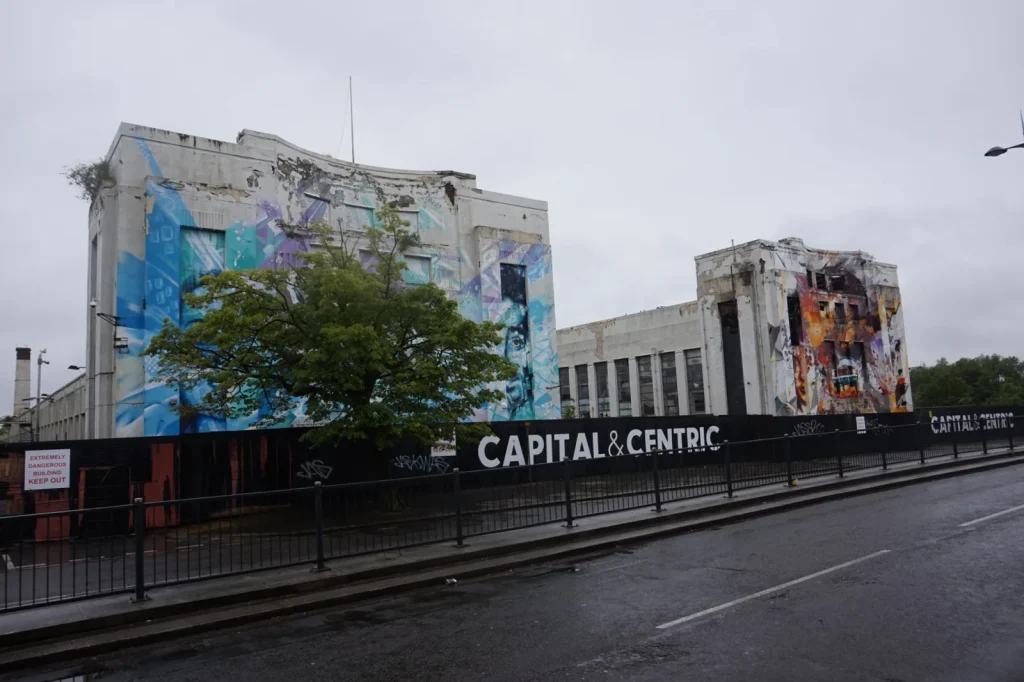
The Littlewoods Pools building on Edge Lane in Liverpool is one of Britain’s most significant examples of Art Deco commercial architecture — a white-rendered, near-kilometre-long facade built in 1938 as the headquarters of John Moores’s Littlewoods football pools empire, which at its peak employed tens of thousands of people across Liverpool and handled coupon returns from millions of British households every week. The building has been largely empty since the Littlewoods pools closed in 1994, was damaged by fire in 2018, and is now at the centre of a £70 million redevelopment by Capital & Centric that will convert it into a film and television studio complex operated by Twickenham Studios. This guide covers the building’s history, its architecture, and what the current redevelopment involves.
- Built in 1938 on Edge Lane, Liverpool, as headquarters for the Littlewoods football pools; probably designed by Scottish architect Gerald de Courcy Fraser
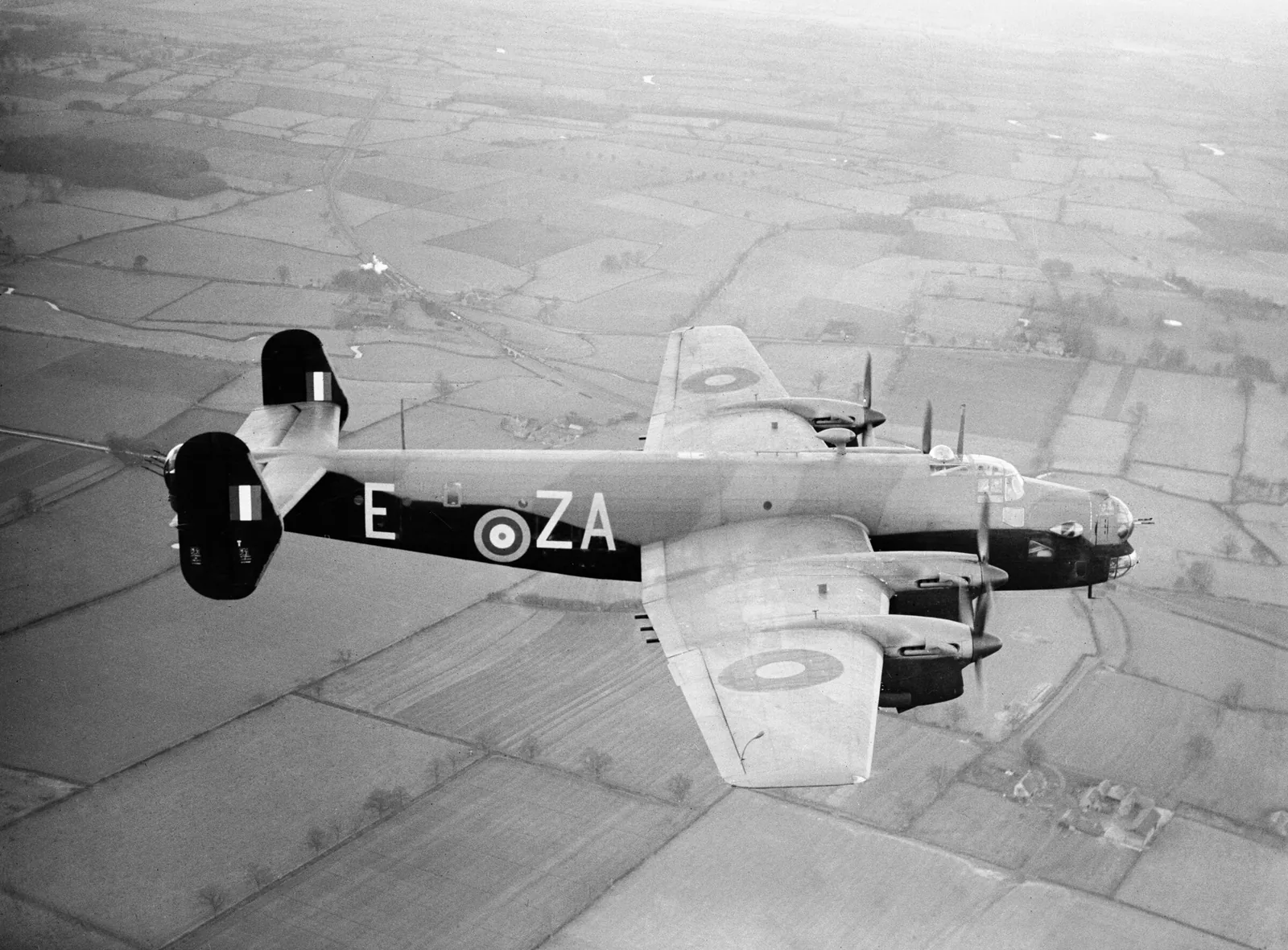
- Requisitioned during World War II for postal censorship, then for manufacturing floors for Halifax bombers; returned to Littlewoods in 1946
- Littlewoods pools operations ceased at the building in November 1994, coinciding with the launch of the UK National Lottery
- A £70 million redevelopment by Capital & Centric — with Twickenham Studios and Liverpool John Moores University as tenants — received planning consent in October 2024
The Littlewoods Pools Building — History and Architecture
John Moores, Littlewoods pools, and why the building was built
John Moores established the Littlewoods football pools in 1923, distributing coupons outside Manchester United’s Old Trafford ground alongside two partners. The venture almost failed in its first year — his partners withdrew and Moores bought out their shares — but it grew rapidly through the late 1920s and 1930s to become the largest football pools operation in Britain, alongside Vernons and Zetters. The pools collected small weekly stakes from millions of British working-class households, who predicted the results of Saturday’s football matches in the hope of winning a portion of the accumulated prize pool. By the mid-1930s the scale of Littlewoods pools required a purpose-built facility to process the volume of coupons received each week. The building on Edge Lane was the result: a purpose-built administrative headquarters designed to house the clerical workforce needed to check, validate, and process millions of coupons weekly, with associated mailing and despatch operations. The building opened in 1938 and from that point became both the operational centre of Littlewoods pools and a highly visible architectural statement about the company’s scale and ambition.
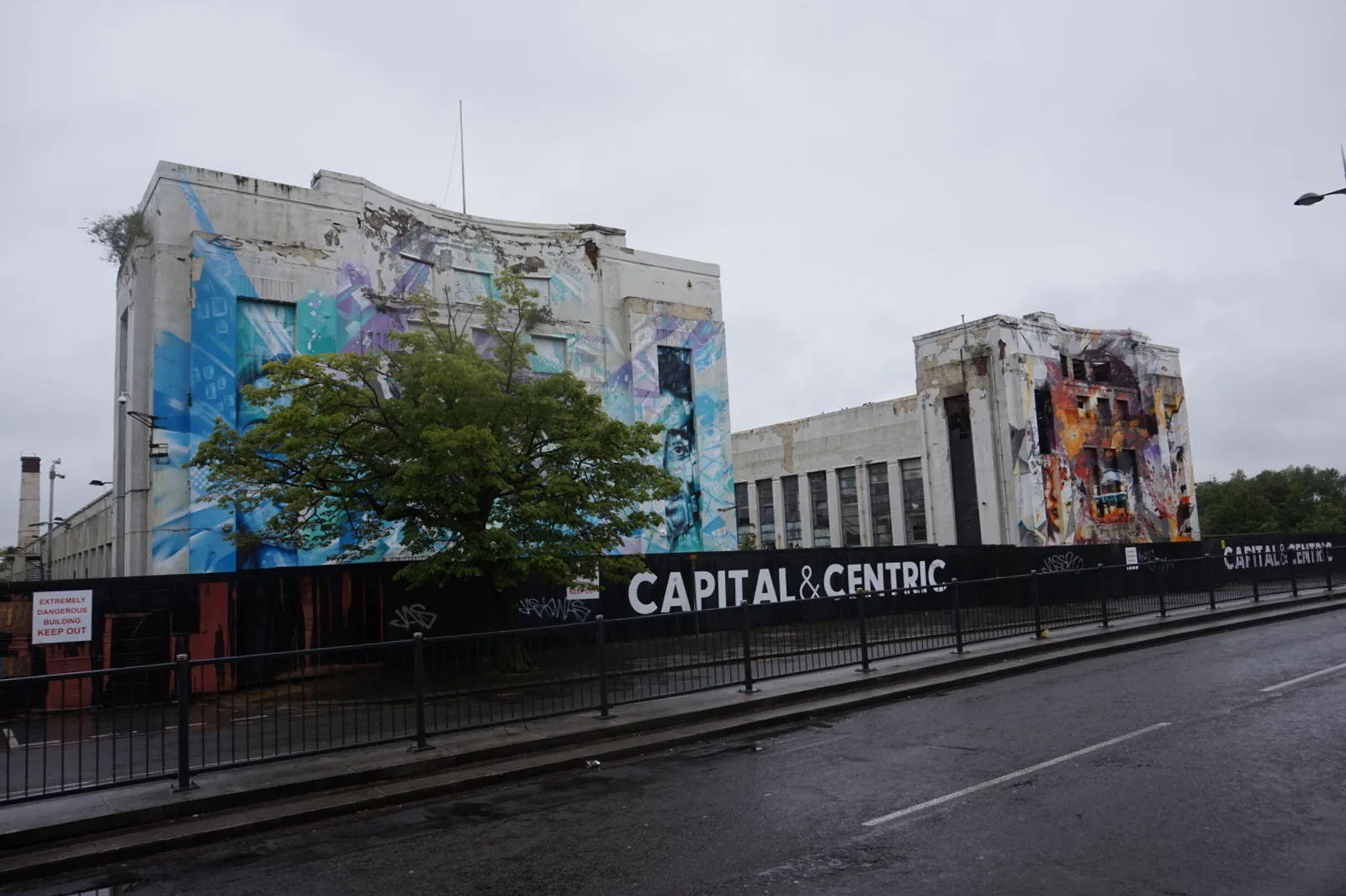
The Littlewoods Pools building was probably designed by Gerald de Courcy Fraser, a Scottish architect, according to SAVE Britain’s Heritage — though documentary attribution is not entirely certain. What is clear is the building’s character: a five-storey Art Deco structure with a central clock tower, two long wings extending on either side, and each wing terminated by a pavilion block. The facade is stucco-rendered in white and runs for almost a kilometre in total, making it one of the longest continuous building frontages in the north of England. It overlooks Edge Lane — one of Liverpool’s main radial roads — and the adjacent Wavertree Botanic Park. The building is Grade II* listed, placing it among the more significant protected historic buildings in England. The Littlewoods Organisation, which also included a retail catalogue and department store empire built by the same John Moores, became one of the largest private companies in Britain; the pools alone, at their mid-century peak, were drawing in more money per week than any other single British business.
The football pools and the people who worked there
At its height, the Littlewoods pools operation at Edge Lane employed thousands of workers — predominantly women — who worked in the building’s large open-plan floors processing the weekly deluge of coupon returns by hand. Each Saturday’s football results required rapid checking against millions of submitted coupons before prizes could be paid; the workforce expanded dramatically during the football season and the building’s layout — long open floor plates with good natural light — was specifically suited to this processing work. The Littlewoods pools were not simply a commercial operation; for many Liverpool families they were a significant local employer, and the pools’ connection to the community was reinforced by the Moores family’s extensive philanthropic activities, including founding what became Liverpool John Moores University. The football pools had a specific cultural footprint in postwar Britain: for the Nicholsons of Castleford, Viv Nicholson’s husband Keith’s 1961 win of £152,319 on the Littlewoods Triple Chance was one of the pools’ defining moments, turning a miner’s family into overnight celebrities and contributing to one of the most memorable phrases in postwar popular culture. Stories like this were part of why the pools retained their hold on British working life through the 1960s, 1970s, and 1980s.
Wartime Use and the Building After the Football Pools
Requisition, Halifax bombers, and the building’s wartime role
When the Second World War began, the Littlewoods Pools building was requisitioned by the government in September 1939. Its initial wartime use was for the postal censorship department, which required large, secure floor space for handling and examining correspondence. The building’s printing presses were put to work producing National Registration forms. Later, the building’s enormous floor plates — again, its original design strength — made it ideal for industrial war production. Floors for Halifax heavy bombers were manufactured on site, and one of the building’s most distinctive wartime contributions was in the manufacture of parachutes: it was one of the only buildings in Britain large enough to fold and pack the parachutes used by Allied forces, with an estimated five million produced there. The building was handed to the war casualties department in November 1945 and returned to Littlewoods in 1946, after which pools operations resumed.
Littlewoods pools continued to use the building as their primary operational headquarters for the remainder of the pools’ active life. By the early 1990s the British pools industry was under pressure from changing leisure habits and anticipated competition from a proposed National Lottery. When the UK National Lottery launched in November 1994, the immediate collapse in pools participation was severe: the Littlewoods pools operation at Edge Lane closed in the same month, with staff redeployed or made redundant. The building fell largely vacant. Over the following two decades it sat empty, its Grade II* listing protecting it from demolition but making significant commercial repurposing difficult without substantial investment. A fire on 2 September 2018 caused damage to the roof and upper floor of the west wing, adding to the building’s deterioration and raising concerns about its long-term survival. In June 2024, the building’s iconic central clock tower was demolished on safety grounds, with plans in place to rebuild it as part of the overall restoration.
Plans that didn’t happen and the path to the current development
Various redevelopment proposals for the Littlewoods Pools building circulated after its closure — retail, residential, and mixed-use schemes were all mooted at different points, and the building’s scale (which made it useful for large-scale processing in the pools era) also made it expensive and complex to adapt for most conventional commercial uses. Liverpool John Moores University, whose name honours the same John Moores who built the pools empire, announced in 2019 that it had secured the legacy of the building alongside development partners, and developer Capital & Centric began to develop the film and television studio concept in earnest from 2018 onwards. A key early step was the creation of “The Depot” — two temporary film studios developed on land adjoining the main building, which opened in October 2021 after an £11 million grant from the Liverpool City Region Combined Authority in 2020. The Depot allowed the site to begin operating as a production facility while the far more complex and expensive main building restoration was planned and financed.
The Littlewoods Building Today — The Film Studio Redevelopment

What the £70 million Capital & Centric development involves
In October 2024, Liverpool City Council granted full planning consent for Shedkm’s designs to convert the Littlewoods Pools building into a film and television studio complex at a total cost of approximately £70 million. The scheme is led by developer Capital & Centric, with Twickenham Studios — one of Britain’s oldest and most established film studios — as the primary tenant and Liverpool John Moores University as the second major occupant. The redevelopment will create two large-budget TV and film studios, each approximately 1,850 square metres of usable floor space, designed for major production work. Supporting facilities will include workshops, office space in the west wing, and studio support infrastructure in the east wing. The Liverpool City Region Combined Authority has committed up to £17 million in public funding to the project, and it is projected to create approximately 4,000 full-time equivalent jobs in the region’s creative and screen industries sector.
One of the most architecturally significant elements of the scheme is the conversion of the building’s original barrel-vaulted hangar — the former staff canteen — into a food hall and multi-purpose screening and performance space with five cinema screens. This space will be open to the public outside production hours, giving the Littlewoods Building a public-facing cultural function it has never had before. Remediation work on the main building began in December 2023, with construction on the main studio spaces scheduled to follow in 2025. The clock tower, demolished in June 2024 for safety reasons after more than 25 years of neglect, will be rebuilt as part of the restoration programme — reinstating one of the building’s most recognisable external features. The project represents one of the largest heritage-led regeneration schemes in the north of England and is central to Liverpool’s ambition to develop a major screen industry cluster in the city region.
Visiting and finding the building
The Littlewoods Pools building stands on Edge Lane (A5047) in the Wavertree area of Liverpool, approximately 3 miles east of Liverpool city centre. It is accessible by bus from the city centre and is adjacent to Wavertree Botanic Park. The building is not publicly open during the construction and remediation phase, but the exterior is fully visible from Edge Lane and makes a significant impression on anyone familiar with Art Deco architecture. The Depot studios on the adjoining land are active production facilities and not open for public visits. Once the redevelopment is complete, the food hall and public screening spaces in the barrel-vaulted hangar are intended to be accessible to the public on a walk-in basis outside production hours, giving visitors the opportunity to experience the scale and character of one of Liverpool’s most important twentieth-century buildings. For those interested in the wider history of the football pools, our guide to Viv Nicholson — who won £152,319 on the Littlewoods pools in 1961 — tells one of the defining stories of the pools era.
Frequently Asked Questions
Where is the Littlewoods Pools building?
The Littlewoods Pools building is on Edge Lane (A5047) in Wavertree, Liverpool, approximately 3 miles east of Liverpool city centre. It overlooks Edge Lane and Wavertree Botanic Park. The postcode for the area is L7. The building is accessible by bus from central Liverpool and is identifiable by its long white Art Deco facade and (historically) its central clock tower.
Why was the Littlewoods Pools building built?
The building was constructed in 1938 to serve as the headquarters of the Littlewoods football pools operation, which by the mid-1930s required a large, purpose-built facility to process the millions of coupon returns it received each week from British households. Its long, open-plan floor plates were designed to accommodate the clerical workforce needed to check and validate millions of coupons following each Saturday’s football results. The building was also a statement of the Littlewoods Organisation’s commercial scale and status.
What is happening to the Littlewoods building in Liverpool?
The Littlewoods Pools building is being redeveloped into a £70 million film and television studio complex by developer Capital & Centric, with Twickenham Studios and Liverpool John Moores University as tenants. Planning consent was granted by Liverpool City Council in October 2024. The scheme, designed by architect Shedkm, will create two large film studios, office and workshop space, and a public food hall and cinema space in the building’s historic barrel-vaulted hangar. Remediation work started in December 2023; main construction is scheduled for 2025.
Is the Littlewoods building listed?
Yes — the Littlewoods Pools building is Grade II* listed, which places it among the more significant categories of protected historic buildings in England. Grade II* listing indicates that a building is “particularly important and of more than special interest.” The listing protects the building’s structure and character and requires any significant alterations or redevelopment to receive heritage consent. The listing is part of why the building survived decades of vacancy and is now being restored rather than demolished.
When did the Littlewoods pools close?
Littlewoods pools operations at the Edge Lane building ceased in November 1994, coinciding with the launch of the UK National Lottery. The National Lottery immediately became a major competitor to the football pools industry, drawing in participants who had previously staked small sums on pools coupons each week. The closure was carried out in anticipation of reduced pools revenue as a result of the lottery; staff were redeployed or made redundant, and the building fell largely vacant from that point.