Wave pools generate artificial surf using one of three fundamental engineering approaches — pneumatic air displacement, mechanical lever or piston systems, or towed foil/plow technology — and the approach chosen by each facility determines everything about the waves it can produce: their height, shape, frequency, and the length of ride available to surfers. What all three systems share is the same core physics challenge: moving enough water in a controlled pattern to reproduce what ocean geography and wind energy do naturally. This guide explains how each approach works, what determines wave character, and which facilities use which technology in the UK and internationally.
- The three main wave-generation mechanisms are pneumatic (compressed air) chambers, mechanical lever/piston paddles, and towed foil/plow systems — each with different wave height, frequency, and capacity trade-offs
- The Wave Bristol and Lost Shore Edinburgh both use Wavegarden Cove lever technology, making them the most accessible wave pool facilities in the UK
- The first commercial surf wave pool was Big Surf in Arizona (1969); the first public wave machine anywhere was the Bilzbad in Radebeul, Germany (1912)
- Pool bathymetry — the shape and slope of the pool floor — is as important as the wave generator itself in determining whether waves are suitable for beginners, tube-riders, or longboarders
The Three Core Wave-Generation Technologies
Pneumatic and compressed air systems
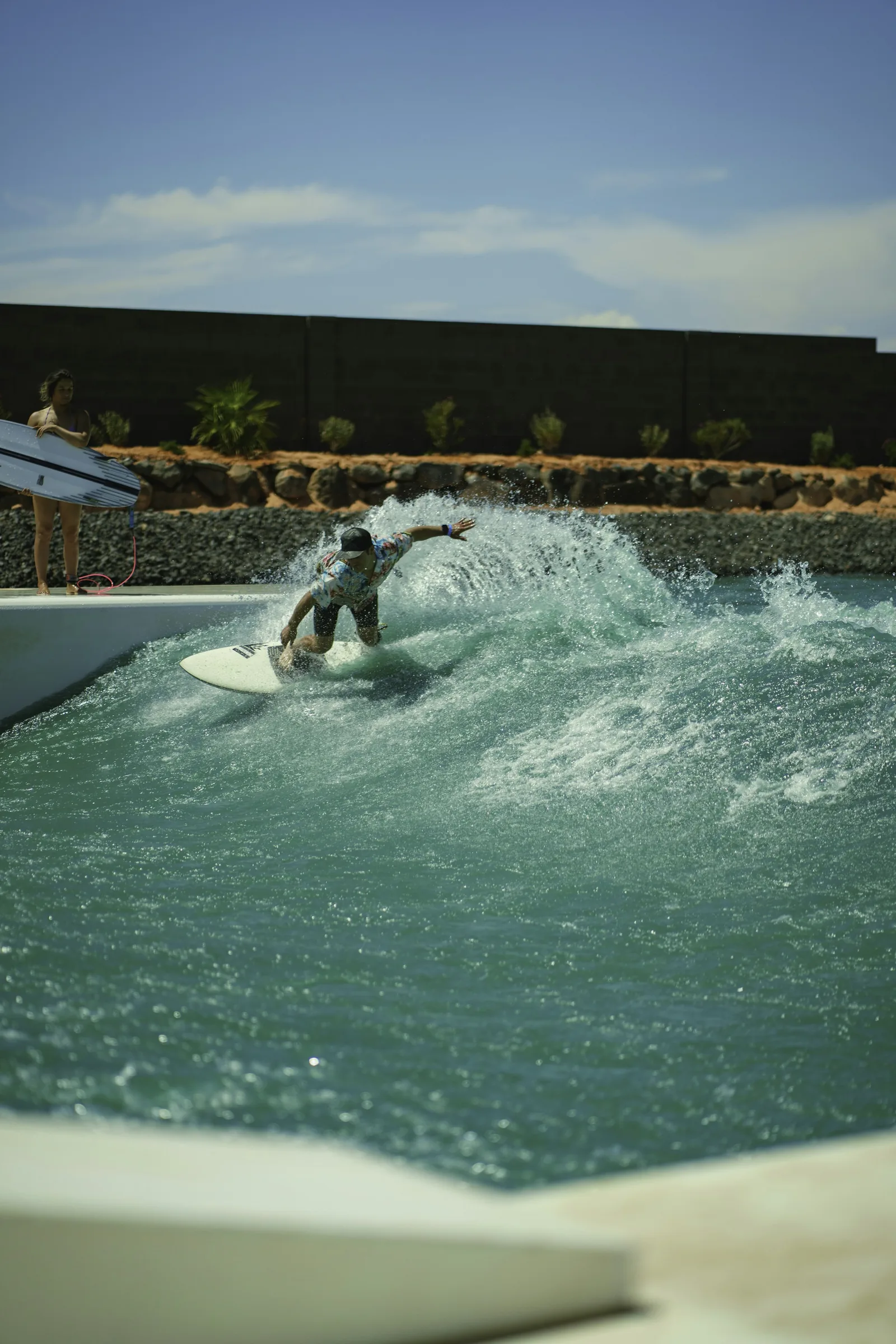
Pneumatic wave generation is the most widely used approach in modern surf parks. The system works by sequentially pressurising a series of chambers — called caissons — embedded in the pool floor or walls. When a caisson is pressurised, compressed air pushes down on the water above it, forcing the water upward and outward to create a wave. By controlling the timing, pressure, and sequence of caisson firing, the system’s software can produce waves of different heights, steepnesses, and shapes. Endless Surf’s pneumatic system — used at Munich’s facility — fires 400 to 700 waves per hour from its array of 34 or 48 caissons, with wave heights of 3 to 7 feet and ride lengths up to 200 metres in full-size configurations. American Wave Machines’ PerfectSwell system (used at Waco Surf in Texas, American Dream Mall in New Jersey, and facilities in Japan and Brazil) takes a similar approach with chambers in a central wall, producing 120 to 160 waves per hour in groups of three. Pneumatic systems have the advantage of high wave frequency and software-adjustable wave variety — the same pool can produce beginner rollers and expert tubes by altering the firing sequence and chamber pressure.
Surf Loch’s pneumatic caisson system adds a different refinement: chambers arranged in a perimeter rather than along a central spine, using Siemens automation software to control firing sequences precisely. This arrangement allows the system to generate A-frame peaks — waves that break symmetrically left and right from a central point, as opposed to unidirectional lefts or rights — which increases surfing capacity per wave by allowing two surfers to ride the same wave simultaneously. At the Palm Springs test facility, 12 chambers produce rides of approximately 6 seconds; full-scale installations with 24 chambers extend ride duration to 12 seconds. The key trade-off in all pneumatic systems is energy consumption: the compressors that generate the pressurised air are significant energy users, and facilities with high wave frequency face substantial electricity costs.
Mechanical lever and piston systems (Wavegarden Cove)
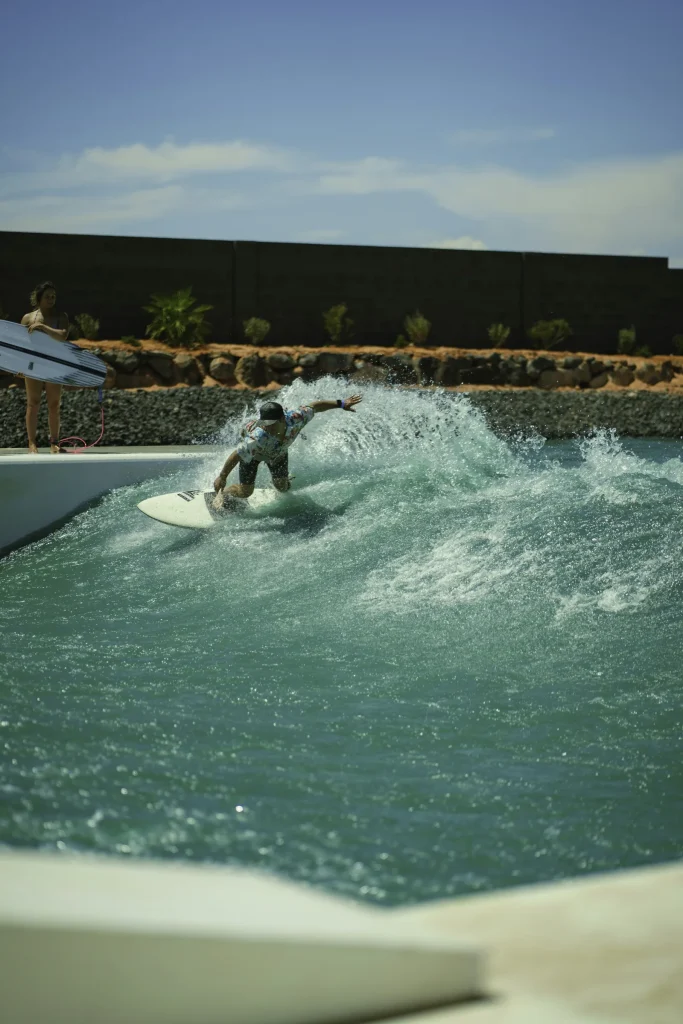
The Wavegarden Cove technology — used at The Wave Bristol (40 modules), Lost Shore Edinburgh (Scotland), Alaia Bay in Switzerland (46 modules), and Wave Park South Korea (56 modules) — works on a different principle. Rather than pressurised air pushing water from below, the Wavegarden system uses a diamond-shaped pool with a central pier running its length. Along the pier, a series of lever modules swing bidirectionally on hydraulic pivots, their paddles displacing water to create a wave that propagates outward from the pier. The module levers fire sequentially — one after another from back to front along the pier — which adds energy to the wave progressively, allowing it to travel the full length of the pool without dissipating. Because the levers swing both left and right, the system simultaneously generates a left-breaking wave on one side of the pool and a right-breaking wave on the other, effectively doubling the surfable wave output per cycle. Wavegarden’s lever technology produces waves of 2 to 7 feet with adjustable settings labelled (at The Wave Bristol) as beginner, intermediate, and performance modes including the “Beast” tube wave configuration. The number of lever modules is the primary determinant of pool capacity and wave quality — more modules produce longer, more consistent waves.
Older mechanical systems used a different approach: a single large piston or paddle at one end of a rectangular pool, which displaced water to send a wave across the pool. This is the mechanism used in most traditional waterpark wave pools (bodysurfing and paddling wave pools rather than surfing pools) — a simple, reliable design that generates 2 to 3 foot waves suitable for bodyboarding and general swimming but unsuitable for surfing because waves are too small and the frequency too low. These older mechanical systems are what most public leisure centres in the UK used through the 1980s and 1990s, and many still operate today at waterparks internationally.
Towed foil and plow systems (Kelly Slater Wave Co.)
The Kelly Slater Wave Company uses a fundamentally different approach: rather than pushing water from a fixed position, a large submerged hydrofoil (sometimes described as a plow) is physically towed along the bottom of a straight channel at variable speed. The foil displaces water as it moves, generating a wave that travels beside it for the full length of the pool. The speed of the foil directly controls the character of the resulting wave — faster towing generates a steeper, more powerful wave; slower towing creates a gentler, more forgiving shape. The Surf Ranch facility in Lemoore, California, and the new Abu Dhabi installation are the primary operational venues. The key limitation of plow/foil technology is wave frequency: because the foil must physically travel the length of the pool and return before generating the next wave, there is a 3 to 4 minute interval between waves — dramatically lower frequency than pneumatic systems. Each session at the Surf Ranch produces either a left or a right (the wave is unidirectional), and the facility is primarily positioned for professional surfing events and premium private sessions rather than high-throughput public use. The exceptionally long ride length (up to several hundred metres) and near-perfect wave quality are the system’s key advantages.
How Pool Floor Shape Determines Wave Character
Bathymetry: the hidden variable in wave quality
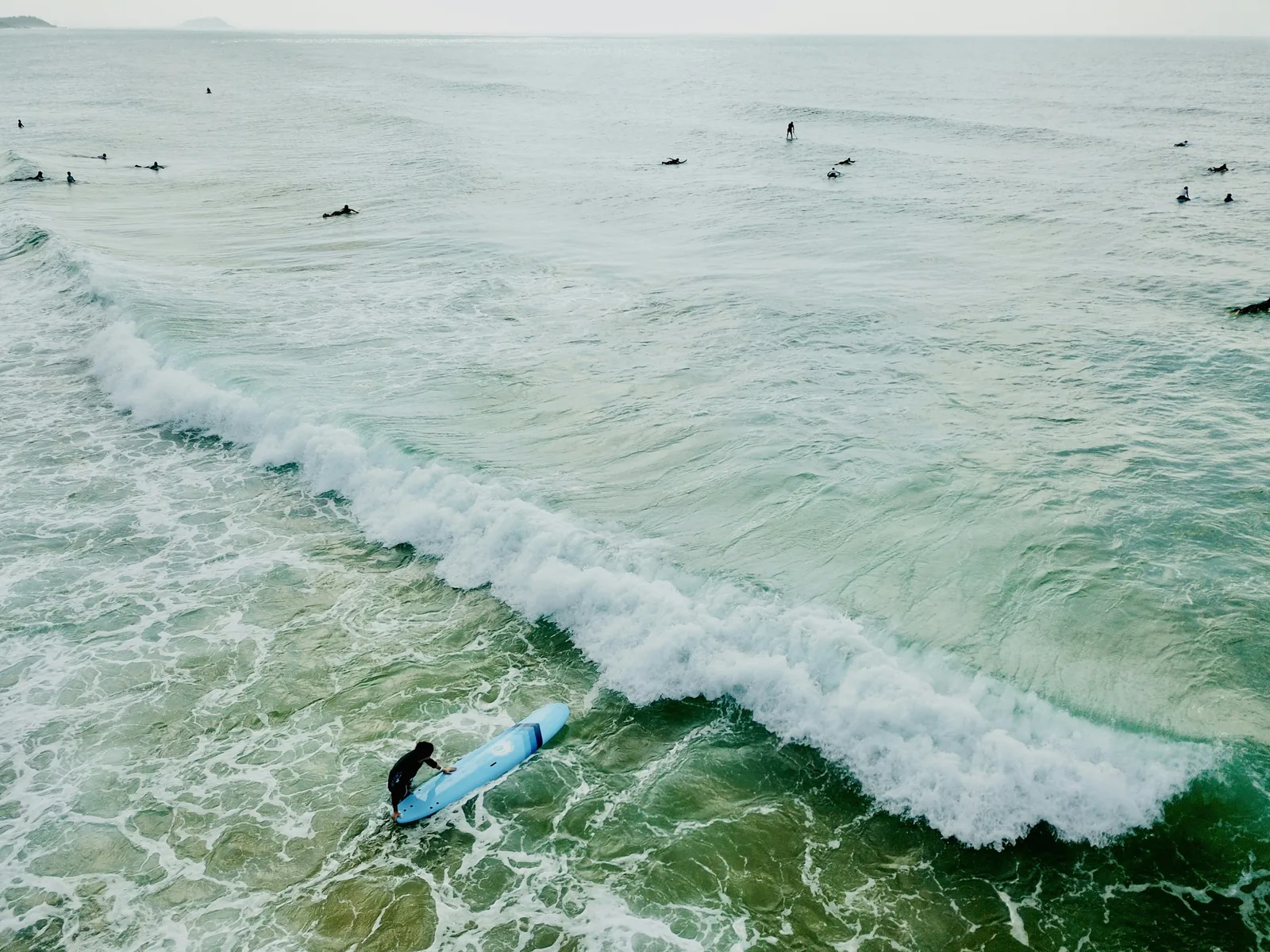
The wave generator is only half of what determines wave character. The other half is bathymetry — the shape, slope, and depth profile of the pool floor — which is as important as the wave-generation mechanism in determining whether the waves are suitable for beginners, intermediate surfers, or professional tube-riders. When a wave travels from deep water into shallower water, the bottom friction slows the wave’s base while the top continues at full speed, causing the wave to steepen and eventually break. The slope and depth at which this transition occurs directly controls how steep (powerful) the wave is and where it breaks. Wave pool engineering guidance describes this as replicating what natural reef and sand bar formations do in the ocean — the pool floor is essentially a manufactured reef, engineered to make waves break in a specific way at a specific location.
The Wavegarden Cove pools at The Wave Bristol feature a single bathymetry profile that is tuned during construction and cannot be changed in real time; adjusting wave character is done through the software settings of the lever modules rather than the pool floor. Kelly Slater’s Surf Ranch, by contrast, features a highly refined bottom bathymetry that was developed through years of testing and is the primary reason the waves are considered some of the best artificial surf ever produced. Facilities with adjustable floor systems — like those proposed by Infinity Wave Co., which features a Dynamic Reef system with variable-depth moveable floor sections — would allow real-time bathymetry adjustment, potentially producing different wave styles in the same session. For reference context on different types of managed water facilities in the UK, our guide to outdoor swimming pools and lidos across the UK covers the full range from leisure pools to open-water venues.
Wave capacity, ride frequency, and facility throughput
The commercial viability of a surf park depends heavily on the number of surfable rides it can generate per hour — more rides per hour means more paying customers. Different technologies produce radically different throughput figures: Surf Lakes’ central plunger system, which drops a pneumatic plunger in the centre of a circular pool to generate concentric waves radiating outward in all directions to multiple reef breaks, claims up to 2,000 rides per hour at its Queensland prototype — the highest throughput of any tested system. The AllWaves hydraulic membrane system at its Belgium research facility achieves approximately 500 waves per hour, with four simultaneous riders per wave. Wavegarden Cove facilities typically accommodate approximately 70 to 100 surfers in the water simultaneously across multiple zones (beginner to performance), with session management controlling which zones run which wave settings at any time. The Kelly Slater plow system, at 1 wave per 3–4 minutes, supports only a handful of surfers per session and is not commercially viable as a high-volume public facility.
Energy consumption is a significant operational factor for all wave pools. Pneumatic systems require large air compressors running continuously; mechanical lever systems have high hydraulic power requirements; plow systems accelerate and decelerate large masses repeatedly. Most commercial wave pools consume hundreds of kilowatts of electricity per hour of operation — a cost that is factored into session pricing. Emerging systems like WaveSEG’s green hydrogen-powered design are attempting to address operational energy costs through renewable power integration, though none have moved beyond prototype stage as of 2026.
Wave Pools in the UK — Facilities, Safety, and What to Expect
The Wave Bristol and Lost Shore Edinburgh
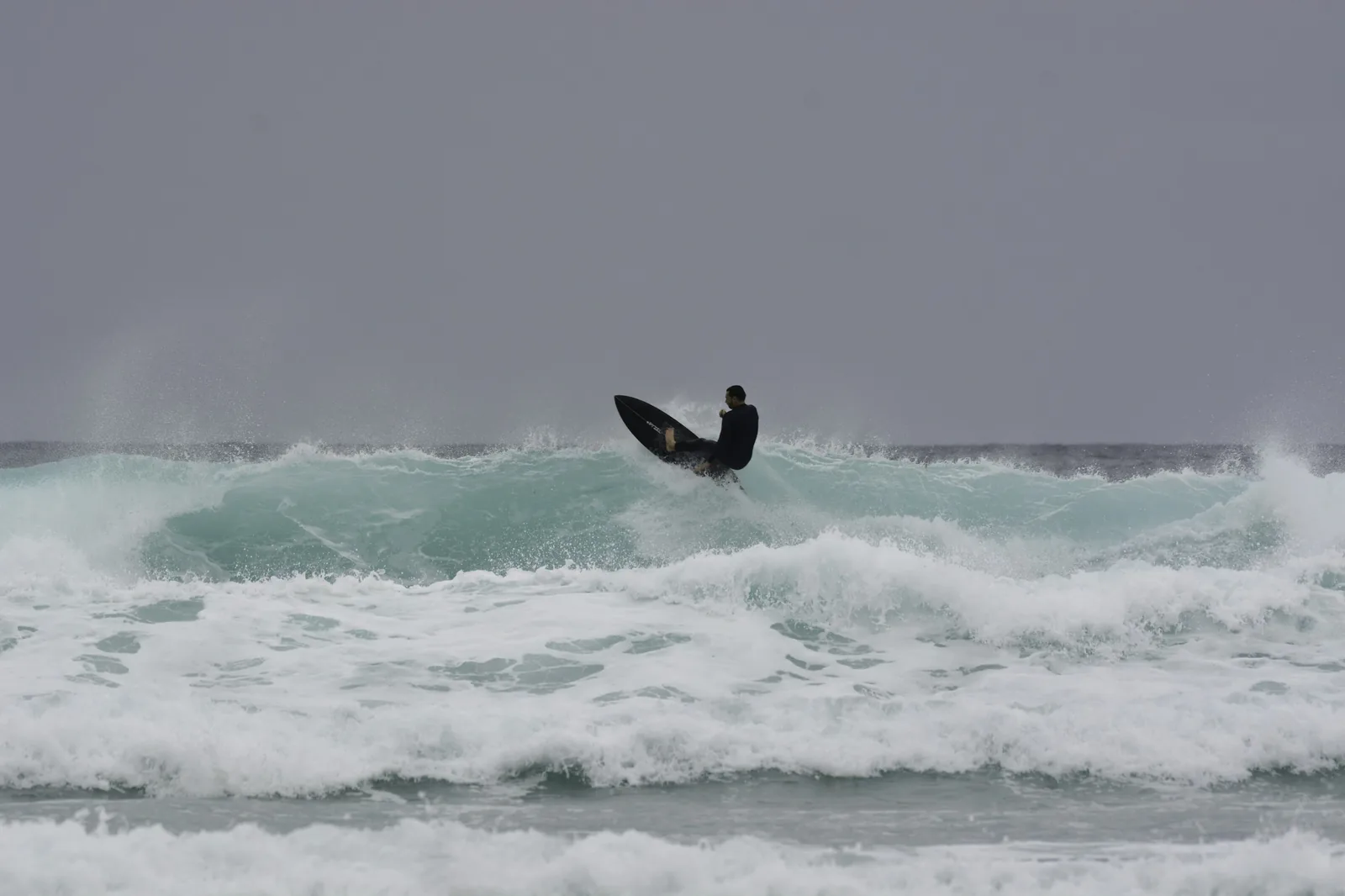
The United Kingdom has two major operational surf wave pool facilities, both using Wavegarden Cove technology. The Wave, near Bristol, was the first inland surf lake to open in the UK (2019) and operates with 40 Wavegarden lever modules, producing waves of 2 to 7 feet across beginner, intermediate, and performance zones. Sessions are bookable online, with different zones priced by experience level, and the facility also operates a surf school for first-timers. Lost Shore Surf Resort near Edinburgh opened in 2023, using a Wavegarden Cove installation and positioning itself as both a surf park and a resort destination with accommodation. Both facilities offer the same technology — lever module Wavegarden pools — but differ in setting, scale, and ancillary facilities. Pre-booking is essential at both venues, as sessions are capped by surf zone capacity and are frequently sold out at weekends. For comparison, facilities in continental Europe using similar Wavegarden technology include Alaia Bay in Switzerland and Wave Park in South Korea (56 modules — the largest Wavegarden installation). Our guide to natural swimming pools and chemical-free water alternatives provides context for those exploring different types of managed water facilities beyond conventional chlorinated pools.
Safety in wave pools — what makes them different from standard pools
Wave pools present specific safety challenges that standard pool environments do not. Moving water, wave turbulence, and sun glare at outdoor facilities make visual supervision significantly harder than in still-water pools. Wikipedia’s wave pool safety overview notes that automated drowning detection systems fail in wave pool environments because the water movement and surface turbulence exceed the system thresholds. Lifeguard ratios in wave pools must be higher than in standard pools, and lifeguard positioning must account for zones in which waves temporarily obscure swimmers from view. Water chemistry management is also more complex: wave turbulence increases water-air contact area, which accelerates chlorine dissipation, requiring more frequent chemical monitoring and dosing than still pools. Session management at surf facilities — strict controls on how many surfers are in each zone simultaneously, and consistent right-of-way rules for wave priority — reduces collision risk between surfers but requires briefing of all participants before sessions. The wave pool format is safe when properly managed; the key variables are lifeguard deployment, session density control, and accurate beginner/advanced zone segregation.
Frequently Asked Questions
How do wave pools generate waves?
Wave pools use one of three main technologies: pneumatic systems (compressed air chambers that push water upward sequentially), mechanical lever or piston systems (paddles that physically displace water), or towed foil/plow systems (a submerged foil pulled along the pool floor at speed). Each approach moves water in a controlled pattern to create waves; the pool floor shape (bathymetry) then determines how those waves break. Most modern surf parks use pneumatic or lever-based systems because they generate high wave frequency — hundreds of waves per hour — compared to plow systems which produce 1 wave every 3 to 4 minutes.
What wave pool technology does The Wave Bristol use?
The Wave Bristol uses Wavegarden Cove technology — a lever-based system with 40 modules along a central pier in a diamond-shaped pool. The lever modules swing bidirectionally, simultaneously generating left-breaking waves on one side of the pool and right-breaking waves on the other. Software settings adjust the modules to produce beginner, intermediate, and performance waves, including the “Beast” tube wave configuration at higher settings.
Are wave pools safe?
Wave pools are safe when properly staffed and managed, but they present specific challenges not found in standard pools: moving water makes visual supervision harder, automated drowning detection systems do not work in wave environments, and turbulence increases chlorine dissipation. Reputable facilities operate with higher lifeguard ratios than conventional pools, strict session capacity limits, and zone-based segregation of surfers by ability. The session briefing before entering the water covers right-of-way rules and zone boundaries — following these instructions reduces collision risk between surfers significantly.
Which is the best wave pool in the UK?
The Wave Bristol and Lost Shore Edinburgh are the UK’s two main operational surf wave pools, both using Wavegarden Cove lever technology. The Wave Bristol is the longer-established venue and easier to reach from central England; Lost Shore Edinburgh operates as a resort destination with accommodation and is the more recent opening. Both require advance booking, particularly for weekend sessions. Internationally, facilities like Waco Surf in Texas (American Wave Machines PerfectSwell) and the Kelly Slater Surf Ranch in California are considered benchmarks for wave quality, though they are not accessible to UK-based swimmers without international travel.
How are traditional waterpark wave pools different from surf wave pools?
Traditional waterpark wave pools — the kind found at leisure centres and waterparks, which produce gentle 1 to 2 foot bodyboarding waves — typically use a simple single piston or air chamber at one end of a rectangular pool. They generate regular waves suitable for bodyboarding, swimming, and family use, but not surfable waves for stand-up surfing. Modern surf wave pools use more complex multi-chamber or lever systems to produce steeper, more powerful, and better-shaped waves specifically designed for surfing. The two applications also differ in the pool shape: traditional waterpark wave pools are typically rectangular, while surf pools use complex shapes (diamond, oval, or straight channels) specifically designed around the wave-generation system.