Air-source heat pumps are the most efficient way to heat a swimming pool in the UK, converting each unit of electricity into 5–7 units of heat by extracting warmth from the ambient air. A standard garden pool heat pump costs £1,500–£7,000 for the unit plus installation, and running costs for a 25,000-litre pool over the May–September season come to approximately £150–£200 — far less than a gas or electric resistance heater. For context on wider pool running costs, see our guide to swimming pool costs in the UK. This guide covers how pool heat pumps work, how to size one correctly, the difference between standard and inverter models, and what running costs to expect in UK conditions.
- COP (coefficient of performance) of 5–7 means a heat pump costs roughly one-fifth as much to run as a direct electric heater for the same heat output.
- Standard (non-inverter) models suit May–September UK use. Inverter models with defrost functions can operate down to –10°C, extending the season year-round.
- Inverter heat pumps use 20–40% less electricity than fixed-speed models by matching output to demand, but cost more upfront.
- Pool covers are essential: 75% of pool heat loss occurs through surface evaporation; using a cover overnight can halve a heat pump’s running time.
How Pool Heat Pumps Work and Their Efficiency Advantage
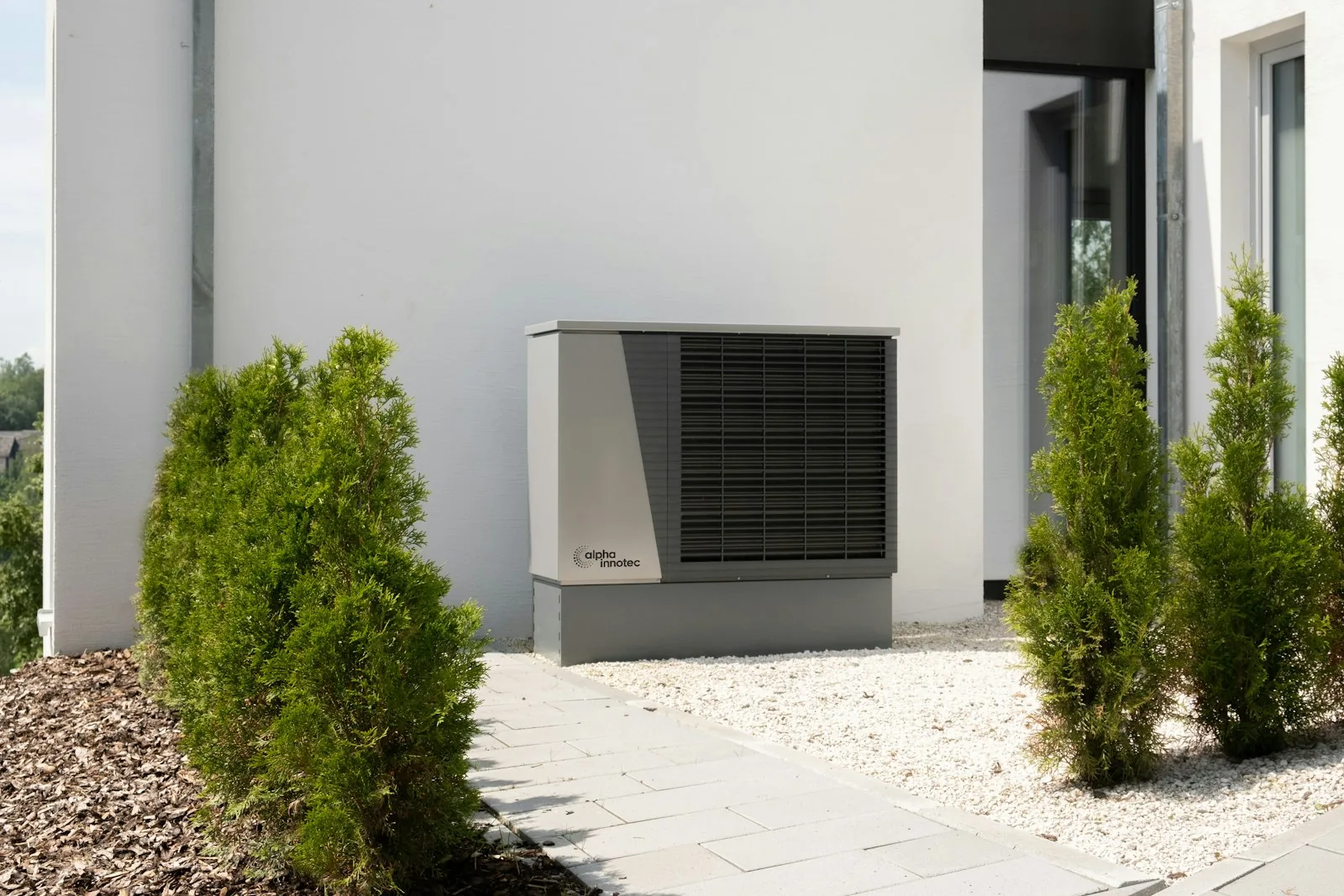
A pool heat pump works by the same refrigerant cycle used in domestic heat pumps and refrigerators, but in reverse. The unit draws outside air across an evaporator coil containing liquid refrigerant. The refrigerant absorbs heat from the air and evaporates into a gas. That gas passes through a compressor, which raises its temperature significantly, before flowing through a condenser where it transfers heat to the cooler pool water circulating through the unit. The cooled refrigerant returns to liquid form and the cycle repeats. Crucially, the pump does not generate heat — it moves heat from the air into the water.
COP: Why Heat Pumps Are Cheaper to Run Than Gas or Electric Heaters
The key performance metric is the Coefficient of Performance (COP): the ratio of heat energy output to electrical energy input. UK pool heat pumps typically achieve a COP of 5–7 in favourable conditions, meaning for every 1 kW of electricity consumed, 5–7 kW of heat is delivered to the pool. By comparison, a gas heater operates at around 85–90% efficiency (COP ≈ 0.9) and an electric resistance heater at ~100% efficiency (COP = 1). This translates directly to running cost: at UK electricity rates, a heat pump produces usable heat at approximately 4p per kWh, compared to approximately 19p/kWh for direct electric heating. COP falls as air temperature drops — at 10°C ambient, expect COP 4–5; at 20°C, COP 6–7.
Standard vs Inverter vs All-Season Models
There are three main categories:
- Standard (fixed-speed) heat pumps: operate when air is above +8–10°C, suitable for May–September in most UK locations. Compressor runs at full power or off — less efficient than inverter models but lower purchase price (£1,500–£3,500).
- Inverter heat pumps: the compressor runs at variable speed, matching heat output to pool demand in real time. Inverter models use 20–40% less electricity than fixed-speed equivalents, run significantly quieter, and place less mechanical stress on components. Units cost £3,000–£7,000. For pools used consistently across a long season, the electricity savings typically recoup the price premium within 3–5 years.
- All-season/low-ambient inverter models: equipped with a defrost function, these operate down to –10°C, enabling year-round pool heating. These are the appropriate choice for indoor pools or owners who want to swim in winter. Running costs rise substantially at low ambient temperatures due to the falling COP.
For pools heated by solar thermal panels as a supplementary source, see our guide to solar panels for swimming pools.
Pool Heat Pump Costs, Sizing and What to Look For
The installed cost of a pool heat pump — unit plus installation labour — typically runs from £2,500 for a basic fixed-speed unit on a small above-ground pool to £9,000–£12,000 for a large-capacity inverter model on an inground concrete pool. Note that pool heat pumps do not qualify for the UK government’s Boiler Upgrade Scheme (BUS), which is restricted to domestic space heating.
Sizing: How Many Kilowatts Do You Need?
Pool heat pumps are rated in kilowatts of heat output. Choosing the right size is critical: an undersized unit will run continuously without reaching target temperature; an oversized unit will short-cycle (turn on and off repeatedly), reducing efficiency and lifespan. A standard calculation uses pool surface area and desired temperature rise:
- Small inground pool (up to 30,000L / ~6m × 4m): 8–11 kW
- Medium inground pool (30,000–60,000L / ~8m × 4m): 12–16 kW
- Large inground pool (60,000–100,000L / ~10m × 5m): 18–25 kW
- Indoor or heated year-round: add 20–30% to the above
Heating rate is approximately 1–3°C per day, depending on ambient air temperature and whether the pool is covered overnight.
Estimated Running Costs by Pool Size (May–September Season)
The following estimates assume a COP of 5, UK electricity at approximately 24p/kWh (2026), and an overnight pool cover in use:
| Pool Volume | Approximate Size | Seasonal Running Cost |
|---|---|---|
| 8,000L | 12ft round above-ground | ~£50/season |
| 25,000L | 8m × 4m inground | ~£160/season |
| 64,000L | 12m × 5m inground | ~£400/season |
| 100,000L | 15m × 6m inground | ~£680/season |
What to Look for When Buying
- Titanium heat exchanger: resists corrosion from pool chemicals, especially chlorine. Avoid stainless steel exchangers in chlorinated pools — they corrode faster.
- Noise rating: inverter heat pumps typically produce 45–55 dB(A) at 1m. Check neighbours’ proximity — units should be positioned at least 2 metres from boundaries.
- Defrost function: required if you want to heat the pool outside May–September. Without it, the unit will freeze up and shut down below approximately 8°C.
- Digital controls and smart connectivity: better models allow temperature scheduling and remote control via app, reducing electricity use by heating overnight when tariffs are lower (Economy 7).
Frequently Asked Questions
How much does a pool heat pump cost to run in the UK?
Running costs depend on pool volume and how long the season is. A medium inground pool of around 25,000 litres costs approximately £150–£200 to heat across the May–September season using an air-source heat pump with a COP of 5–6. Larger pools of 60,000–100,000 litres cost £400–£700 per season. These figures assume an overnight pool cover is in use; without a cover, costs can double due to evaporative heat loss.
What is the difference between an inverter and a standard pool heat pump?
A standard (fixed-speed) heat pump runs its compressor at full power or switches it off — it cannot modulate output. An inverter heat pump varies compressor speed continuously to match the heat demand, which uses 20–40% less electricity, runs more quietly and puts less wear on components. Inverter models cost more upfront (£3,000–£7,000 vs £1,500–£3,500 for standard) but are more economical to run over a full season, particularly for pools that are heated daily.
Can a pool heat pump run all year in the UK?
Standard pool heat pumps are designed for use above 8–10°C and are only suitable for the May–September season in most UK locations. All-season inverter heat pumps with a defrost function can operate down to –10°C ambient temperature, making year-round pool heating feasible. Running costs increase significantly in winter due to the lower COP at cold air temperatures — expect COP 2–3 in January rather than the 5–7 achievable in summer.
Do pool heat pumps qualify for the UK Boiler Upgrade Scheme?
No. The Boiler Upgrade Scheme (BUS) grant of £7,500 applies only to domestic space heating — replacing a gas or oil boiler with an air-source or ground-source heat pump for home heating. Swimming pool heat pumps are not eligible. There are no specific government grants available for pool heat pumps in the UK as of 2026.
What size heat pump do I need for my swimming pool?
Sizing depends on pool volume and whether you want to extend the season. A rough guide: 8–11 kW for a small pool up to 30,000 litres; 12–16 kW for a medium pool of 30,000–60,000 litres; 18–25 kW for a large pool of 60,000–100,000 litres. Add 20–30% to these figures for indoor or year-round use. Always use a pool-specific sizing calculator or consult the manufacturer’s guidelines — ambient air temperature, pool depth and whether a cover is used all affect the required output.