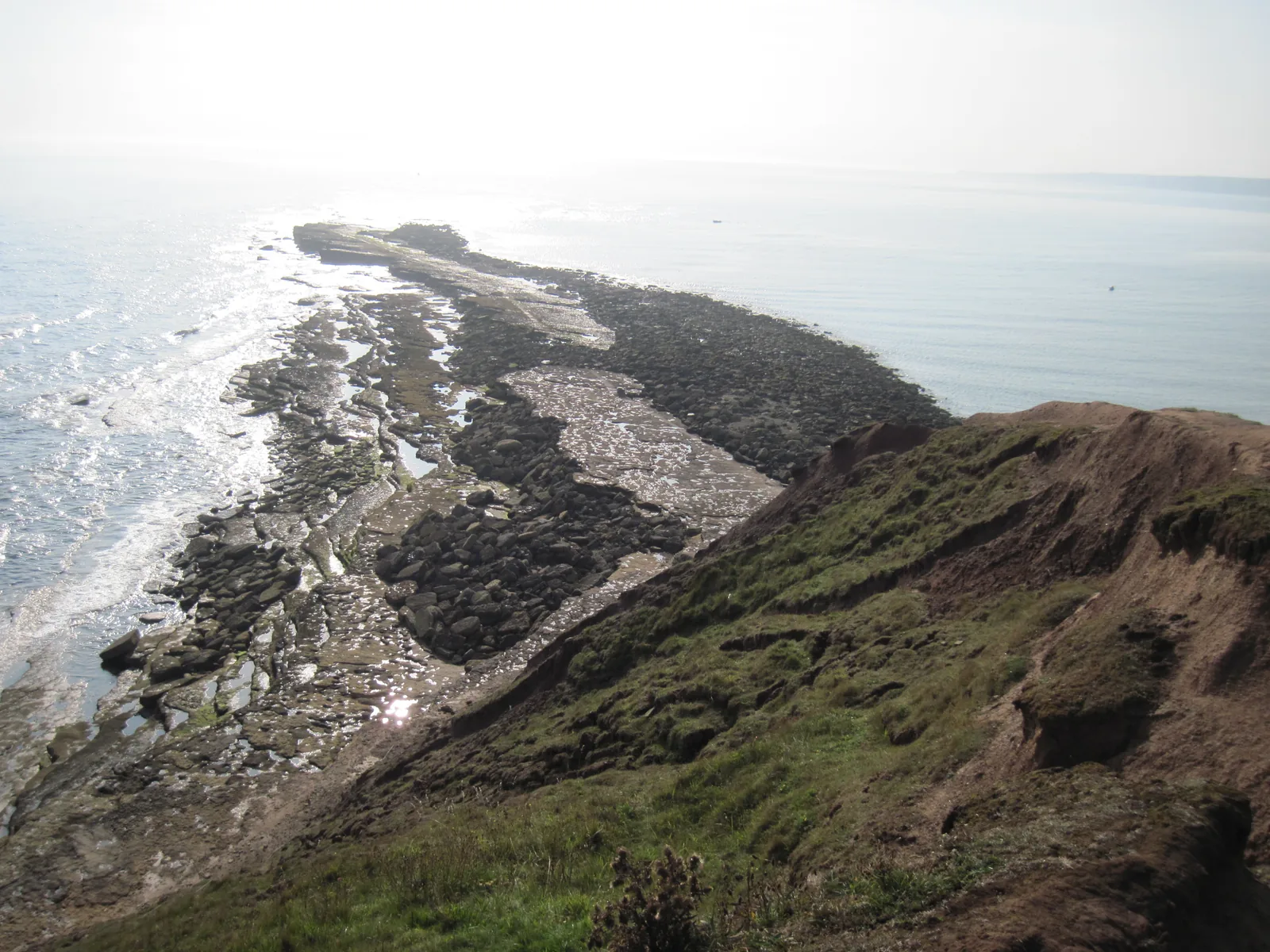
Filey Brigg is a narrow promontory of Jurassic rock extending approximately 1.5 kilometres into the North Sea from the north side of Filey Bay on the Yorkshire coast. Unlike the soft glacial cliffs that characterise much of the Yorkshire shoreline, the Brigg’s ancient limestone and sandstone resist erosion and create a rocky platform of channels, pools, and crevices that is exposed at low tide twice daily. A designated Site of Special Scientific Interest for both its geology and its biology, Filey Brigg offers some of the most accessible and species-rich rock pooling in northern England — and a shoreline that is simultaneously a productive fossil site, a nationally important birdwatching location, and home to grey seals, dolphins, and harbour porpoises. This guide covers the geology, the species you will find, and everything needed to plan a visit.
- Filey Brigg is a designated Site of Special Scientific Interest (SSSI) — for both its Jurassic geology and its biological significance
- The promontory extends approximately 1.5 km and is formed from Upper Jurassic Coralline Oolite and Calcareous Grit rocks, approximately 155–163 million years old
- Over 50 hermit crabs have been recorded in a single visit to the rock pools; species also include grey sea slugs, edible sea urchins, chitons, and beadlet anemones
- Leave the Brigg at least 2–3 hours before high tide — warning signs at the slipway advise this, and the tide comes in faster than expected
Filey Brigg’s Geology and What Makes Its Rock Pools Possible
How Filey Brigg formed — Jurassic rock on a glacial coast
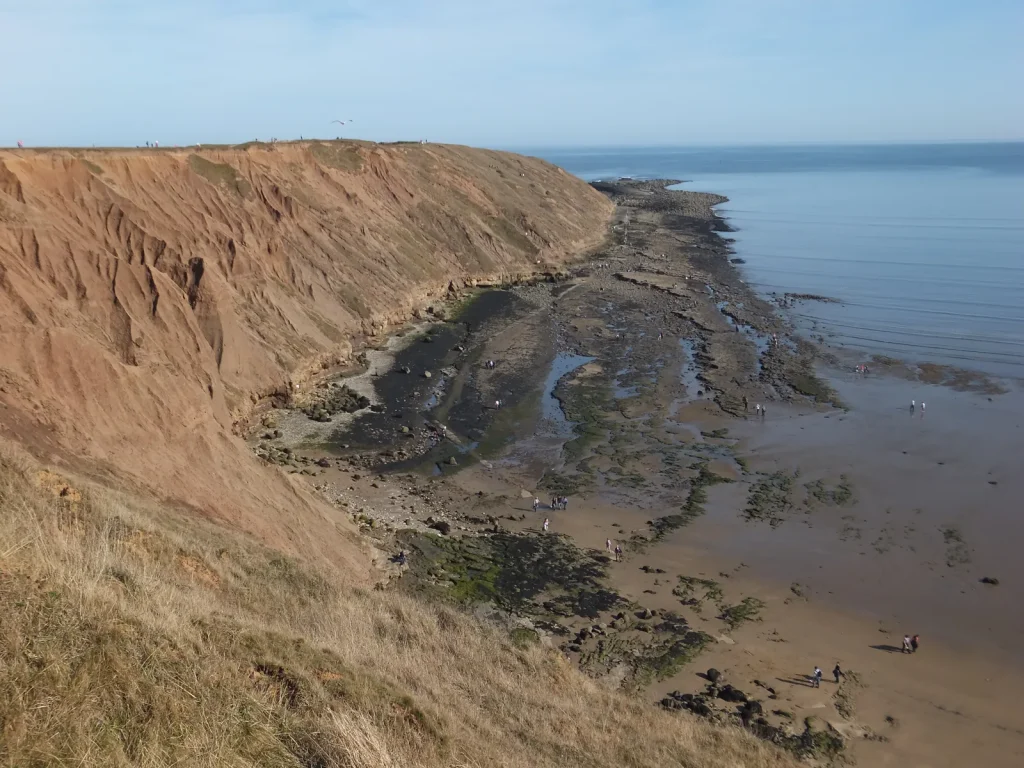
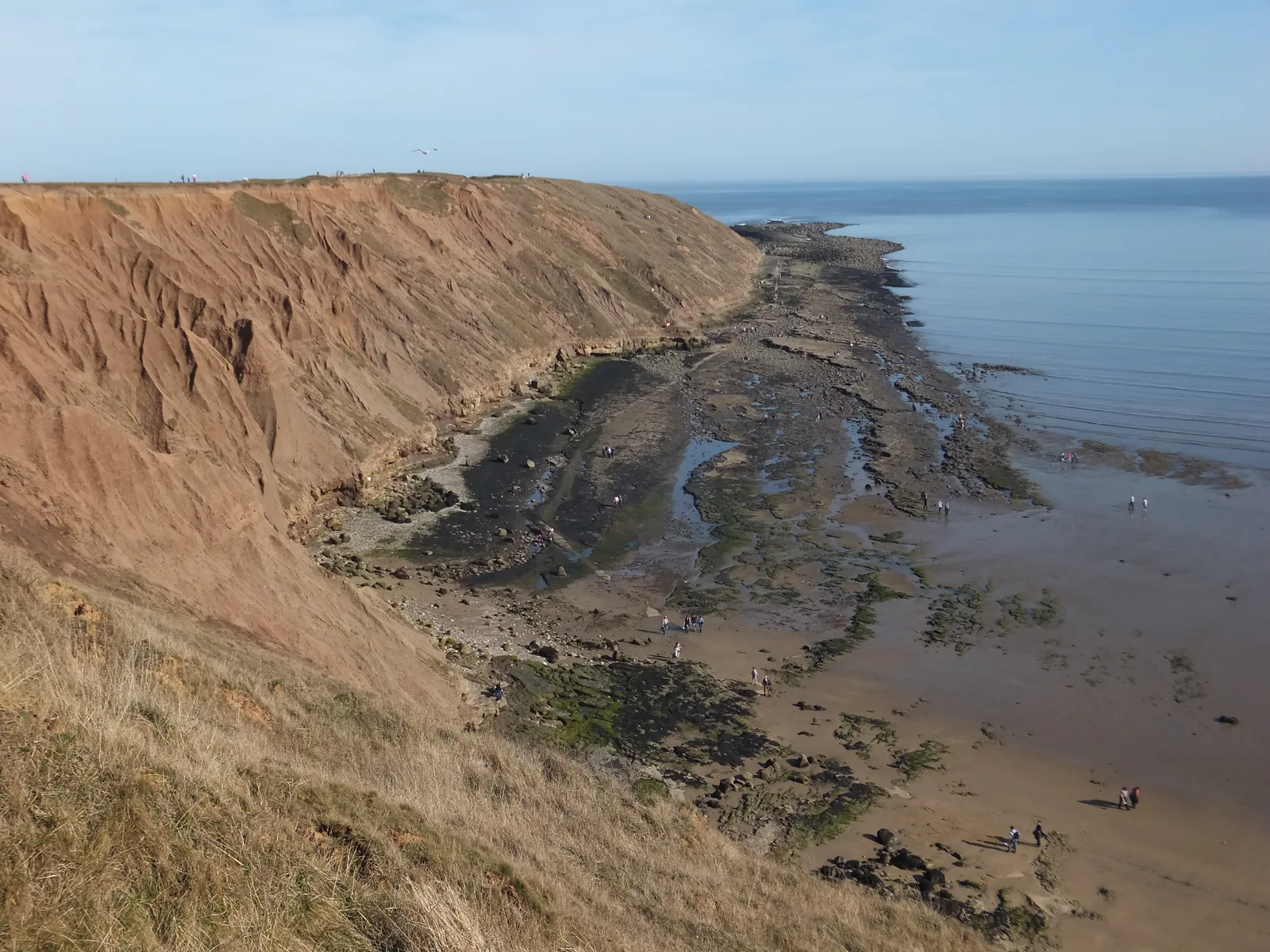
Most of the Yorkshire coast between Flamborough Head and Scarborough is formed from soft glacial till and boulder clay that erodes rapidly, giving flat sandy beaches and crumbling cliffs but no hard substrate for rock pools. Filey Brigg is a geological exception. The promontory is composed of Upper Jurassic Coralline Oolite Formation limestone — laid down approximately 155–163 million years ago during the Oxfordian stage of the Jurassic period — interbedded with Calcareous Grit. The cliffs are up to 20 metres high and the Brigg itself extends nearly 1.5 kilometres east–west into the sea, projecting beyond the softer clay of Filey Bay to either side. Its formation reflects a structural contrast: rock on the south side slid and eroded to create Filey Bay, while the harder northern rock remained and projected outward as the Brigg.
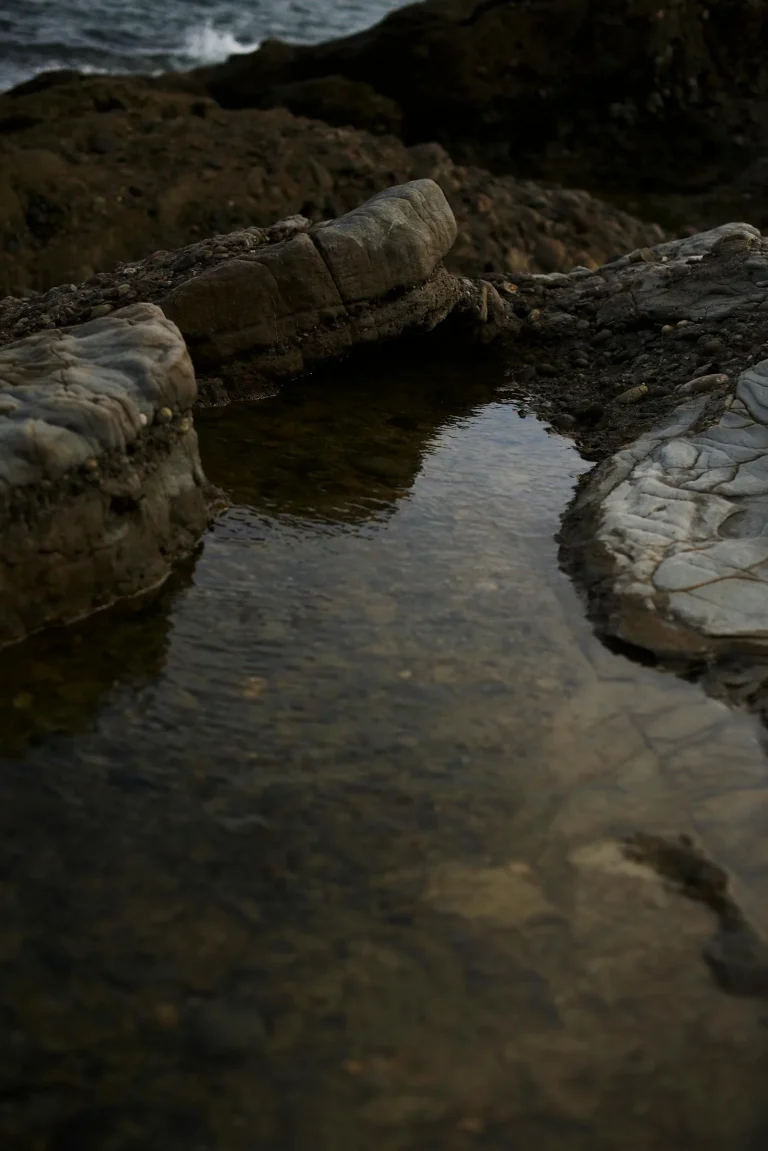
At low tide, this Jurassic platform is exposed as a series of rocky ledges, deep channels, overhangs, and pools — an intertidal landscape created by the differential erosion of limestone beds of varying hardness. The surface is pitted and textured, providing excellent footholds for encrusting organisms such as barnacles and mussels, while the deeper channels and shaded overhangs harbour anemones, fish, and crustaceans. The platform’s east–west orientation means that as the tide retreats, progressively lower and more sheltered pools are exposed, creating a gradient from exposed to sheltered habitats within a short walk.
Geological significance: Jurassic fossils at Filey Brigg
Filey Brigg is a classic site for Upper Jurassic fossils. The Coralline Oolite Formation and Lower Calcareous Grit Formation exposed here contain abundant marine invertebrate remains — ammonites including Cardioceras and Perisphinctes, belemnites, brachiopods, and bivalves including Nanogyra colonies and Gervillella valves. One of the most scientifically significant features of Filey Brigg’s geological record is its exceptional examples of Thalassinoides burrows — trace fossils produced by burrowing crustaceans in the Jurassic seafloor — which are preserved in limestone that has been karstified (dissolved and reprecipitated) by ancient groundwater activity. The beach pebbles at Filey also include glacial erratics transported from Scandinavia during the last ice age, providing evidence of the extent of Pleistocene glaciation across the North Sea basin.
The SSSI designation means that hammering bedrock at Filey Brigg is prohibited. Casual collection of loose fossils already eroded from the foreshore is generally tolerated, but disturbing in-situ rock is illegal. The best conditions for finding loose fossils are after storms and high spring tides when fresh material has been dislodged from the upper limestone beds.
Getting there, parking, and facilities
Filey Brigg is accessible from two main starting points. From Filey town centre, Coble Landing on the seafront provides direct beach access, with the Brigg reached by walking north along the beach at low tide or along the cliff path above. From the north, the Country Park car park at Church Cliff Drive (YO14 9ET) sits at the cliff top at the end of the Cleveland Way National Trail, with toilet facilities, a café, and ample space including overflow grass parking. The route from the Country Park down to the Brigg involves a steep descent but provides a shorter approach to the end of the promontory. Parking charges apply seasonally; parking is free in winter. The Brigg is accessible year-round, but the terrain is rough and slippery — the route to the very end requires light scrambling over rocks and is not suitable for those with limited mobility.
What You’ll Find in Filey Brigg’s Rock Pools
Crustaceans, molluscs, and echinoderms
Filey Brigg’s intertidal pools are exceptionally productive for rock pooling. Hermit crabs — common hermit crabs (Pagurus bernhardus) occupying empty dog whelk and periwinkle shells — are one of the most reliably found and most abundant species: more than 50 have been observed during a single visit to the pools. Shore crabs (Carcinus maenas) are common under rocks and in the weed-filled margins of deeper pools. The mollusc assemblage reflects the Brigg’s exposed but varied nature: common periwinkles (Littorina littorea), edible mussels (Mytilus edulis) in dense colonies on the most wave-washed surfaces, dog whelks, and limpets on the upper shore. Chitons — specifically grey chitons (Lepidochitona cinerea), distinctive armoured molluscs with segmented plate shells — have been recorded here, pressed flat against the rock surface and harder to spot than the more mobile species.
Perhaps the most surprising large invertebrate in Filey Brigg’s pools is the edible sea urchin (Echinus esculentus), typically found in deeper, more sheltered channels. Juvenile specimens are sometimes encountered — small, green-tinged, and covered in short pale spines. Brittle stars, which are echinoderms related to sea urchins, have also been recorded: small, fast-moving, with five slender arms radiating from a central disc, disappearing under rocks when disturbed.
Anemones, sea slugs, and fish
Beadlet anemones (Actinia equina) are common throughout the pools, appearing as blobs of dark red or occasionally green contractile jelly when the tide is out, and expanding into a flower-like form with up to 96 tentacles when submerged. The grey sea slug (Aeolidia papillosa) is a more unusual find that has been documented at Filey Brigg — a large, pale nudibranch (shell-less mollusc) covered in cerata (hair-like projections) that it uses to store the stinging cells of the anemones it preys upon. Sea hares and oaten pipe hydroids have also been recorded in the pools. Among the fish, baby sea scorpions have been found — these are juvenile Taurulus bubalis, small and well-camouflaged ambush predators that sit motionless on the pool floor and match the substrate closely in colour and texture.
Beyond the pools, the rocky platform and adjacent mudflats support an internationally significant assemblage of wading birds: purple sandpipers visit Filey Brigg in nationally significant numbers during winter, joined by oystercatchers, turnstones, redshanks, dunlin, and knot. Offshore, grey seals regularly haul out on the lower rocks, and harbour porpoises and bottlenose dolphins are visible from the end of the Brigg. Red-throated and great northern divers winter in the bay.
Planning Your Visit to Filey Brigg Rock Pools
Tides and the best conditions
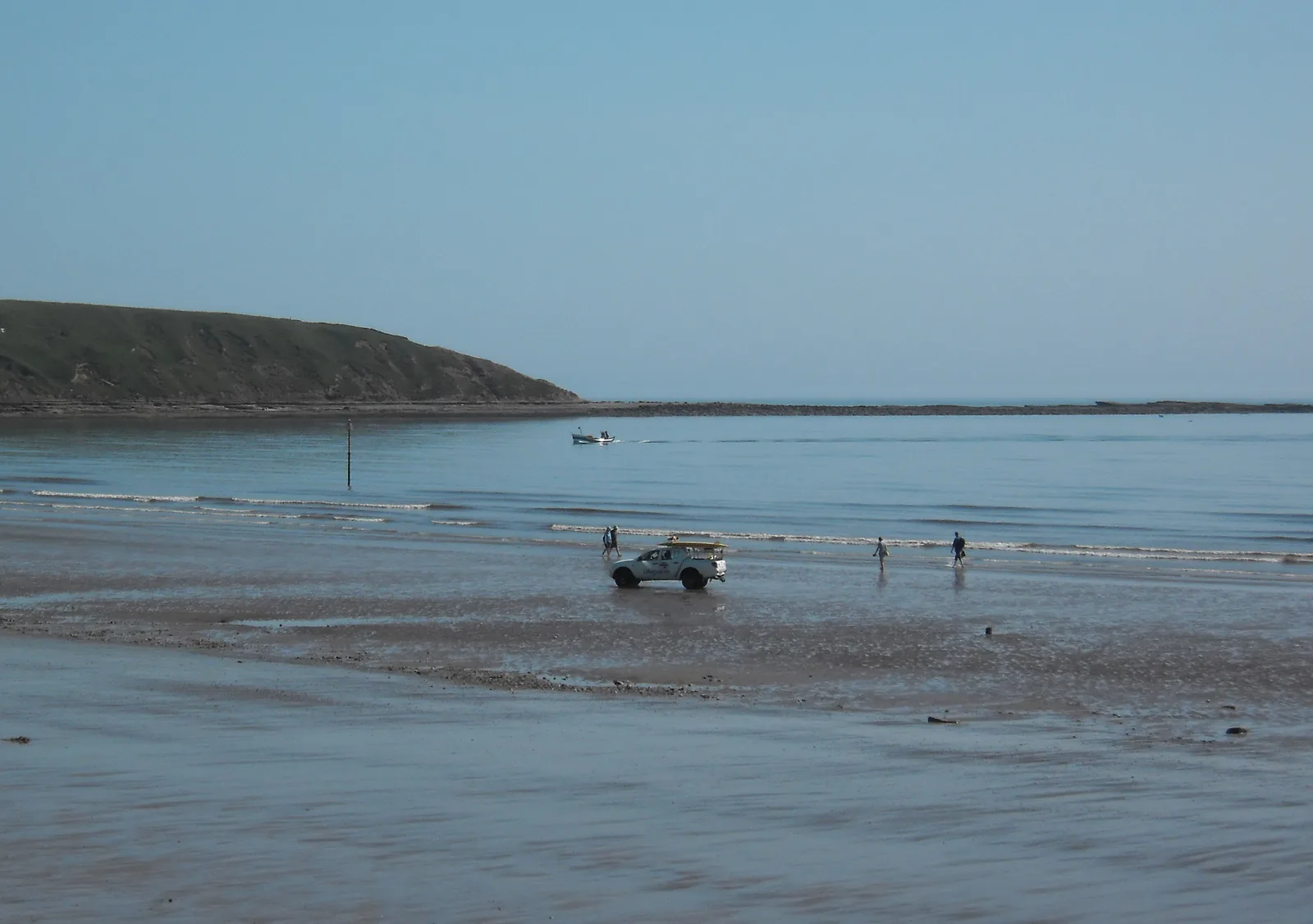
The state of the tide determines everything at Filey Brigg. The rocky platform is submerged at high water and exposed for several hours around low tide. The best rock pooling conditions are on a receding tide — arriving at the beach on the ebb and moving out onto the Brigg as the water retreats. Heading out two to three hours after high water gives the platform time to drain and exposes the deeper, more productive pools further along the promontory. Warning signs at the Coble Landing slipway advise leaving the Brigg at least two to three hours before high tide returns — the sea comes in faster than it appears to, particularly on spring tides when the tidal range is greatest. Families should be cautious and keep a constant eye on the tide direction; anyone who has walked far out along the Brigg should begin the return journey with plenty of time before the tide turns.
Scarborough tide times apply to Filey Brigg and are published on BBC Weather’s tide table for Scarborough. Spring tides (around new and full moon) give the greatest tidal range and expose the most extensive sections of the Brigg. Summer visits (June–September) offer the best water temperatures and species diversity in the pools; winter visits are outstanding for seabirds and waders but rock pool species are less active.
Safety and conservation code
Filey Brigg’s limestone surface is uneven, covered in coralline algae and wet seaweed, and can be extremely slippery. Non-slip footwear — Wellington boots, old trainers, or dedicated water shoes — is essential. Smooth-soled shoes and flip-flops are unsuitable. The scramble to the very end of the Brigg involves climbing over boulders and is not suitable for young children without close adult support, or for anyone with limited mobility. Mobile phone coverage on the Brigg is generally good from the cliff side but can be patchy at the seaward end. The RNLI operates from Filey; if in doubt about conditions, the beach team can advise.
As with all SSSI-designated shore sites, the conservation code applies strictly. Turning over rocks or boulders to look for animals is acceptable — provided every stone is replaced immediately and carefully in its original position. Animals that live on undersides of rocks will die quickly if left exposed to sun and air. Living creatures should be observed and returned immediately to where they were found. Collecting living marine organisms from the SSSI is illegal. Hammering or removing rock samples is prohibited. The site’s dual SSSI designation for both geology and biology means that both the fossil record and the intertidal ecology depend on visitors treating the environment with care.
For other notable coastal wildlife sites in Yorkshire and the North East, our guide to outdoor swimming pools and lidos in the UK covers swimming destinations across the region. For guidance on natural water environments and biological habitats, see our natural swimming pools guide.
Frequently Asked Questions
What makes Filey Brigg rock pools special?
Filey Brigg is a 1.5 km promontory of Upper Jurassic limestone extending into the North Sea — one of very few hard-rock intertidal platforms on this section of the Yorkshire coast, where most of the shoreline is soft glacial till. Its pools are sheltered, varied, and rich in species including hermit crabs, grey sea slugs, edible sea urchins, chitons, beadlet anemones, and sea scorpion fish. The site is a designated SSSI for both its biology and its Jurassic geology.
When is the best time to visit Filey Brigg rock pools?
The best time is two to three hours after high water on a receding spring tide, when the limestone platform is fully exposed. Summer (June–September) offers the best water temperatures and the most active marine life. Winter visits are outstanding for wading birds (purple sandpipers, dunlin, knot, turnstones) and seabirds. Always check Scarborough tide times before visiting — the tide returns faster than expected and warning signs at the slipway advise a 2–3 hour safety margin before high water.
Can you find fossils at Filey Brigg?
Yes — the Upper Jurassic Coralline Oolite and Calcareous Grit rocks exposed at Filey Brigg contain ammonites (including Cardioceras and Perisphinctes), belemnites, brachiopods, and bivalves, as well as exceptional Thalassinoides trace fossils. The beach pebbles also include glacial erratics from Scandinavia. Filey Brigg is a SSSI, so hammering bedrock is prohibited — collecting loose fossil material from the foreshore is generally tolerated, but removing material from in-situ rock is illegal.
How do you get to Filey Brigg?
The two main access points are Coble Landing on Filey seafront (walk north along the beach at low tide) and the Country Park car park at Church Cliff Drive, YO14 9ET (cliff-top access at the end of the Cleveland Way National Trail, with toilets and a café). The Country Park route involves a steep descent to the Brigg. Parking is free in winter; seasonal charges apply from spring to autumn.
Is Filey Brigg suitable for families with young children?
Yes for rock pooling on the lower reaches of the Brigg, which are accessible and not too rough. The very end of the Brigg requires scrambling over boulders and is better suited to older children and adults. Non-slip footwear is essential for everyone. Keep a careful eye on the tide — the sea returns quickly, and children should not be allowed on the Brigg unsupervised. The Filey town beach to the south of the Brigg is wide, sandy, and safe for young families.