The Luss Faerie Pools are a series of natural pools formed along the Luss Water burn in the hills above Luss village on the western shore of Loch Lomond — a distinct wild swimming destination accessible via the Quarry Walk, a 45-minute loop trail through forest that is separate from the better-known Loch Lomond Faerie Trail children’s attraction that starts in the village itself. Luss also has a beach directly on Loch Lomond at the village pier, which is a popular wild swimming spot in its own right. This guide covers both the Faerie Pools and the Loch Lomond beach swimming at Luss, what to expect from each, and everything you need to know before visiting.
- Luss Faerie Pools are natural wild swimming pools along the Luss Water burn, accessed via the Quarry Walk — a 45-minute loop trail starting from Luss village that passes through forest and the site of historic slate quarrying operations
- Luss Beach on Loch Lomond is at the village pier — a pebbly lochside beach that is the most accessible swimming spot at Luss, popular in summer though the water is cold year-round
- The Loch Lomond Faerie Trail is a separate children’s interactive trail starting at the south car park — it is not the same as the Faerie Pools, which are a wild swimming spot accessible only by foot
- Luss is approximately 32 miles north of Glasgow on the A82; the 250-car south car park (pay and display) fills quickly on summer weekends — arrive before 10am to secure a space
The Luss Faerie Pools — Wild Swimming on the Quarry Walk
What the Faerie Pools are and where to find them
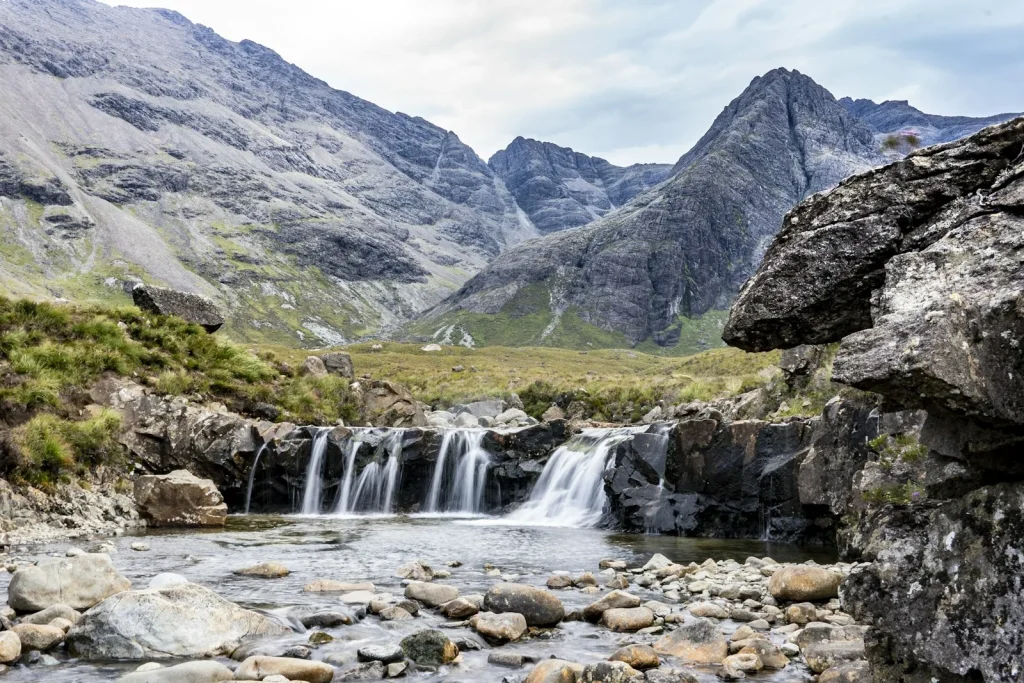
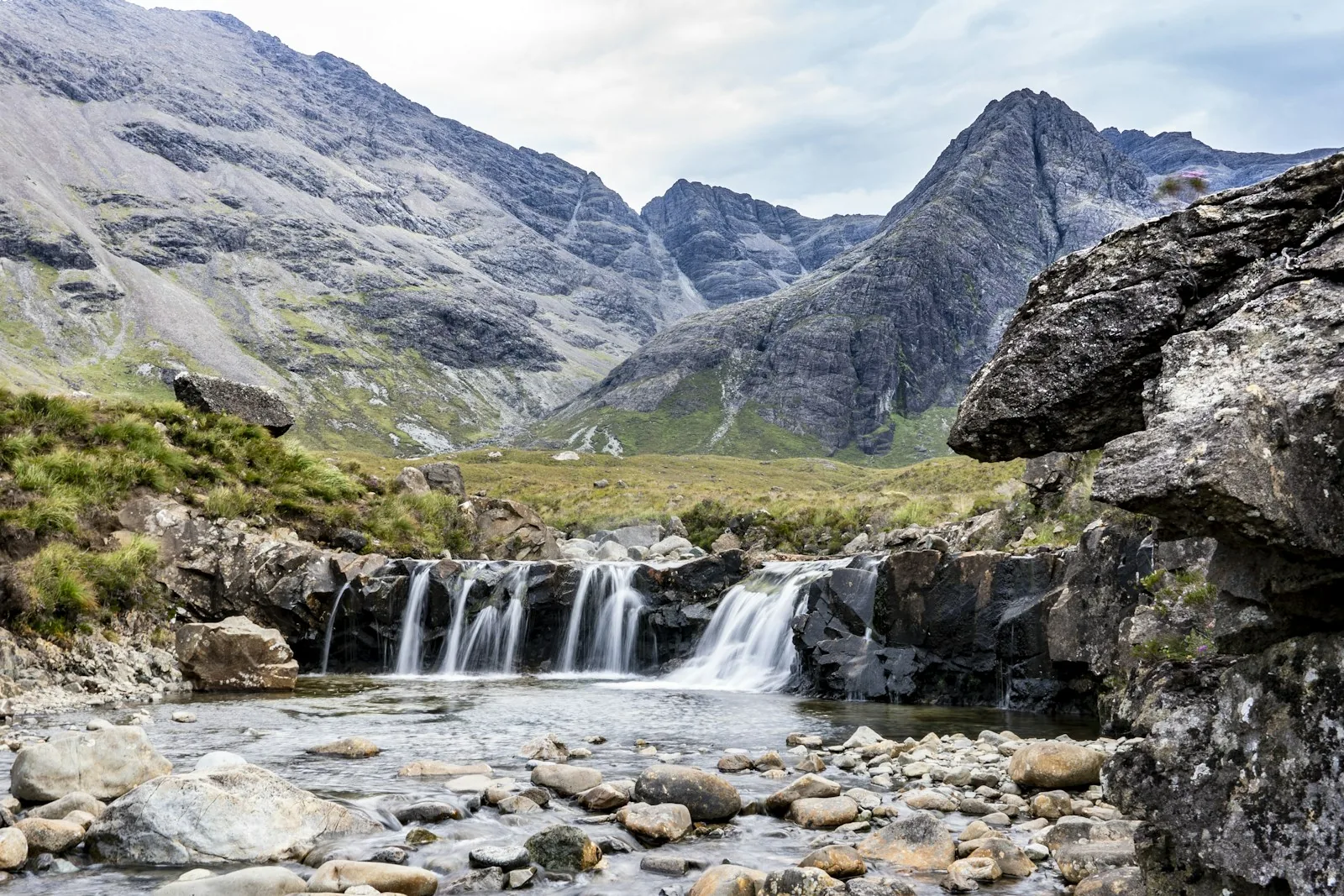
The Luss Faerie Pools are natural pools formed along the Luss Water — the burn that runs down from the hills through Glen Luss before joining Loch Lomond at the village. They are reached via the Quarry Walk, one of four shorter walking routes that start from the visitor centre by the car park in Luss village. The Quarry Walk is a loop of approximately 45 minutes that winds through mixed woodland, passing the remnants of the slate quarrying operations that defined Luss’s economic life through the nineteenth and early twentieth centuries — the village’s characteristic slate-roofed cottages are a direct product of this industry. The path leads to the Faerie Pools, which have developed a quiet reputation among wild swimmers as one of the more sheltered and characterful natural swimming spots in the Loch Lomond and The Trossachs National Park.
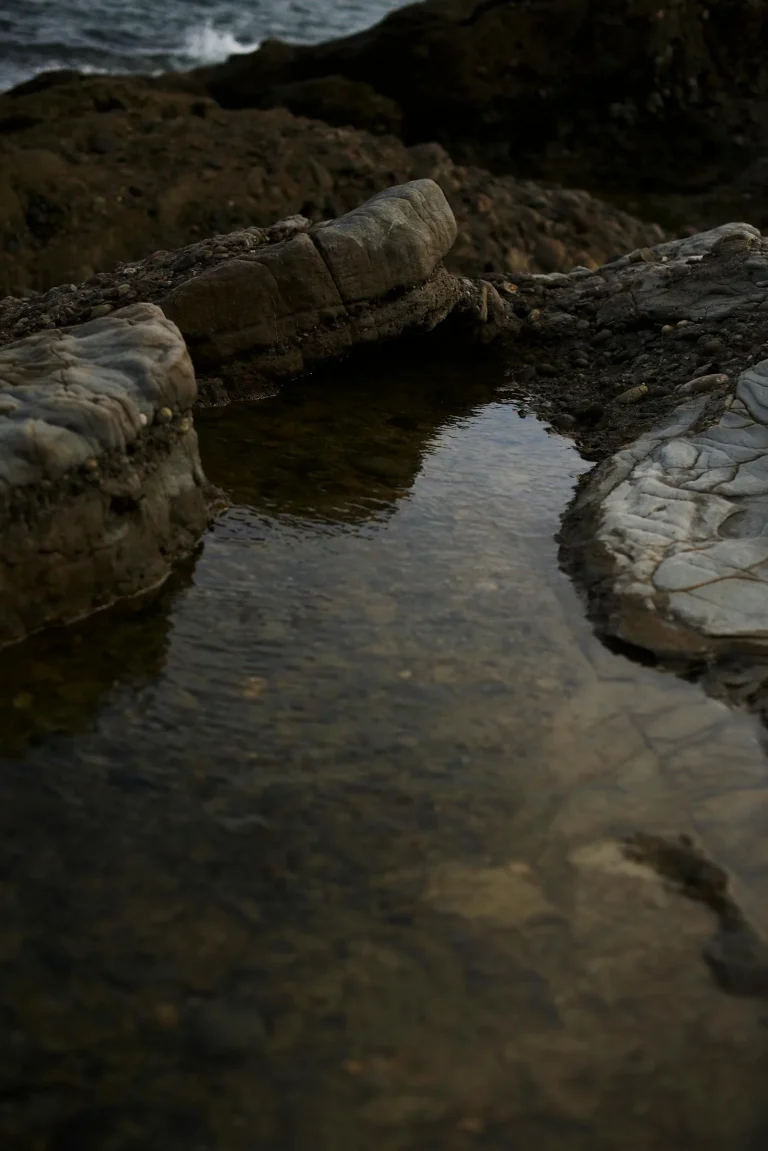
The pools sit in a forest setting above the village, with the burn forming a series of small pools between rocks and tree roots — the kind of enclosed, sheltered environment that earns the label “faerie” in Scottish landscape tradition. The approach is not wheelchair accessible due to uneven terrain and steps along the trail; sturdy footwear is essential, and the path can be muddy after rain in any season. Compared with Luss Beach on Loch Lomond itself, the Faerie Pools offer a quieter, more secluded experience away from the summer crowds that descend on the village — the trade-off is the 45-minute walk to reach them and the nature of the pools themselves, which are smaller and shallower than open-loch swimming. For those whose primary goal is a longer open-water swim, the loch beach at the pier remains the more practical option; the Faerie Pools are better suited to those who want a wild swimming experience in a natural gorge setting as part of a forest walk.
Swimming conditions, water temperature, and what to bring
The Luss Water pools are fed by hill runoff and the burn from Glen Luss, making them cold throughout the year and particularly cold outside the summer months. VisitScotland’s wild swimming guidance covers the general conditions at Loch Lomond swimming spots: even in July and August, when air temperatures in the area reach their peak, water temperatures in Scottish burns and lochs rarely exceed 15–16°C and are frequently in the 10–13°C range. The Faerie Pools, fed by burn water from the hills, are likely to be at the cooler end of this range. A wetsuit extends comfortable swimming time significantly and reduces the risk of cold water shock — the RNLI recommends that even confident open-water swimmers always enter cold water gradually rather than diving straight in. Acclimatise by immersing your wrists and splashing your face before full submersion, and never swim alone.
What to bring for a Faerie Pools visit: waterproof walking shoes or boots (the path is uneven and can be muddy), a dry towel and dry clothes in a waterproof bag, a wetsuit if you plan to swim for more than a few minutes, and midge repellent. Scottish midges are a genuine practical consideration in the Loch Lomond area from May to September, particularly in still, humid conditions near wooded burn sides — exactly the environment of the Faerie Pools. A head net and repellent containing DEET or Saltidin are the most reliable protection. The best midge conditions are windy days and the middle of the day; early mornings and evenings near wooded water are typically the worst times. The Quarry Walk itself starts from the visitor centre at the Luss car park — signage in the village directs walkers to the start point.
Luss Beach and Loch Lomond Wild Swimming
Swimming at Luss Beach — the lochside option
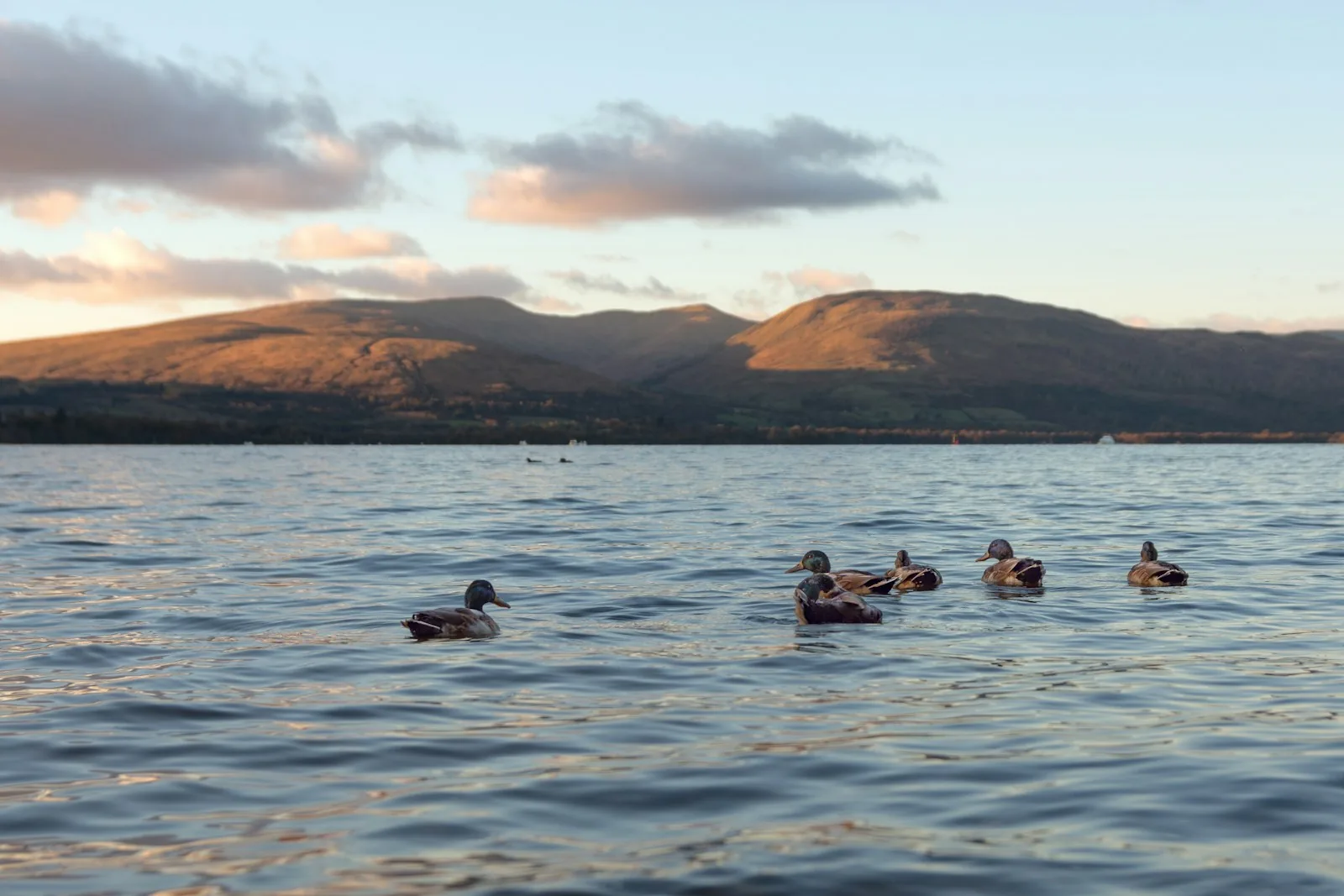
Luss Beach at the village pier is the most immediately accessible wild swimming spot at Luss and the one most visited by day-trippers arriving from Glasgow. The beach is a pebbly and mixed-sand stretch of Loch Lomond shoreline directly beside the pier, with the open loch spreading out in front and views across to Ben Lomond on the eastern shore. It is popular in summer for paddling, sunbathing, and wild swimming, and on warm weekends the beach and the surrounding village green become significantly crowded. Cameron House Resort’s Luss guide notes that even on the hottest days, Loch Lomond’s water temperature is icy cold — the loch is deep (reaching 190 metres at its maximum depth) and fed by multiple tributaries from the surrounding hills, which keeps water temperatures low even at peak summer. Loch Lomond water is generally clean and of good quality; the national park authority monitors water quality across the loch, and Luss is consistently among the cleaner stretches of the western shore.
Organised wild swimming is available on Sunday mornings through Inchbagger’s morning swims from Luss Beach — described as a social, supportive, no-pressure experience that caters for all levels including first-time open-water swimmers. These group swims provide safety in numbers and an informal introduction to cold-water swimming in a structured format, which is considerably safer than solo first attempts. Beyond swimming, Luss Pier is a departure point for boat cruises and water taxis operated by Sweeney’s Cruises and Cruise Loch Lomond, with routes to Loch Lomond’s islands including Inchcailloch; kayak, canoe, and paddleboard hire is also available in the village during summer, providing lower-intensity ways to experience the loch for those not ready for cold-water immersion.
The Loch Lomond Faerie Trail — not the same as the Faerie Pools
A point of confusion worth addressing directly: the Loch Lomond Faerie Trail and the Luss Faerie Pools are two different things, and visitors searching for one sometimes arrive expecting the other. The Loch Lomond Faerie Trail is a family-friendly children’s activity that starts at the silver Airstream caravan in the south car park — participants purchase a clue book for a few pounds, select a wristband, and follow a mile-long trail through the village encountering hidden faerie doors, wooden sculptures, spell books, and themed puzzles. The Faerie Trail is described by local tourism guides as the number one attraction for young children visiting Loch Lomond and The Trossachs National Park — it is an imaginative village walk designed for families with children, not a swimming destination. The trail does not lead to the Faerie Pools; the two attractions are located in different parts of Luss and serve different purposes entirely.
The Luss Faerie Pools, by contrast, are a natural feature of the Luss Water burn and are reached via the Quarry Walk starting from the visitor centre. They are not a ticketed attraction and have no infrastructure — no facilities, no lifeguards, and no organised entry. This distinction matters for planning: families visiting with young children who want to do the Faerie Trail as an activity and families of confident swimmers who want to reach the natural Faerie Pools for wild swimming are planning two different days out. The village is compact enough that both can be combined, but it is worth understanding the separate characters of each attraction before arriving.
Getting to Luss and What to Know Before You Visit
How to reach Luss and parking
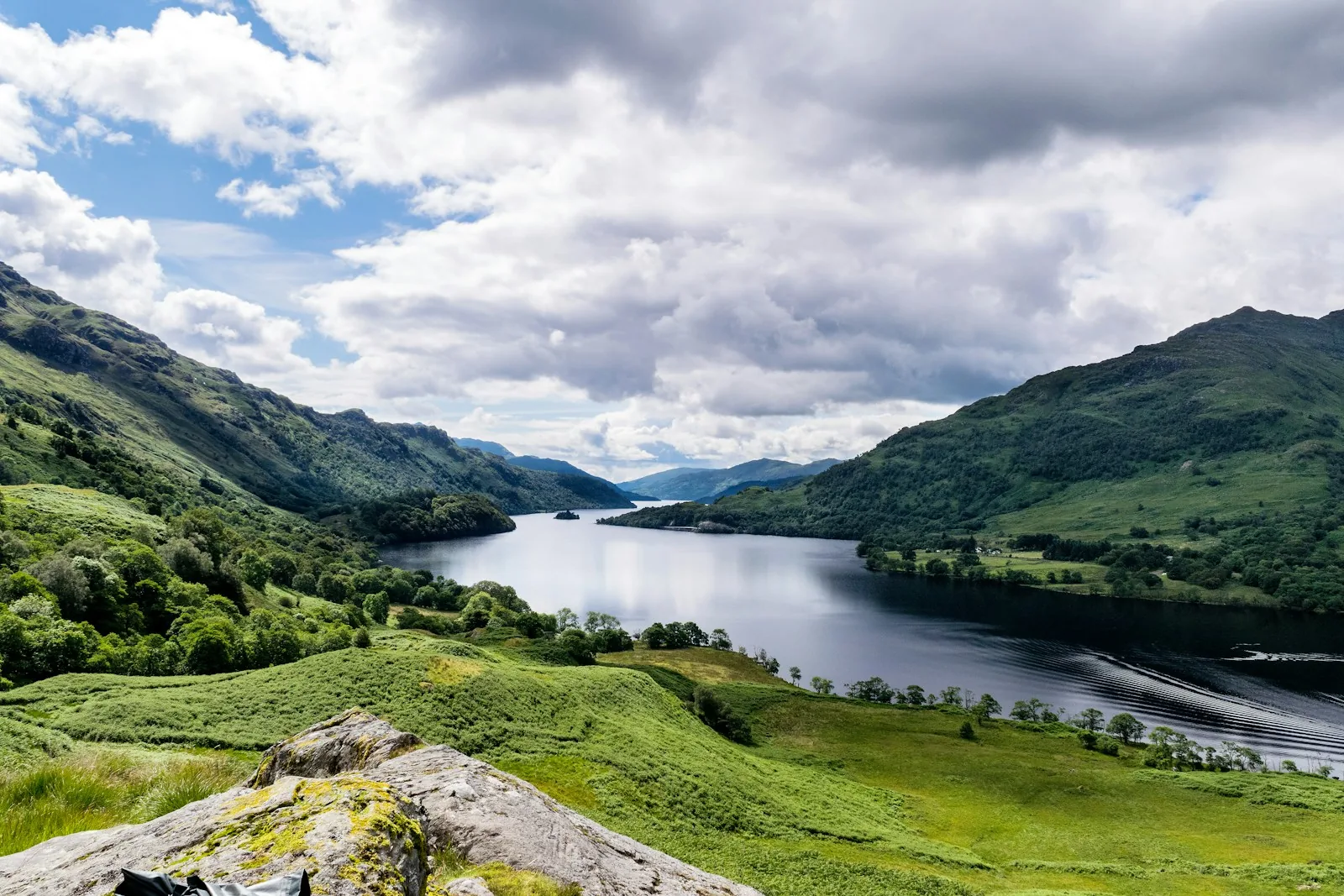
Luss sits on the western shore of Loch Lomond on the A82, approximately 32 miles north of Glasgow city centre — under an hour’s drive in normal traffic conditions, and around 1.5 to 2 hours from Edinburgh via the M9 and A84. The village is one of the most visited in Scotland and its accessibility from Glasgow means it becomes extremely busy on summer weekends and bank holidays. The south car park, which opened in 2021 and holds approximately 250 cars, is pay-and-display and the primary parking option for visitors; it is a 5–10 minute walk from the pier and beach. The car park fills very quickly on summer Saturdays and Sundays — arriving before 10am is strongly advised if visiting on a weekend in July or August. Overflow parking is sometimes available along the A82 road verge north of the village, but spaces are limited. The Loch Lomond and The Trossachs National Park manages visitor access across the area and the park’s website carries current information on facilities and access arrangements.
Public transport to Luss is feasible though less convenient than driving. Several bus services running north from Glasgow on the A82 towards Oban and Fort William pass through Luss — the 976 and 977 Citylink services stop at or near the village. Journey time from Buchanan Bus Station in Glasgow is approximately 45 minutes to an hour. There is no railway station at Luss; the nearest stations are Balloch (approximately 6 miles south, at the southern end of Loch Lomond) and Alexandria, neither of which is within walking distance. Arriving by water bus is possible: Sweeney’s Cruises and Cruise Loch Lomond both operate waterbus services calling at Luss Pier from Balloch during the summer season, which provides a scenic alternative approach to the village from the train-accessible southern end of the loch. The West Loch Lomond Cycle Path also passes through Luss for those travelling by bicycle.
Village facilities and what to do beyond swimming
Luss village is compact but well-provisioned for day visitors. The Luss General Store is the main retail and refreshment option, offering coffee, ice cream, and artisan Scottish produce alongside gifts and souvenirs; it is often busy during peak season. The Loch Lomond Arms Hotel provides pub food and accommodation at the centre of the village, and the Coach House Coffee Shop is frequently recommended for post-swim warming drinks. The village green includes a children’s play area, and Luss Parish Church — which dates to the nineteenth century but is built on much older foundations — is worth visiting for its Viking hogback stone, a carved grave marker estimated to be around 900 years old. For those interested in the broader natural environment around Luss, the guide to outdoor swimming pools and lidos across the UK covers managed open-water swimming venues with lifeguards and facilities — useful context for those who want supervised alternatives to unsupervised wild swimming. Our guide to natural swimming pools covers biological filtration pool systems and freshwater alternatives to chlorinated facilities for those interested in chemical-free swimming more broadly.
The road north along the A82 from Luss opens up to wider Loch Lomond scenery, with Firkin Point approximately 3 miles further north offering another lochside access point with a car park, toilet facilities, and a longer stretch of shoreline that is typically less crowded than the village beach at Luss. For those willing to drive a further 20 minutes north along the A82 to Inverarnan, the Falls of Falloch — a substantial waterfall 3km north of Inverarnan — offers a different kind of natural swimming experience in a powerful pool beneath a waterfall, surrounded by crags and woodland. The full western shore of Loch Lomond is one of the most accessible stretches of wild swimming in Scotland for visitors from Glasgow and central Scotland, and Luss is the most visible entry point to this landscape for most day visitors.
Frequently Asked Questions
What are the Luss Fairy Pools?
The Luss Faerie Pools (sometimes written as Fairy Pools) are natural pools formed along the Luss Water burn in the hills above Luss village on the western shore of Loch Lomond. They are a wild swimming spot — not a formal facility — reached via the Quarry Walk, a 45-minute loop trail through forest starting from the visitor centre near the Luss car park. The pools pass through the site of Luss’s historic slate quarrying operations and offer a sheltered, secluded wild swimming experience. They are entirely separate from the Loch Lomond Faerie Trail, which is a children’s interactive village walk starting at the south car park.
How do I get to the Luss Faerie Pools?
The Luss Faerie Pools are reached via the Quarry Walk, which starts from the visitor centre at the car park in Luss village. The walk is a loop of approximately 45 minutes through forest; the path is uneven with steps in places and is not wheelchair accessible. Good walking shoes or boots are recommended, and the route can be muddy after rain. The Quarry Walk is one of four shorter paths that start from the visitor centre and is signposted within the village.
Can you swim at Luss on Loch Lomond?
Yes — Luss Beach at the village pier is a popular wild swimming spot on Loch Lomond. The beach is pebbly and loch-facing, with views across to Ben Lomond. Swimming is possible throughout the year, though the water is cold even in summer (typically 10–16°C). Organised Sunday morning swims run from Luss Beach through Inchbagger’s, providing a group introduction to open-water swimming. There are no lifeguards at Luss Beach; follow RNLI open water safety guidance, enter the water gradually, and always swim with others.
Is the Loch Lomond Faerie Trail the same as the Faerie Pools?
No — these are two distinct attractions in Luss. The Loch Lomond Faerie Trail is a ticketed family activity: a mile-long village walk featuring hidden faerie doors, wooden sculptures, spell books, and puzzles, starting at the silver Airstream caravan in the south car park (clue books available for a few pounds). It is designed for young children and does not lead to the wild swimming pools. The Luss Faerie Pools are a natural feature of the Luss Water burn, reached by the Quarry Walk starting from the visitor centre — a 45-minute forest trail leading to natural wild swimming pools. The two are in different parts of the village and serve completely different purposes.
How far is Luss from Glasgow?
Luss is approximately 32 miles north of Glasgow city centre on the A82, a journey of under an hour by car in normal traffic. By public transport, Citylink bus services (976/977) running north from Glasgow’s Buchanan Bus Station on the A82 route call at or near Luss, with a journey time of approximately 45 minutes to an hour. Alternatively, a train from Glasgow to Balloch (approximately 6 miles south of Luss) followed by the Cruise Loch Lomond or Sweeney’s Cruises water bus to Luss Pier is a scenic option during the summer season.