Adding a deck to an above ground pool transforms it from a standalone garden feature into an integrated outdoor living space — providing safe entry and exit, a dry seating and lounging area, and an appearance that can make a steel-panelled above ground pool look surprisingly close to an inground installation. This guide covers the main deck styles, the best materials for UK pool environments, what planning permission and building regulations require, and what the costs look like for different approaches.
- The most popular deck styles are platform/step decks (entry access only), partial surround decks (one to two sides), and full wraparound decks (entire perimeter) — each at a different cost and complexity level
- Composite decking is the preferred material for pool environments — it offers low slip resistance, low water absorption, and requires no regular oiling or staining; timber becomes slippery when wet and demands significantly more maintenance
- In England, a pool deck under 30cm above ground level that covers less than 50% of the garden is generally permitted development — no planning permission required; elevated decks or those in conservation areas require formal application
- Always build the deck after the pool is installed and positioned — above ground pool dimensions vary between manufacturers and trying to fit a pool to an existing deck structure rarely works
Deck Styles for Above Ground Pools — From Platform Entry to Full Wraparound
Platform and partial surround decks
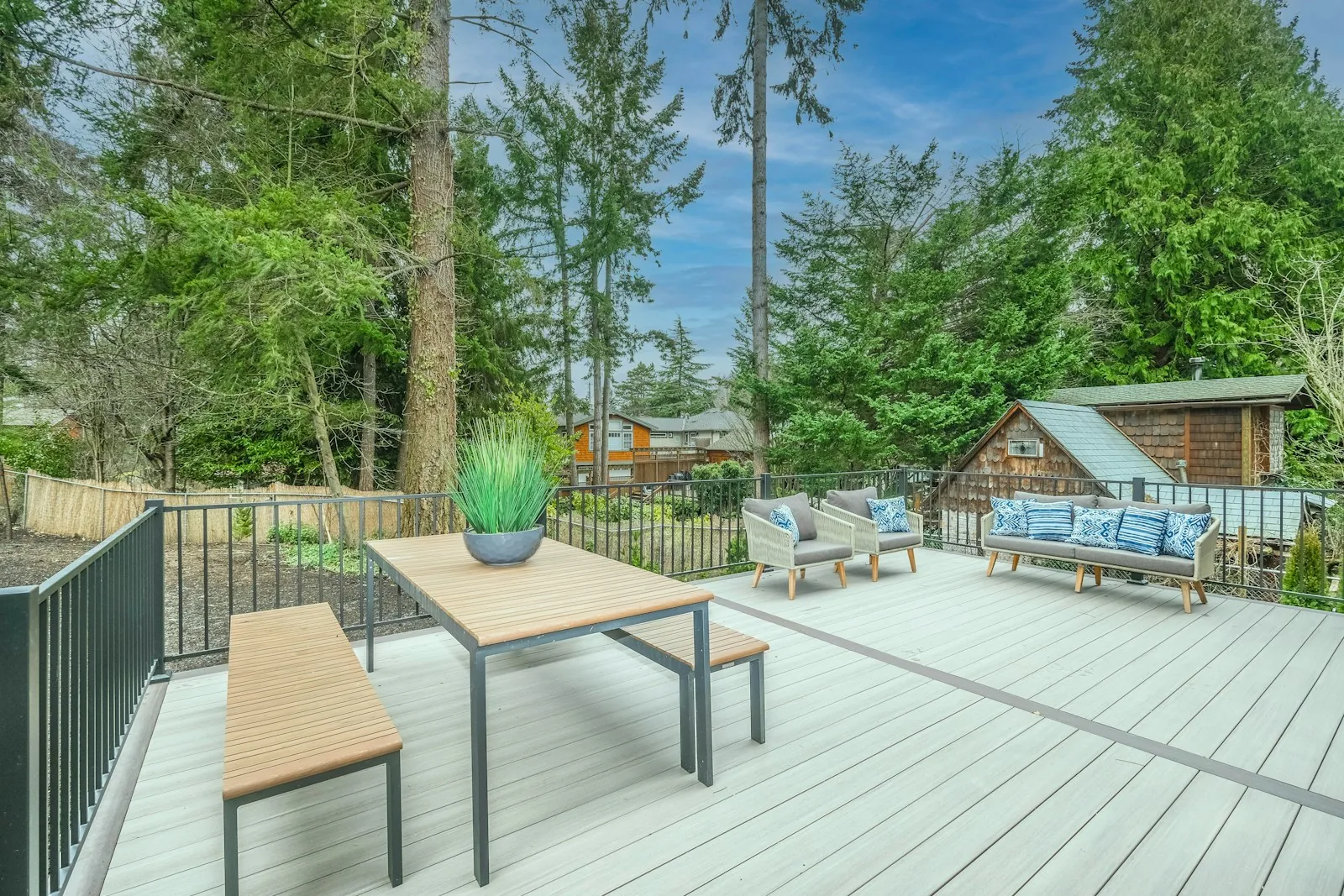
The simplest above ground pool deck configuration is a raised entry platform — a small elevated deck section positioned on one side of the pool that raises the swimmer to pool rim height and provides a few steps up and a ladder or step into the water. Platform decks are the most affordable approach and suit smaller gardens or pools where budget is a priority. They solve the primary practical problem of above ground pool access — standard above ground pool walls range from 120cm to 137cm (48–54 inches) in height, making a flat-ground ladder the only alternative entry, which many swimmers find awkward — but leave the pool sides exposed. A platform deck can be extended over time into a larger partial or full surround as budget allows, making it a practical starting point for phased garden projects.
Partial surround decks extend decking along one or two sides of the pool, creating a walkway and seating area beyond the entry point. This design provides more usable outdoor living space alongside the pool — enough for a table and chairs or sun loungers — while keeping materials costs and construction complexity below those of a full wraparound. Many partial surround designs incorporate a step or change of level, creating a tiered appearance where a lower main deck area flows up to a raised pool-level walkway. Cladco’s above ground pool deck guide notes that multi-level designs combining a lower relaxation area with a raised entry platform create visual interest while integrating safety features naturally — the level change between deck and pool rim is visible and intuitive for swimmers entering and exiting the water.
Wraparound and semi-inground decks
A full wraparound deck circles the entire perimeter of the above ground pool, providing access at any point and concealing the pool’s side panels behind the deck structure. Trex’s planning guide for above ground pool decks notes that a wraparound deck can create the illusion that the pool is built in — by hiding the steel or resin wall panels behind decking framing that rises to pool-rim height, the installation can closely resemble a raised inground design from the outside. This is the most expensive configuration but also the most complete: it maximises usable deck space, provides the most polished appearance, and is particularly suited to oval or round pools where entry from any side is desirable. A wraparound deck for a typical 4.6×9.1m (15×30ft) oval pool might use 30–40 square metres of decking material plus structural framing, making material selection a significant cost decision.
Semi-inground pool installations take a different approach: the pool is partially excavated into the ground — typically to half the pool’s depth — with decking built at ground level on the higher side and at pool-rim height on the slope side, often incorporating multi-level terracing that steps down with the landscape. This technique is common on sloping gardens where a fully above-ground installation would look awkward and where a full inground pool is too expensive. The decking element of a semi-inground installation is built as part of the overall landscape design rather than as an add-on, and the results can be visually striking — the pool appears built into the hillside rather than sitting on top of it. UK companies including Happy Hideouts cover the range of above ground pool ideas suitable for British gardens, including semi-inground and decked configurations adapted for the UK climate.
Decking Materials: Composite, Timber, and PVC Compared
Composite decking — the recommended choice for pool environments
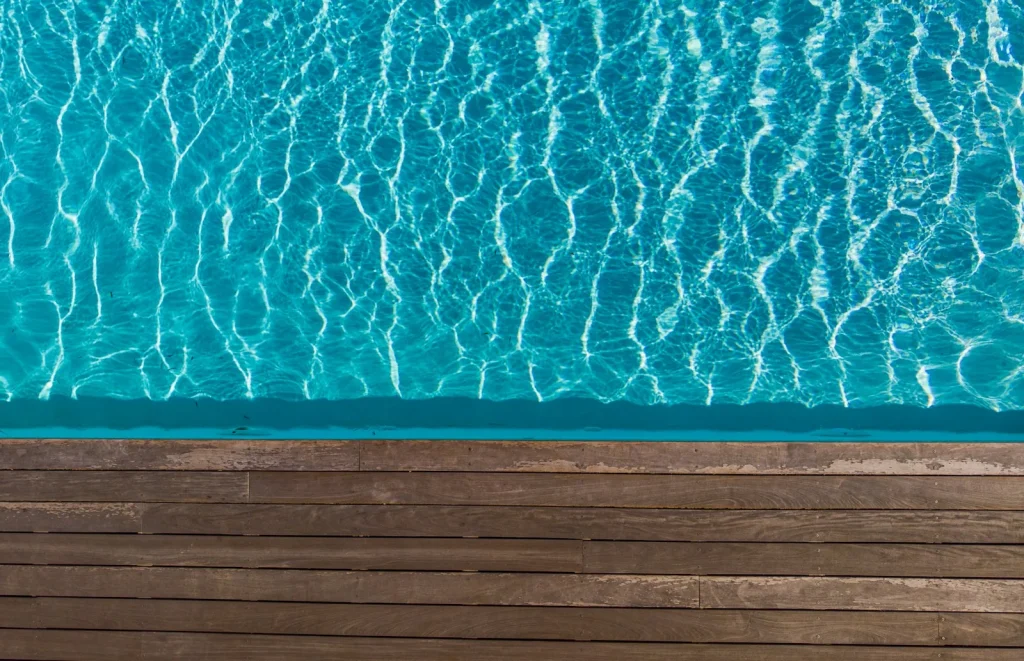
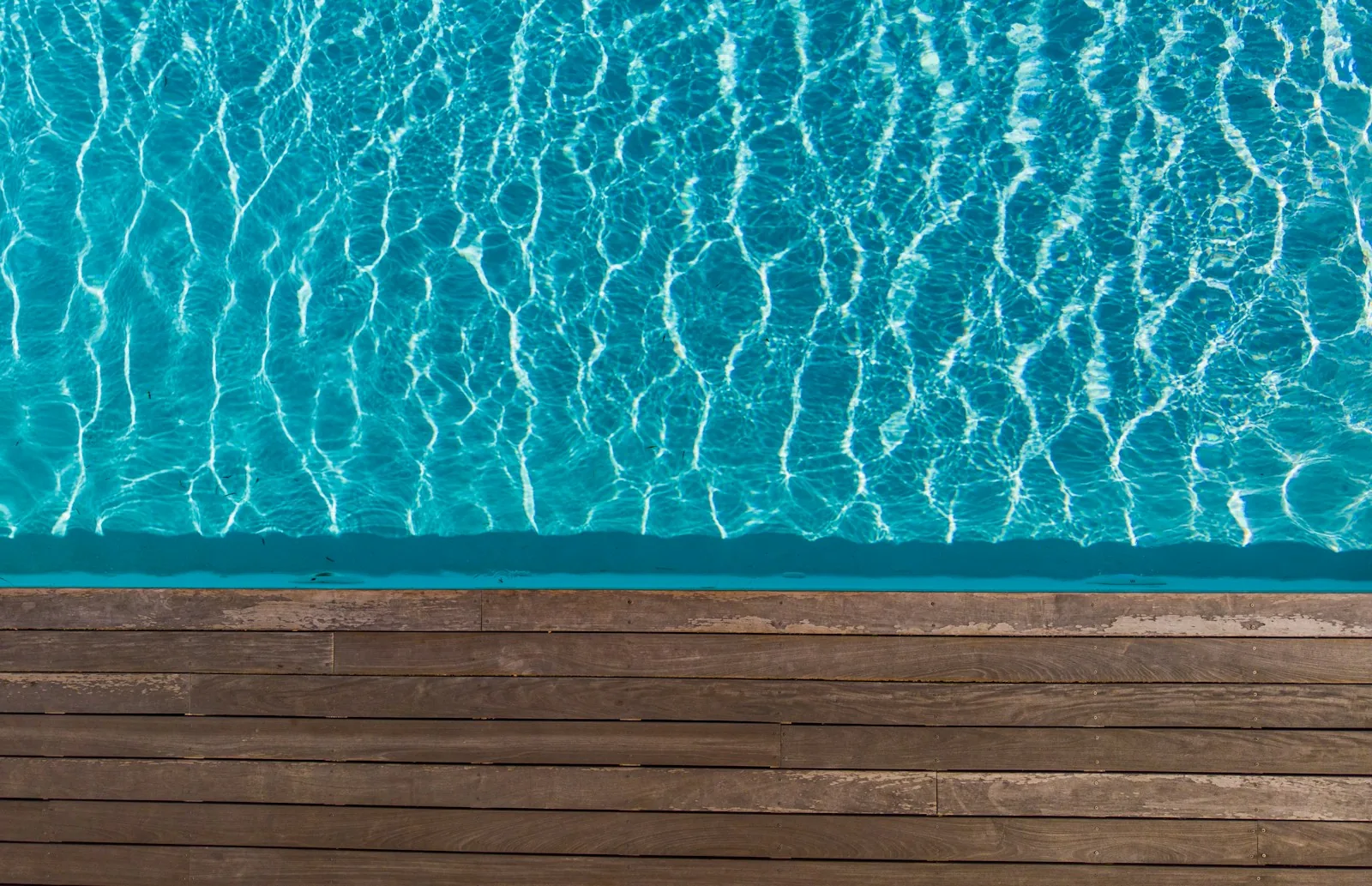
Composite decking — boards manufactured from a mixture of wood fibres and recycled plastic — is widely recommended as the best material for above ground pool decks for several reasons that are specific to the pool environment. Pool decking is in constant contact with water: splash-out, wet swimmers walking to and from the pool, and rain all keep pool deck surfaces wet for more hours per year than standard garden decking. Trex’s materials guide explains that composite boards resist rotting, warping, splintering, and weather-related cracking — all the deterioration modes that make timber pool decks problematic in wet climates. Composite decking also requires no annual oiling, staining, or sealing: periodic cleaning with soap and water or a gentle pressure wash maintains the surface. This maintenance advantage is amplified in a pool context where the surface is being regularly wetted and dried throughout the swimming season.
The other critical factor for pool decks is slip resistance. Cladco’s pool decking guide specifies that composite boards installed with the narrow-groove side facing up provide low-slip properties specifically suited to areas with high moisture. PVC decking (such as Nordeck products) offers similar benefits — low water absorption, low slip, and scratch resistance — without any wood content, making it fully waterproof throughout its life. PVC is the more chemically inert option and performs well in environments where pool chemicals may occasionally splash onto the deck surface. Both composite and PVC cost more upfront than pressure-treated softwood, but their maintenance-free performance over a 20–25 year lifespan typically makes them the lower total-cost option for pool applications.
Timber decking — the budget option and its limitations
Pressure-treated softwood is the least expensive decking material upfront and remains widely used for pool decks, particularly for DIY installations where labour costs are removed from the equation. The practical limitations are significant in pool environments: untreated or poorly maintained softwood rots within a few seasons in continuously wet conditions, requiring boards to be replaced; softwood also becomes dangerously slippery when wet unless treated with anti-slip paint or coated regularly. Hardwood options (Balau, iroko, and thermally modified softwood) are more durable and naturally more resistant to moisture, but require annual oiling to maintain their appearance and remain significantly more expensive than pressure-treated softwood — approaching the cost of composite decking in some cases, without the maintenance-free advantages.
For above ground pool decks specifically, Cladco and other composite manufacturers advise against resting the deck structure on the pool wall itself — the deck must be independently supported by its own post and joist structure, with pool walls free from the deck’s load. This applies to all deck materials: the deck’s weight must not bear on the pool’s steel or resin panels, which are not designed as load-bearing structural elements. Ensure that pump, filter, and heater equipment has accessible clearance under or around the deck structure, and that the deck boards run close to but not beneath the pool’s top rail — liner replacement (necessary every 5–10 years for most above ground pools) requires access to the rail fittings, and boards locked beneath the rail make liner replacement extremely difficult.
Planning Permission, Building Regulations, and Costs in the UK
UK planning rules for pool decks
In England, most above ground pool deck projects fall under permitted development rights — meaning no formal planning application is required — provided the deck meets specific criteria. The UK decking regulations guide for 2026 summarises the key conditions: the deck surface must be no more than 30cm above ground level; the total area of decking and other outbuildings cannot exceed 50% of the garden area; and the deck must not extend beyond the principal elevation of the house (in front of the house). For an above ground pool deck at ground or near-ground level, these conditions are typically met without difficulty. Exceptions include properties in conservation areas, listed buildings, and those subject to Article 4 directions — in these cases, full planning permission may be required for any external structure. Ecodek’s planning permission guide for decking notes that where permitted development rights apply, it is still worth notifying your local planning authority to get written confirmation before beginning construction.
Building regulations apply separately from planning permission. A pool deck that is elevated — raised more than 30cm above ground level, as many wraparound decks are when built to pool rim height — requires building regulations compliance covering structural safety, load calculations, and handrail requirements. Even where building regs are not formally required, any deck structure should be built to withstand the loads it will bear: the weight of wet swimmers moving around the pool, furniture, and potentially equipment storage. Homebuilding’s guide to swimming pool planning permission and building regulations notes that the pool itself rarely triggers planning permission as a garden structure (it is treated as an outbuilding), but that associated electrical work, plumbing for heating, and drainage must comply with building regulations regardless of whether planning is required. Above ground pools are not subject to the same building regulations requirements as permanently constructed inground pools in most cases, but any electrical installation for pump and filter systems must be carried out by a Part P-certified electrician. For context on how above ground decked pools compare with alternative garden water features, our guide to natural swimming pools covers biological filtration systems that can be built to a similar aesthetic to a decked above-ground pool but without chlorine. Our guide to outdoor swimming pools and lidos covers publicly managed alternatives across the UK.
Cost guide for above ground pool decks in the UK
Costs for above ground pool decks vary substantially depending on deck style, materials, pool size, and whether the project is professionally built or DIY. For reference points: a simple entry platform deck in pressure-treated softwood for a standard 3.6m round pool can cost from £400–£900 in materials, rising to £1,500–£2,500 with professional labour. A partial surround deck covering one side of a medium oval pool in composite material — roughly 15–20 square metres of decking — runs to approximately £1,800–£3,500 for materials alone, with professional installation adding £800–£1,500 depending on structural complexity. A full wraparound deck in composite for a 7.3×3.7m oval pool (the most popular UK size range) covering 25–40 square metres of deck at pool-rim height with steps and handrails represents a total project cost in the range of £5,000–£12,000 professionally installed — the elevated structure, safety handrails, and material quantities involved account for the higher cost relative to a ground-level deck. These figures broadly align with 2026 above ground pool deck cost guides which place the average professionally installed above ground pool deck in the £3,500–£8,000 range for a complete wraparound design in composite materials. DIY construction with composite materials reduces costs by approximately 40–50% depending on the structural complexity.
Frequently Asked Questions
Do I need planning permission for an above ground pool deck in the UK?
In most cases, no — provided the deck is no more than 30cm above ground level, covers less than 50% of the garden (combined with other outbuildings), and does not extend forward of the principal house elevation. These criteria place most pool platform and partial surround decks within permitted development rights in England. Elevated wraparound decks built to pool-rim height (typically 120–137cm) do exceed the 30cm threshold and may require a planning application. Conservation area properties, listed buildings, and those with Article 4 directions must check their specific constraints before building. Scotland, Wales, and Northern Ireland have their own permitted development rules which differ in some respects — check with your local planning authority.
What is the best decking material for an above ground pool?
Composite decking is the recommended choice for pool environments. It is slip-resistant when the narrow-groove side is installed facing upward, has low water absorption, does not rot or warp, requires no annual oiling or treatment, and typically lasts 25+ years. PVC decking (such as Nordeck) offers similar advantages and is fully waterproof throughout its life. Pressure-treated timber is cheaper upfront but becomes slippery when wet, rots if not regularly maintained, and typically requires board replacement within 10–15 years in a wet pool environment. Hardwood decking is more durable than softwood but requires annual oiling and is often comparably priced to composite.
How much does an above ground pool deck cost in the UK?
A simple entry platform in softwood costs £400–£900 in materials (£1,500–£2,500 professionally installed). A partial surround deck of 15–20m² in composite runs approximately £1,800–£3,500 for materials plus £800–£1,500 labour. A full wraparound composite deck for a medium oval pool (25–40m² of deck) including stairs and handrails typically costs £5,000–£12,000 professionally installed. DIY construction reduces these costs by approximately 40–50% on the labour element. Overall project costs depend significantly on the pool size, deck height, material choice, and structural complexity.
Can I build the deck before installing the pool?
No — always install the pool first, then build the deck around it. Above ground pool dimensions vary significantly between manufacturers and models even when described by the same nominal size: a pool labelled as “4.5m round” from different manufacturers may have different actual dimensions, different wall heights, and different top rail configurations. Building a deck to specific dimensions before the pool arrives and then trying to fit the pool into the structure rarely works. Install the pool on its prepared base, confirm it is correctly positioned and filled, then measure and build the deck to fit the actual pool.
What height should an above ground pool deck be?
The deck surface should be level with or just below the pool rim — typically at the top of the pool wall, which for most above ground pools is 120–137cm (48–54 inches) above ground level. This height allows easy entry and exit over the pool wall and provides a natural transition between deck and pool. For safety, the deck surface should not be higher than the pool rim, which would allow a swimmer to step down into the pool without the wall as a barrier. Steps or a short ladder are typically used for the transition from ground level up to the elevated deck platform, and safety handrails are recommended for any deck above 60cm from ground level.