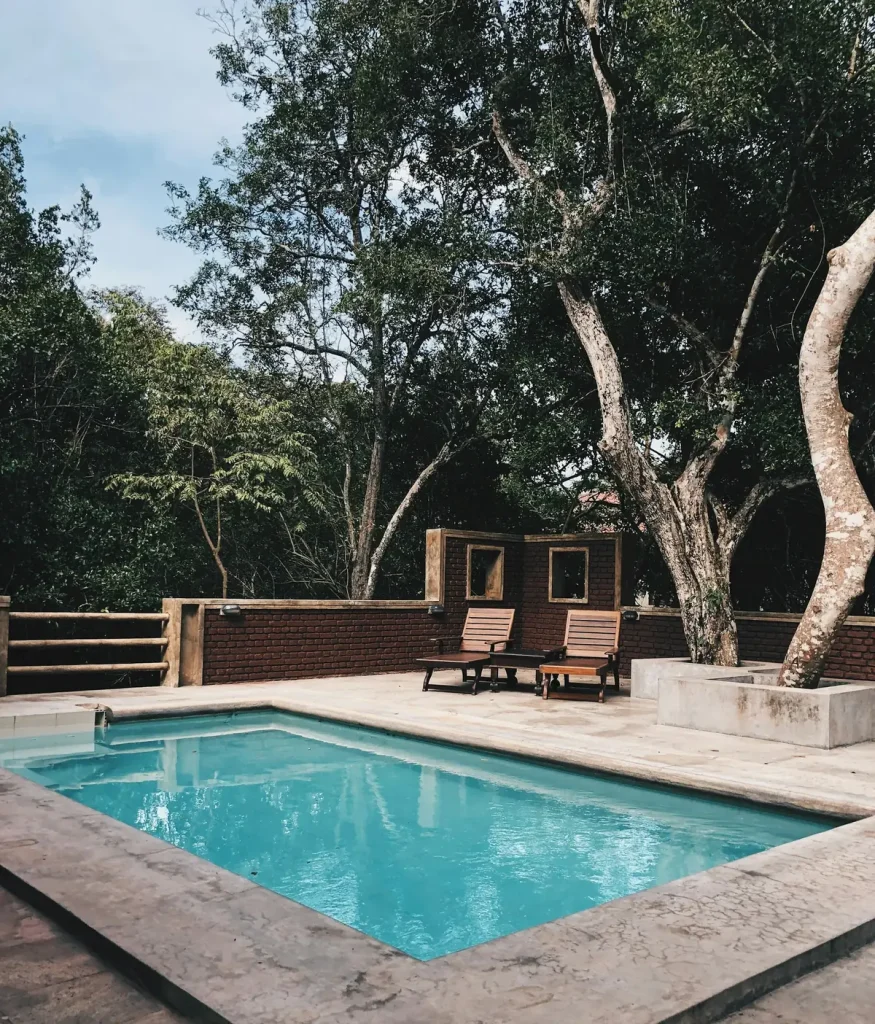
Above-ground heated pools offer a practical middle ground between a garden paddling pool and the expense of an in-ground installation. For a few hundred to a few thousand pounds, a rigid-frame above-ground pool heated with an air source heat pump or solar panels can give a UK family a genuinely usable outdoor pool from April through October. This guide covers the main pool types worth considering, the heating options available, and the real-world costs of running a heated above-ground pool in the UK.
- Rigid steel or resin frame pools suitable for heating cost £300–£2,000; wooden above-ground pools start from £3,000
- An air source heat pump is the most cost-effective heating method: £2,500–£7,500 to buy, £300–£800 per season to run
- Inflatable pools are not suitable for sustained heating — they lose heat too rapidly and cannot withstand the pressure of motorised pumps
- A well-insulated heated above-ground pool extends the UK swimming season from the typical June–August window to April–October
Types of Above-Ground Pools Suitable for Heating

Rigid steel and resin frame pools
The most practical above-ground pools for heating are rigid frame models with a structural steel or resin framework holding a reinforced liner. Steel frame pools from brands such as Intex and Bestway — including the Bestway Steel Pro Max, which costs under £800 — are the most widely sold option in the UK. They are rated for multi-season use, can support motorised heating pumps, and hold water temperatures effectively when paired with a pool cover. A steel frame pool of 4.5 metres diameter is typically large enough to be worth heating: anything smaller loses heat so quickly that the economics become unfavourable.
Resin frame pools use a polymer rather than metal for the supporting structure, making them lighter, rust-proof, and less likely to heat up in direct sunlight (which can cause discomfort when touching the frame). They generally cost slightly more than equivalent steel models — around £500–£2,000 for a mid-range option. Hybrid pools combining steel uprights with resin components, including some Doughboy models, offer the durability of steel with the low-maintenance qualities of resin and are well-regarded for extended outdoor installation.
Semi-permanent and wooden above-ground pools
Semi-permanent above-ground pools with solid panel walls — typically steel, aluminium, or composite panels set on a levelled base — sit between a frame pool and an in-ground installation in both cost and permanence. Prices start at around £1,000 for a basic kit and reach £5,000 or more for larger or timber-clad options. Wooden above-ground pools start from £3,000 and can reach £15,000 for large custom builds. These are easier to heat than frame pools because their thicker walls and solid structure retain heat better, and they are aesthetically closer to an in-ground pool than a temporary frame installation.
Inflatable pools, while popular for children and summer use, are not appropriate for sustained heating. Their thin walls conduct heat rapidly, they cannot handle the back-pressure of most heat pumps, and the economics of heating a pool that you cannot adequately insulate simply do not work. If you want a heated pool, a rigid frame or panel pool is the starting point.
Planning and installation considerations
Most above-ground pools do not require planning permission in England and Wales because they are classed as temporary garden structures, provided they are not permanently fixed to the ground. However, if you intend to install decking, fencing, or permanent pipework alongside the pool, permitted development limits may apply. The site needs to be level — a gradient of more than a few centimetres across the pool footprint requires significant groundwork. Above-ground pools also need proximity to an outdoor power supply for the pump, and ideally a tap for filling. A standard 3m × 5m frame pool holds approximately 20,000 litres — a figure worth calculating against your water meter rate before filling for the first time.
Heating Options: Costs and Running Expenses
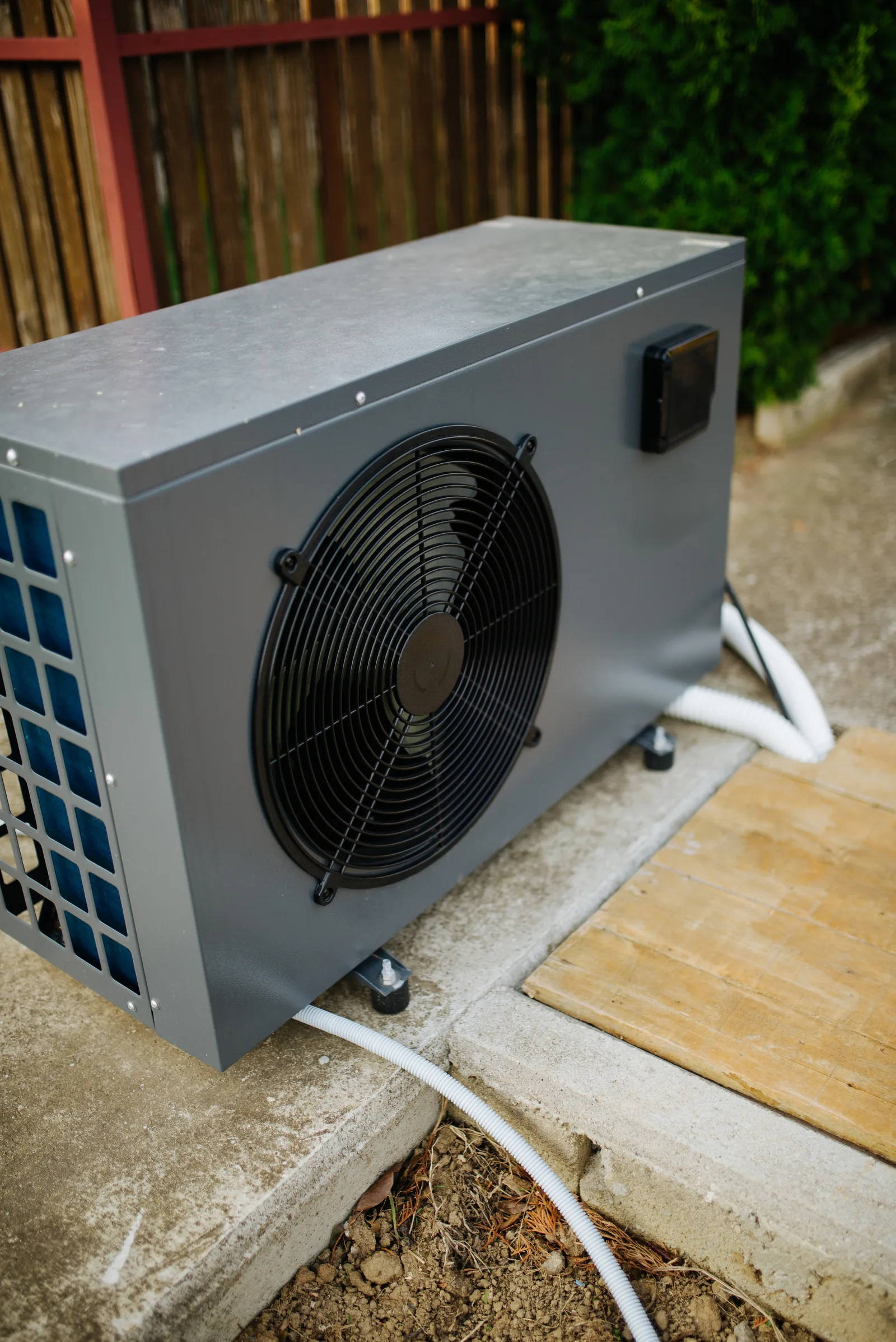
Air source heat pumps
An air source heat pump is the most cost-effective long-term solution for heating an above-ground pool in the UK. The unit draws heat from the ambient air and transfers it to the water at a ratio of up to 5:1 — for every 1 kW of electricity consumed, it can deliver up to 5 kW of heating. This coefficient of performance (COP) makes it far cheaper to run than an electric immersion heater. Pool-specific air source heat pumps cost £2,500–£7,500 to buy and £1,000–£3,000 to install professionally, though smaller units designed for above-ground pools are available at the lower end of this range. Running costs are typically £300–£800 per swimming season (May through September), making a heat pump the cheapest option once the upfront investment is recovered.
Heat pumps work most efficiently when air temperatures are above 10°C, which limits their effectiveness during early spring and late autumn in most parts of the UK. They are also slower to heat the pool initially than gas heaters — raising the temperature of a 20,000-litre pool from 15°C to 28°C takes 12–24 hours depending on unit size — so forward planning is needed rather than same-day decisions to swim.
Solar thermal heating
Solar thermal panels circulate pool water through roof-mounted collectors, using solar radiation to heat the water at no ongoing fuel cost. A correctly sized solar thermal system can raise pool temperature by 4–8°C above the ambient water temperature and extend the swimming season by two to four months without any electricity or gas cost in operation. System costs range from £3,000 to £7,000 installed, depending on pool volume and the number of panels required. The limitation is that solar heating is dependent on sunshine: on overcast UK days, the system delivers little or no heat. Most solar installations are paired with a backup heater for cloudy periods, adding to the overall cost but providing reliability.
Solar thermal is the cheapest method per unit of heat delivered once installed, but the upfront capital cost is higher than a basic gas or electric heater. For above-ground pools, the simpler unglazed panel systems (essentially a black rubber mat on a south-facing surface) are a cost-effective starting point, with systems available from around £500–£1,500 in kit form — though these are less effective in cooler conditions than glazed collector systems.
Gas and electric heaters
Gas heaters are the fastest way to heat a pool: a 15 kW gas heater can raise a 20,000-litre pool by several degrees per hour, making same-day pool use practical. They cost £1,500–£3,500 to purchase and £500–£1,000 to install. The drawback is running cost: gas pool heating costs £800–£2,500 per season, making it significantly more expensive to operate than a heat pump in normal UK gas and electricity tariff conditions. Gas heaters are most practical for pool owners who heat infrequently or who need rapid heating for specific events rather than sustained season-long use.
Electric immersion and inline heaters are the simplest option to install but the most expensive to run. They cost £500–£2,000 to buy and can be fitted without professional installation in many cases. Running costs of £1,500–£3,000 per season make them economically unsuitable for regular use — they are best suited to small pools used for short periods or as backup systems. For any above-ground pool intended to be used consistently through the season, a heat pump or solar option offers substantially better economics over a three-to-five-year ownership period.
Getting the Most from a Heated Above-Ground Pool

Pool covers and heat retention
A pool cover is not an optional accessory for a heated above-ground pool — it is an essential component of the heating system. An uncovered pool loses the majority of its heat through surface evaporation, particularly overnight. A solar cover (a bubble-wrap style cover that floats on the water surface) can reduce heat loss by 70% or more and trap solar gain during the day, making a measurable difference to both temperature and running costs. Cover prices range from £30–£200 for a basic solar bubble cover sized to a standard above-ground pool. Thermal covers and automatic reel systems cost more but add convenience and longevity.
Insulating the pool walls also helps. Above-ground pools with foam insulation panels behind the liner, or with an insulating sleeve fitted around the exterior, retain heat significantly better than uninsulated models. For frame pools, aftermarket foam insulation products are available and relatively straightforward to fit around the outside of the liner.
UK climate and realistic season length
Without heating, an outdoor above-ground pool in the UK reaches a comfortable swimming temperature (18°C or above) only from late June through early September in most regions — roughly 10–12 weeks per year. With a heat pump or solar thermal system maintaining the pool at 26–28°C, that window extends to April or May through October — potentially 25–30 weeks, more than doubling usable pool time. The economic case for heating is straightforward if the pool would otherwise sit unused for most of the year.
Above-ground pools in the UK should typically be drained and disassembled for winter storage unless they are semi-permanent or solid-panel models designed for year-round installation. Frame pools left full over winter are vulnerable to frost damage to the liner, frame, and fittings. Even where the pool is robust enough to overwinter, heating an above-ground pool through the UK winter is rarely economically justified — heat loss through cold air on all sides of the pool makes the heating demand far higher than during the spring-to-autumn swimming season.
For more on the UK’s outdoor pool options, see our guide to natural swimming pools in the UK. If you’re looking at club or gym pool membership as an alternative, our gyms with swimming pools guide covers the main chains including those with year-round heated pools.
Frequently Asked Questions
Is it worth heating an above-ground pool in the UK?
Yes, if you plan to use the pool regularly. Without heating, a UK above-ground pool is only comfortably usable from late June to early September — about 10 weeks per year. A heat pump or solar system extends this to 25–30 weeks (April to October), dramatically improving value for money. The economics depend on upfront investment versus how many swimming sessions the pool actually gets: if the pool would sit unused without heating, the running costs are hard to justify.
What is the cheapest way to heat an above-ground pool in the UK?
Solar thermal heating has the lowest ongoing running cost (close to zero) but a higher upfront investment of £3,000–£7,000 installed. An air source heat pump costs £2,500–£7,500 to buy and £300–£800 per season to run — the best balance of upfront cost and ongoing economy for most above-ground pool owners. Electric immersion heaters are cheapest to buy (£500–£2,000) but cost £1,500–£3,000 per season to run, making them the most expensive long-term option.
Can you use a heat pump with a frame pool?
Yes — pool-specific heat pumps are designed to work with the filter pump systems of frame pools. The heat pump plumbs into the pool’s existing filter circuit. You need an adequately sized filter pump (typically at least 2,000 litres/hour for a 4–5m pool), an outdoor power supply, and a pool cover to retain the heat. Most manufacturers offer compact heat pump units sized for above-ground pools of 20,000–30,000 litres.
Do above-ground pools need planning permission in the UK?
In most cases, no. Above-ground pools are generally treated as temporary garden structures under permitted development rights in England and Wales, and do not require planning permission. However, if the pool is permanent, fixed to a base, or located within a conservation area, or if associated structures (decking, fencing, a pool house) are planned, it is worth checking with your local planning authority. Scotland and Northern Ireland have their own rules, which may differ.
How long does a heated above-ground pool stay warm?
A covered heated above-ground pool at 27°C will lose 1–3°C overnight on a typical UK summer evening, and more in cooler spring and autumn weather. With a quality solar cover, overnight heat loss can be reduced to less than 1°C. Without a cover, heat loss is much greater — 5–8°C overnight is not unusual. Most heat pumps can recover this temperature loss during the following day’s running. In spring and autumn, when ambient temperatures are lower, maintaining a target temperature requires longer daily run times or a higher-output heater.