Choosing a swimming pool involves far more than picking a shape and a size. The type of pool — its construction method, its position in or above the ground, and how it filters water — determines what it costs to build, how long it lasts, how much maintenance it demands and what it looks like in your garden. This guide covers every pool type available to UK buyers, with practical costs and the key trade-offs for each.
- In-ground pools use four main construction types: vinyl liner (from £20,000), fibreglass (from £30,000), sprayed concrete (from £45,000) and ceramic composite (from £50,000).
- Fibreglass one-piece pools offer the best balance of speed, longevity and low maintenance — installed in around one week with a 25-year lifespan.
- Above-ground pools start from under £500 and need no excavation; wooden above-ground pools from £3,000 are a durable mid-ground option.
- Planning permission is not required for most outdoor pools in England and Wales, but is required for indoor pools built as extensions.
In-Ground Swimming Pool Types
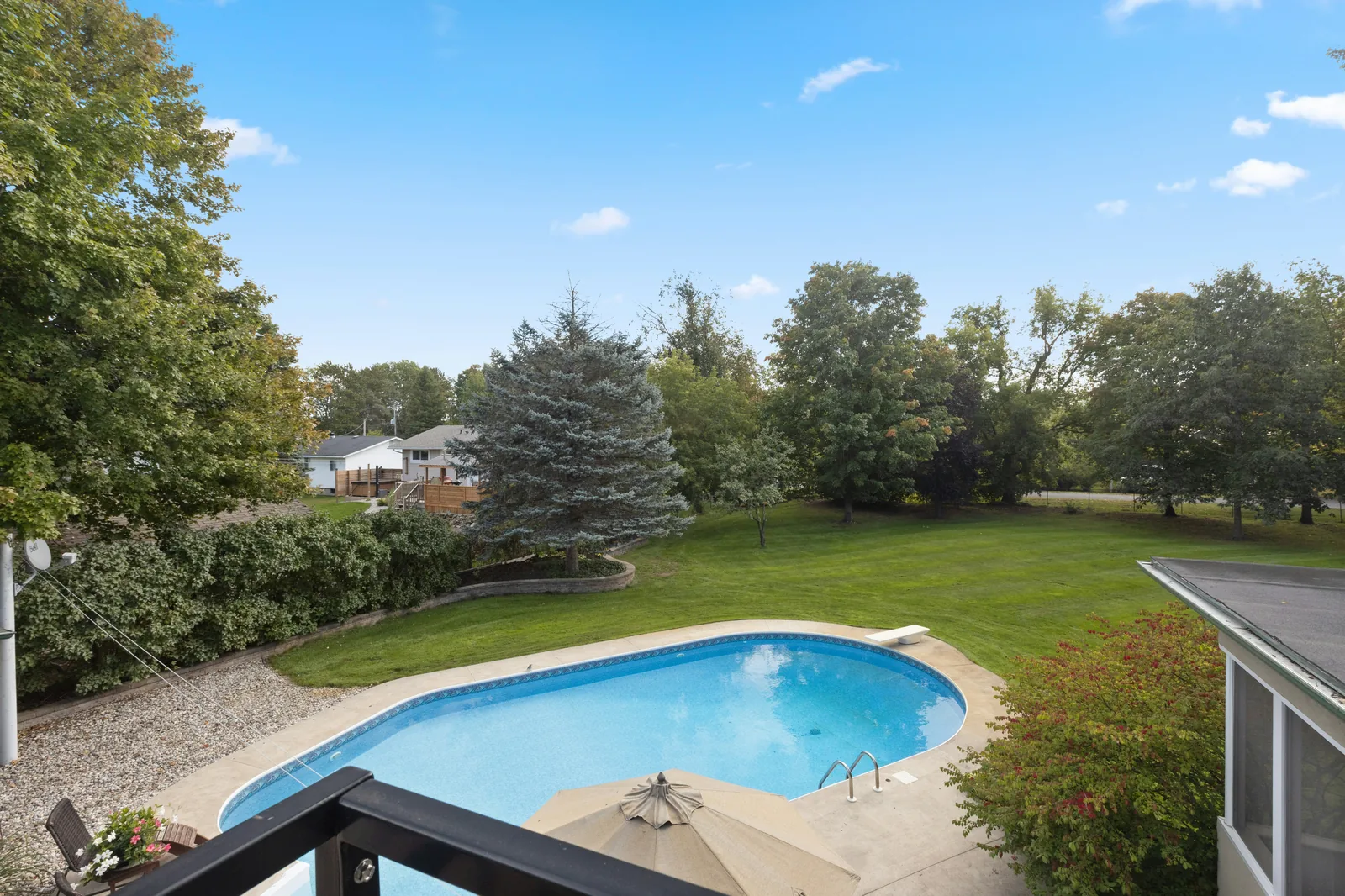
Fibreglass, Vinyl Liner and Concrete
In-ground pools come in four main construction types, each with distinct implications for cost, installation time, durability and ongoing maintenance.
Vinyl liner pools are the entry-level in-ground option, starting from around £20,000. They use a concrete block or interlocking panel shell with a vinyl liner stretched over the interior. Their main advantage is flexibility — a liner pool can be built in any shape or size. The weakness is the liner itself, which is susceptible to tears and punctures. Liners typically require replacement every 6–12 years at additional cost, and repairs to a torn liner are expensive. Heating costs also tend to be higher than for fibreglass or ceramic alternatives.
Fibreglass one-piece pools are pre-formed shells factory-manufactured and lowered into a prepared excavation by crane. Installation takes approximately one week, which is significantly faster than any other in-ground option. Costs start from around £30,000. The gel-coated interior is non-porous and resistant to algae, meaning less chemical use and less cleaning than concrete. The smooth surface eliminates the scrapes associated with rough concrete finishes. With proper care, a fibreglass pool can last 25 years. The trade-off is restricted shape choice — you select from the manufacturer’s range rather than designing a bespoke form — and the pool must have vehicle access to the garden for shell delivery.
Sprayed concrete pools (also called shotcrete or gunite) are built on-site from a steel rod-and-mesh framework sprayed with concrete. They are fully customisable in shape, depth and size and can accommodate difficult or restricted sites. The downside is cost — starting from £45,000 and routinely reaching £150,000+ — and a construction period of three to six months. Maintenance demands are higher than fibreglass, requiring regular brushing of the porous surface to prevent algae. Done properly, a concrete pool can last up to 70 years.
Ceramic composite pools use a newer technology combining ceramic with carbon fibre. Pre-formed like fibreglass but with superior heat insulation and a bacteria-impermeable surface, they require fewer chemicals to maintain. Costs run from £50,000 to £120,000+, making them the most expensive pre-formed option.
| Type | UK Cost (from) | Lifespan | Install Time |
|---|---|---|---|
| Vinyl liner | £20,000 | Shell 30+ yrs, liner 6–12 yrs | 2–4 weeks |
| Fibreglass | £30,000 | 25 years | ~1 week |
| Sprayed concrete | £45,000 | Up to 70 years | 3–6 months |
| Ceramic composite | £50,000 | 25+ years | 1–2 weeks |
Natural Pools, Infinity Pools and Plunge Pools
Natural swimming pools — also called swimming ponds — replace chlorine with biological filtration through aquatic plants. At least 50% of the pool’s surface area must be a shallow plant zone. Costs run from £300–£600 per square metre, depending on complexity and finish. Running costs are very low once established, and the result is a chemical-free, wildlife-friendly water feature that blends naturally into a UK garden. For a full guide to building one yourself, see our article on DIY natural swimming pools.
Infinity (vanishing edge) pools create the optical illusion that water flows over the edge of the pool into the view beyond. The effect requires a lower wall and a catch basin that collects and recirculates the overflow. The premium over an equivalent conventional in-ground pool is around £30,000, plus higher ongoing running costs from the additional pumping. They are a views-dependent feature — the illusion only works if the pool has a compelling backdrop.
Plunge pools are compact, deep pools — typically around one metre deep and no more than four or five metres long — designed for cooling off and hydrotherapy rather than swimming laps. They suit small gardens where a full-sized pool would not fit, and their compact volume means faster heating and lower running costs. Exercise pools (or swim spas) use high-powered jets to create a resistance current, allowing continuous lap swimming in a pool as small as four metres long — useful where space is truly limited but a functional swim is the priority.
Above-Ground, Indoor and Modular Pool Types
Above-Ground Pools: Inflatable, Frame and Wooden
Above-ground pools require no excavation and can be installed in a day or two. They range from summer inflatables costing under £100 to substantial permanent-looking installations that last two decades.
Inflatable and basic frame pools — the kind available in supermarkets and garden centres every spring — cost between £50 and £500. They are easy to set up and suitable for a season or two of use, but they look temporary because they are.
Steel or resin frame pools step up in quality and longevity, costing from around £300 to £2,000 and lasting five to ten years with regular maintenance. Wooden above-ground pools, built from premium Nordic timber, occupy a different category entirely: they are aesthetically permanent-looking, integrate into a garden setting in a way that steel-frame pools cannot, last more than 20 years, and start from around £3,000. For UK households that want a good-looking pool without the cost or disruption of excavation, a quality wooden pool represents the most practical mid-ground option.
| Type | Cost | Lifespan | Best For |
|---|---|---|---|
| Inflatable | £50–£500 | 1–2 seasons | Temporary summer use |
| Steel/resin frame | £300–£2,000 | 5–10 years | Budget above-ground |
| Wooden above-ground | From £3,000 | 20+ years | Permanent-looking without excavation |
Indoor Pools and DIY Kits
Indoor swimming pools are housed within an extension or purpose-built outbuilding. They can be used year-round regardless of weather and typically lose less heat than outdoor pools, which can offset some running costs over time. The significant downside is cost — both the pool construction and the structure to house it — and the regulatory requirements. Indoor pools require planning permission and Building Regulations compliance, as they form part of a habitable structure.
For most outdoor pools in England and Wales, planning permission is not required — pools are treated under permitted development rights similarly to garden structures. Exceptions apply to listed buildings, conservation areas, AONBs and some agricultural land. The Swimming Pool and Allied Trades Association (SPATA) recommends a pre-application enquiry to the local planning authority if there is any doubt — at £50–£100, it provides a written steer before any money is committed to construction.
Finally, DIY in-ground kit pools offer a self-build route using interlocking steel or plastic panels and a vinyl liner, starting from around £5,000 for the kit excluding excavation. They significantly reduce labour costs versus a fully contracted build, though the total project cost still rises considerably once excavation, plumbing, filtration and surround work are factored in. For anyone considering a DIY route, our guide to DIY natural swimming pools covers the process in detail, including the build steps and realistic budgeting.
Frequently Asked Questions
What are the main types of swimming pools?
The main in-ground types are vinyl liner (from £20,000), fibreglass (from £30,000), sprayed concrete (from £45,000) and ceramic composite (from £50,000). Special types include natural pools, infinity pools and plunge pools. Above-ground options include inflatable, steel frame and wooden pools.
What is the cheapest type of in-ground pool in the UK?
Vinyl liner pools are the cheapest in-ground option, starting from around £20,000. However, liner replacement every 6–12 years adds ongoing cost. DIY kit pools using interlocking panels start from around £5,000 for materials, excluding excavation.
What is the difference between fibreglass and concrete pools?
Fibreglass pools are pre-formed, installed in about one week, lower maintenance and last 25 years. Concrete pools are fully customisable, take 3–6 months to build, require more ongoing maintenance (brushing to prevent algae) but last up to 70 years and cost from £45,000.
How long do fibreglass pools last?
With proper care, a fibreglass one-piece pool typically lasts 25 years. The gel-coated interior resists algae and requires fewer chemicals than concrete pools, keeping maintenance costs lower over the pool’s life.
Do I need planning permission for a swimming pool in the UK?
Not usually. Outdoor pools are typically covered by permitted development rights in England and Wales. Exceptions include listed buildings, conservation areas, AONBs and some agricultural land. Indoor pools always require planning permission and Building Regulations compliance as part of a building extension.
What is a plunge pool?
A plunge pool is a compact, deep pool — typically around one metre deep — designed for cooling off and hydrotherapy rather than swimming. They suit small UK gardens and cost less to install and run than full-sized in-ground pools.
What is a natural swimming pool?
A natural swimming pool uses aquatic plants and biological filtration instead of chlorine. At least 50% of the surface area is a shallow plant zone that filters the water. They cost £300–£600 per square metre and have low running costs, but need a growing season to establish.
Are above-ground pools worth it in the UK?
For many UK households, yes. Wooden above-ground pools from £3,000 look permanent, need no excavation, and last 20+ years. They don’t add property value like in-ground pools, but the installation cost is a fraction of even the cheapest in-ground option.