Swimming pools for UK homes come in four main construction types — gunite (sprayed concrete), fibreglass one-piece, vinyl liner, and above-ground metal frame — each with significantly different costs, installation timelines, and maintenance requirements. Gunite pools offer complete shape and size freedom but start from around £60,000; fibreglass one-piece pools can be installed in one to two weeks from £30,000; vinyl liner pools are the most affordable inground option from £20,000; and above-ground metal frame pools from brands including Bestway and Intex are available from under £1,000 with no excavation required. This guide covers what each pool type involves, how they compare in the UK market, and what to consider before choosing.
- Gunite/sprayed concrete pools start from approximately £60,000 in the UK, offer full customisation, and have a lifespan of up to 70 years
- Fibreglass one-piece pools start from £30,000 and can be installed in 1–2 weeks — the fastest inground installation method
- Vinyl liner pools are the cheapest inground option, starting from £20,000 — liners typically need replacing every 8–10 years
- Above-ground metal frame pools (Bestway Steel Pro, Intex metal frame) start from under £1,000, require no excavation, and can be installed as a DIY project in 1–2 days
Inground Swimming Pool Types — Gunite, Fibreglass, and Liner Compared
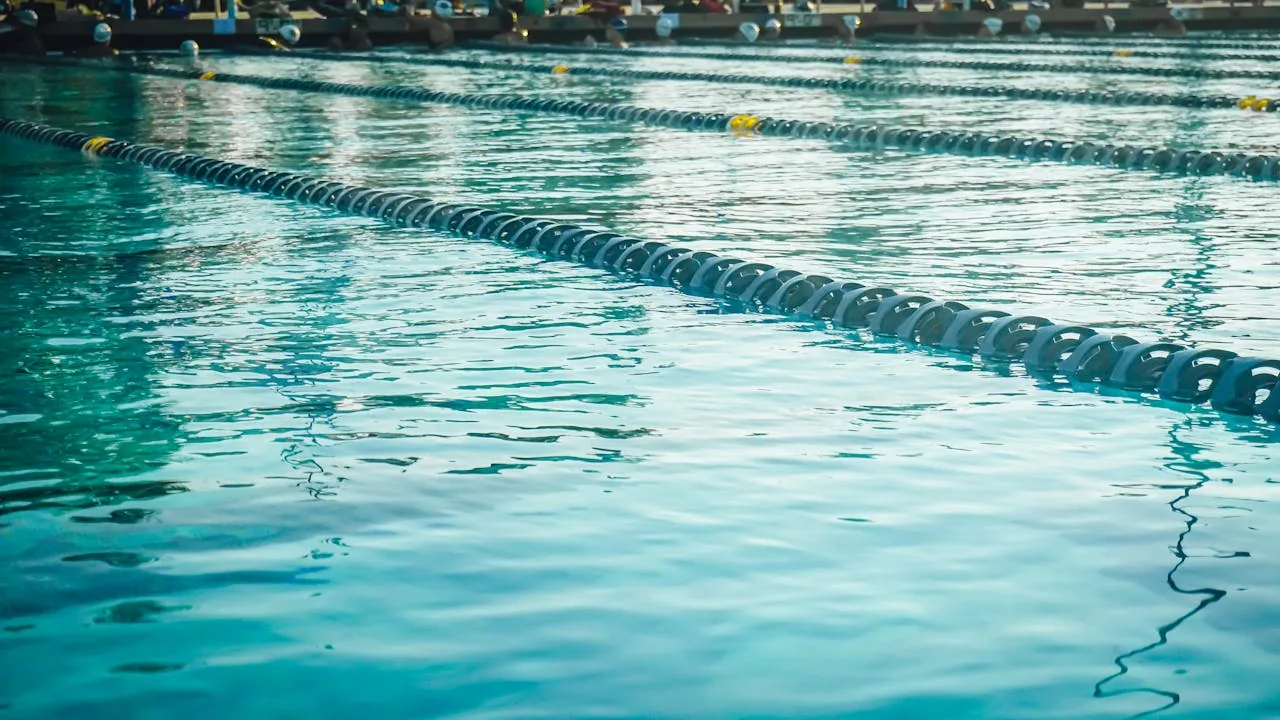
Gunite pools — the most customisable and durable inground option
Gunite pools — also called sprayed concrete or shotcrete pools — are built by spraying concrete under high pressure onto a reinforcing steel (rebar) framework that has been shaped to the pool’s design. Unlike factory-moulded fibreglass shells or panel-frame liner pools, gunite pools have no size or shape constraints: the steel framework can be formed to any configuration, making gunite the pool type used for irregular shapes, split-level designs, vanishing edges, and any pool that needs to integrate with unusual terrain or specific garden architecture. Homebuilding’s guide to swimming pool types notes that sprayed concrete pools are “completely customisable” and cites lifespans of up to 70 years — the longest of any pool construction type. UK costs for gunite pools typically start from £60,000 and can reach £150,000 or more for large or complex designs, reflecting the labour-intensive on-site construction process. Installation takes several weeks from excavation to finish.
The long-term ownership costs of gunite pools are higher than fibreglass: the porous concrete surface requires more chemical treatment to prevent algae, and the interior surface (typically plaster, pebble aggregate, or tiles) needs refinishing every 10–15 years. A full replaster or retile can cost £8,000–£20,000 depending on pool size. The pool’s thermal performance is also lower than fibreglass — concrete is a poor insulator and loses heat faster, increasing heating costs. Despite these factors, gunite remains the premium choice for bespoke residential pools in the UK because no other construction method offers equivalent design freedom.
Fibreglass one-piece pools — fastest installation, lowest maintenance
Fibreglass pools (also called one-piece or fibreglass composite pools in the UK market) are manufactured as a single shell in a factory, transported to site on a flatbed truck, and lowered by crane into an excavated hole. The pool’s shape, size, and all internal features (steps, benches, jets) are fixed at the factory — the buyer selects from the manufacturer’s available mould catalogue rather than specifying dimensions. UK fibreglass pools start from approximately £30,000 installed, making them the mid-range option between liner and gunite. Installation time is 1–2 weeks from excavation to fill — significantly faster than the several-week timelines for concrete pools. According to Homebuilding, fibreglass one-piece pools have a lifespan of up to 25 years, and their smooth, non-porous gel-coat surface resists algae better than concrete, reducing chemical use and cleaning time. Ceramic composite pools — a premium variant using ceramic-carbon fibre shells sold by UK suppliers including Compass Pools — offer similar installation speed with improved crack resistance and heat insulation, at £50,000–£120,000+.
The limitation of fibreglass is that access for the crane and delivery truck must be considered before ordering — the shell may be 8–12 metres long and 2–3 metres wide, and cannot physically reach some gardens with narrow side access or overhead obstructions. Pool size is also capped by what can be transported on a standard flatbed, typically limiting fibreglass to pools up to around 12 metres in length.
Vinyl liner pools — the most affordable inground type
Vinyl liner pools (also called liner pools) are the most affordable inground option, starting from approximately £20,000 in the UK. The construction method uses a structural frame — either concrete block or interlocking galvanised steel or polymer panels — to form the pool shell, with a flexible vinyl liner fitted over the frame to create the waterproof surface. Liners are available in many patterns and colours, and the panel frame can be configured to most rectangular and geometric shapes, giving liner pools more flexibility than fibreglass (though not the full freedom of gunite). TradesmenCosts’s pool installation guide lists vinyl liner pools as “generally the cheapest to install” among inground types, with small pool costs around £20,000–£25,000. The principal recurring ownership cost is liner replacement: liners typically last 8–10 years before they become brittle, fade, or develop tears, and a replacement liner for a standard residential pool costs £1,500–£3,500 including fitting. Liner damage from sharp objects (toys, pets, accidental impact) can require patching or early replacement. For buyers prioritising lower upfront cost with the acceptance of periodic liner replacement expense, liner pools represent the practical entry point for inground pool ownership in the UK.
Above-Ground Pools — Metal Frame, Steel Frame, and Framed Pools
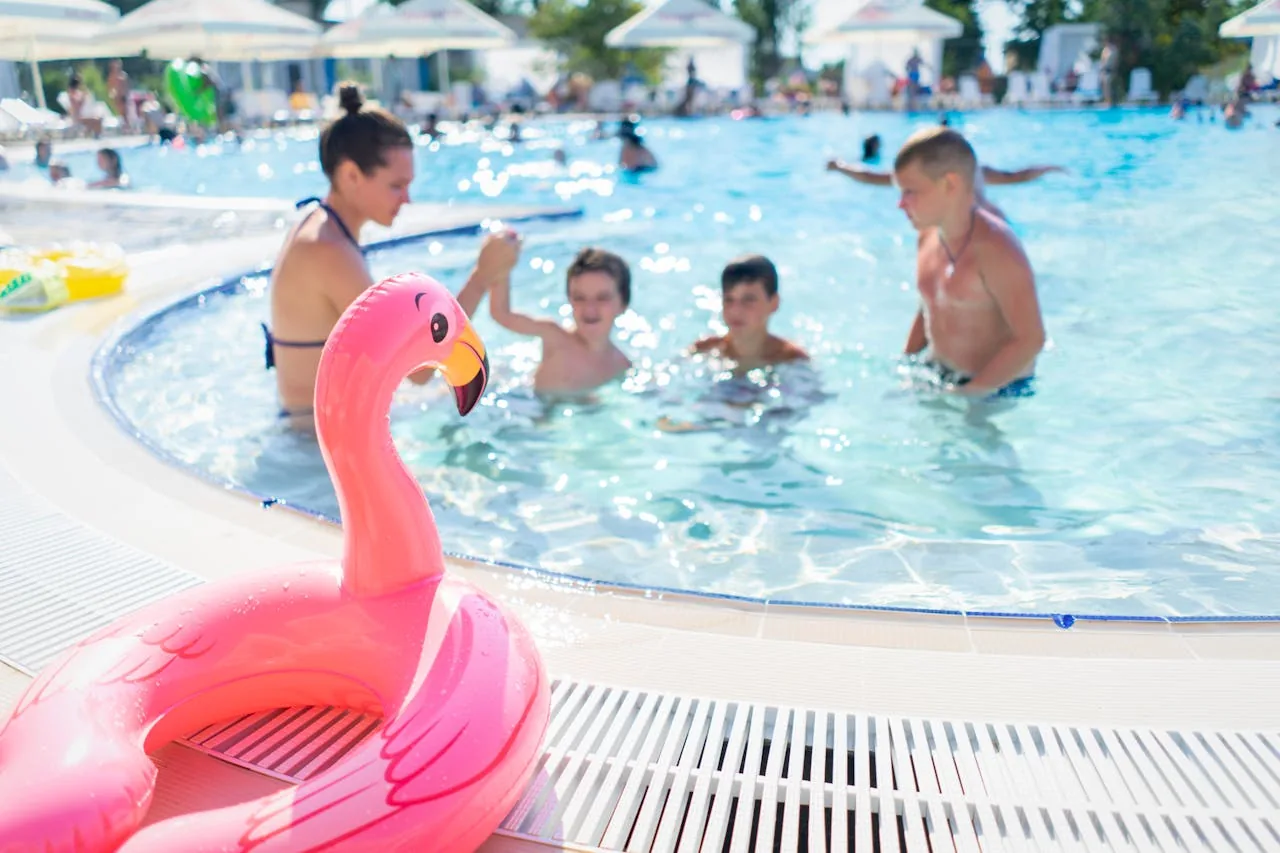
Metal frame and steel frame pools — no excavation, DIY installation
Above-ground metal frame pools are the accessible, no-excavation entry point to home pool ownership in the UK. The pool structure consists of a galvanised steel or powder-coated metal tube frame that assembles above ground, with a PVC or three-layer polyester-reinforced liner fitting through the frame to hold water. The two dominant UK brands are Bestway — whose Steel Pro, Power Steel, and Steel Pro Max ranges are widely available in UK retailers — and Intex, whose metal frame pools range from compact 260 cm × 160 cm rectangular models to larger 450 cm × 220 cm pools. Prices for both brands start below £200 for smaller models and extend to £1,000–£3,000 for larger rectangular pools (typically 12–16ft / 3.6–4.9 m in length) with included filter pumps. Assembly is feasible as a DIY project in 1–2 days without specialist tools or planning permission, and the pools can be dismantled and stored over winter rather than left in place year-round. AG Budget and other UK pool retailers stock metal-framed pools with galvanised components and UV-resistant liners designed for outdoor UK conditions.
Above-ground pools with decking — a popular approach to improve the visual integration of a frame pool into a garden — involve constructing a timber or composite deck at the pool’s rim height, creating a surrounding platform that conceals the pool walls and provides space for seating and entry. Decking costs typically add £2,000–£8,000 depending on materials and area, but significantly improves the aesthetic of an otherwise utilitarian above-ground pool. Purpose-built above-ground pool decking kits are available from UK suppliers, or a standard landscaping contractor can design a bespoke surround. The pool itself sits on level ground (or a levelled sand base) and requires no structural groundworks; decking installation is the primary construction effort.
Planning Permission, Running Costs, and Choosing the Right Pool
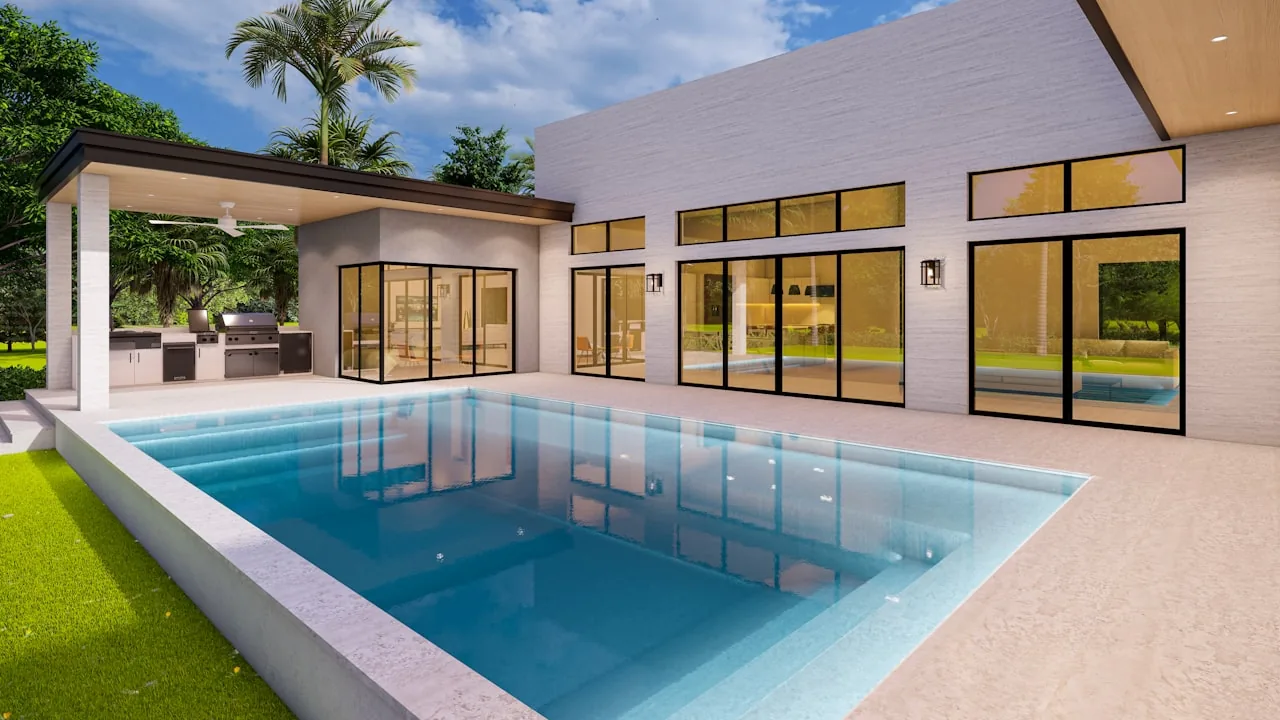
Planning permission and building regulations in the UK
Outdoor swimming pools in England are generally permitted development and do not require planning permission, provided the pool occupies less than 50% of the total garden area, is within the property boundary, and is not in front of the principal elevation. The Planning Portal’s guidance on outdoor swimming pools confirms this position under Class E permitted development rights. Exceptions apply for properties in conservation areas, national parks, Areas of Outstanding Natural Beauty, or listed buildings — where planning permission is required regardless of pool size or position. Indoor pools (pool enclosures or full pool rooms) are treated as extensions and require planning permission. Building regulations compliance is mandatory for all pools regardless of planning permission status: electrical work must meet Part P requirements, drainage must connect to the approved system, and heated pools require compliance with energy efficiency requirements under Part L.
Running costs and annual maintenance
Annual running costs for an inground pool in the UK — chemicals, electricity for filtration, and basic maintenance — typically total £2,000–£5,000 per year depending on pool size, heating method, and usage. Chemical costs alone average approximately £650 per year for a standard residential pool according to MyJobQuote’s pool installation cost guide; professional maintenance contracts covering cleaning, chemical testing, and filter servicing run £80–£250 per month. Heating a pool to a comfortable swimming temperature of 28°C extends usable season significantly but adds substantially to running costs — a heat pump is the most energy-efficient method (£3,000–£6,000 installed) and significantly cheaper to run than gas or electric resistance heaters. Above-ground frame pools have lower running costs than inground pools: smaller water volumes require fewer chemicals, and most owners store them over winter rather than heating through the cold months. For those comparing the full lifecycle cost of pool ownership, the initial installation cost is only one component — running costs, surface maintenance, and system replacements (pumps, filters, liners) over a 20-year ownership period may equal or exceed the original installation cost for all inground pool types.
Frequently Asked Questions
How much does a gunite pool cost in the UK?
Gunite pools (sprayed concrete) in the UK typically cost from £60,000 to £150,000 or more, depending on size, shape complexity, and specification. The high cost reflects their fully bespoke, on-site construction process — gunite pools can be built to any shape and size, unlike fibreglass (factory mould limited) or liner (panel system). Installation takes several weeks. Gunite pools have the longest lifespan of any pool type (up to 70 years) but higher ongoing maintenance costs than fibreglass due to their porous concrete surface requiring more chemical treatment.
What is the cheapest type of inground swimming pool in the UK?
Vinyl liner pools are the cheapest inground option, starting from approximately £20,000 for a small pool. They use a steel or polymer panel frame with a fitted vinyl liner. The main ongoing cost is liner replacement every 8–10 years (typically £1,500–£3,500). Fibreglass one-piece pools start from £30,000 and have lower long-term maintenance costs despite higher upfront cost. Above-ground metal frame pools are the cheapest pool option overall, starting below £500 for smaller sizes and up to £3,000 for large 12–16ft rectangular models, with no excavation or planning permission required.
Do I need planning permission for a garden swimming pool in the UK?
In most cases, no — outdoor swimming pools in England are permitted development under Class E and do not require planning permission, provided the pool occupies less than 50% of the garden area and is within the property boundary. Exceptions apply for conservation areas, national parks, Areas of Outstanding Natural Beauty, and listed buildings, where planning permission is required. Building regulations compliance is mandatory for all pools regardless of planning status, covering electrical safety, drainage, and heating energy efficiency. The Planning Portal provides the authoritative guidance on outdoor pool permitted development rights.
How long do liner pools last?
The structural frame of a liner pool (steel or polymer panels) can last 25–30 years or more with proper maintenance. The vinyl liner itself typically lasts 8–10 years before it requires replacement — exposure to UV, pool chemicals, and physical wear causes the liner to become brittle and prone to tearing over time. Liner replacement costs £1,500–£3,500 for a standard residential pool including fitting. Some high-quality liners with UV-stabilised materials may last 12–15 years. When comparing the total 20-year cost of ownership, liner replacement is the primary recurring expense for this pool type.