Outdoor and hotel swimming pools in hot-climate European and international destinations serve a different function than pools in the UK: in Seville, where July temperatures regularly reach 43–44°C (109–111°F), a hotel pool is not an amenity — it is essential infrastructure for surviving the heat. In Lisbon, rooftop infinity pools have become a defining feature of the city’s hotel market, with nearly 300 days of sunshine per year making pool access viable year-round. In Gran Canaria’s Maspalomas resort area, hotels routinely heat outdoor pools to 22–36°C through the winter months so that the subtropical climate can be enjoyed 12 months a year. And in Mexico’s Yucatán Peninsula, swimming takes a different form entirely — natural limestone cenote pools formed by the collapse of the cave ceiling, with over 6,000 cenotes recorded across the peninsula. This guide covers what to know about pools at each destination.
- Seville summer heat: Average July/August high of 43–44°C (109–111°F) — extreme heat makes hotel pools essential; the city records up to 45°C. Best hotel pools: Hotel Alfonso XIII (luxury, near Alcazar), Hotel Colón Gran Meliá (rooftop with panoramic views), Only YOU Hotel Sevilla (swim-up bar)
- Lisbon rooftop pools: ~300 days of sunshine per year. Top options: EPIC SANA Marquês Hotel (heated infinity pool overlooking city centre), Verride Palácio Santa Catarina (5-star, 360° views), NH Collection Lisboa Liberdade (seasonal rooftop pool, 11 floors up)
- Gran Canaria heated pools: Maspalomas averages 21°C year-round, 2,800 sunshine hours annually. Most major hotels heat pools to 22–36°C in winter. Palm Oasis Maspalomas, Maspalomas Resort by Dunas, Hotel Cordial Mogán Playa all operate heated outdoor pools year-round
- Mexico cenotes: 6,000+ natural limestone pools in the Yucatán Peninsula. Best visited: Cenote Ik Kil (near Chichen Itza, most photographed), Gran Cenote (near Tulum), Dos Ojos (snorkelling), Cenote Azul (near Playa del Carmen, family-friendly open-air)
Swimming Pools in Seville — Hotel Pools and the Context of Extreme Summer Heat
Why pool access matters in Seville
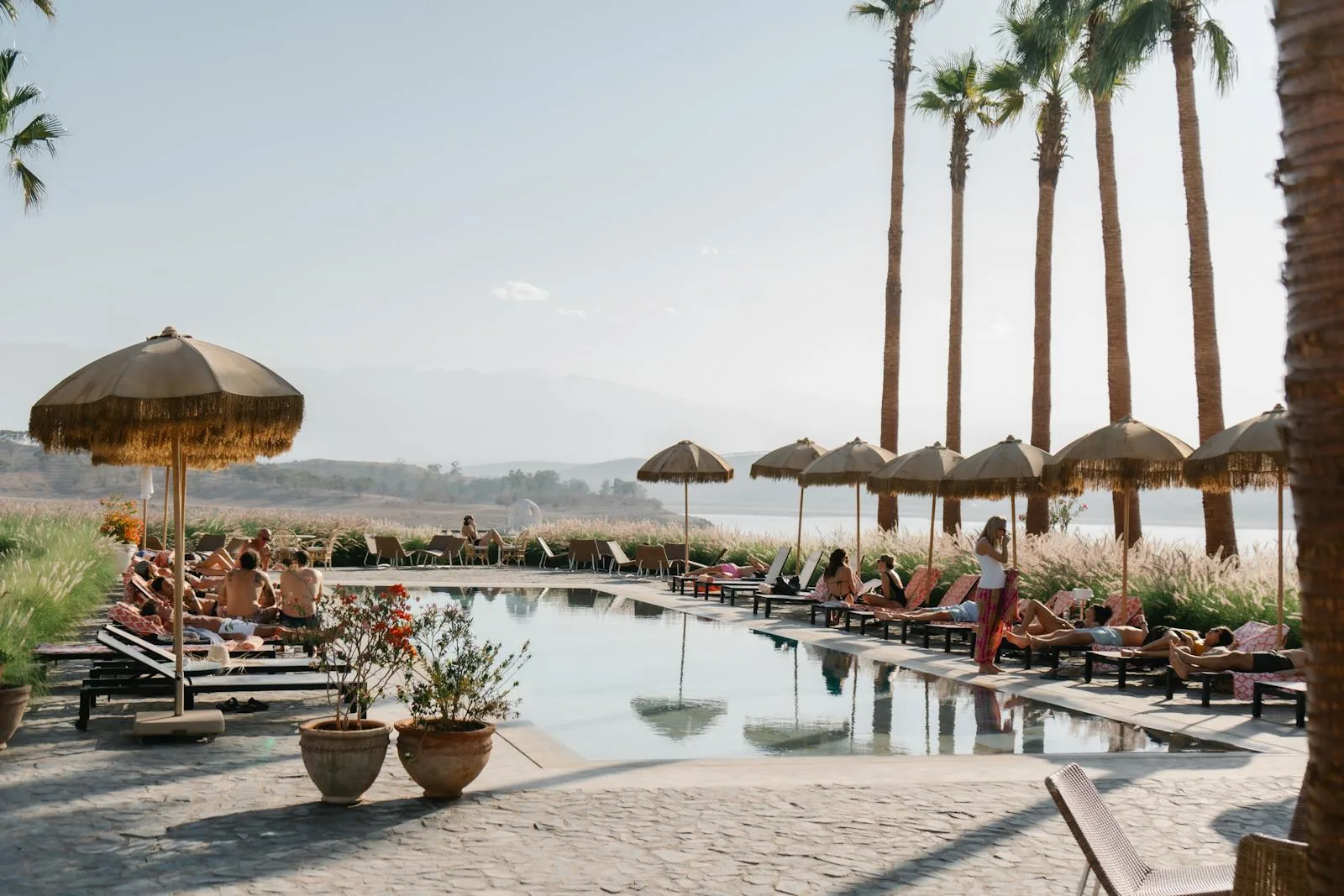
Seville is one of the hottest cities in Spain — average July daytime highs reach 43°C (109°F), with August highs up to 44°C (111°F) and recorded extremes approaching 45°C. The heat is intense enough that many residents leave the city in July and August. For visitors who remain, a hotel swimming pool is not a luxury add-on but a practical necessity: mid-afternoon outdoor activity becomes effectively impossible, and pool access during the 2pm–6pm heat peak is the standard way to manage the temperature. The most practical hotel pools in Seville are those that can be reached without leaving the property — rooftop pools that combine shade access, a bar, and space for unstructured time.
Best hotel pools in Seville
The Hotel Alfonso XIII, a Luxury Collection property near Seville’s Cathedral and Real Alcazar, operates a large outdoor swimming pool surrounded by exotic gardens — consistently rated as one of the best hotel pool settings in the city for the combination of heritage architecture and shaded pool space. Hotel Colón Gran Meliá, a five-star property with Belle Époque architecture, has a rooftop pool with panoramic views over Seville’s rooftops and the tower of the Giralda. Only YOU Hotel Sevilla operates a rooftop pool with a swim-up bar, rated highly for its accessibility and the quality of the poolside service. For families or visitors who want multiple pool options, Hotel Barceló Sevilla Renacimiento operates three pools including a large outdoor pool, a children’s pool, and a heated indoor/outdoor pool available November through April. Most Seville hotel pools are accessible exclusively to guests; the city has limited public pool infrastructure relative to the size of the demand in summer, making hotel pool access the primary option for most visitors.
Rooftop Pools in Lisbon and Heated Pools in Gran Canaria
Lisbon rooftop pools
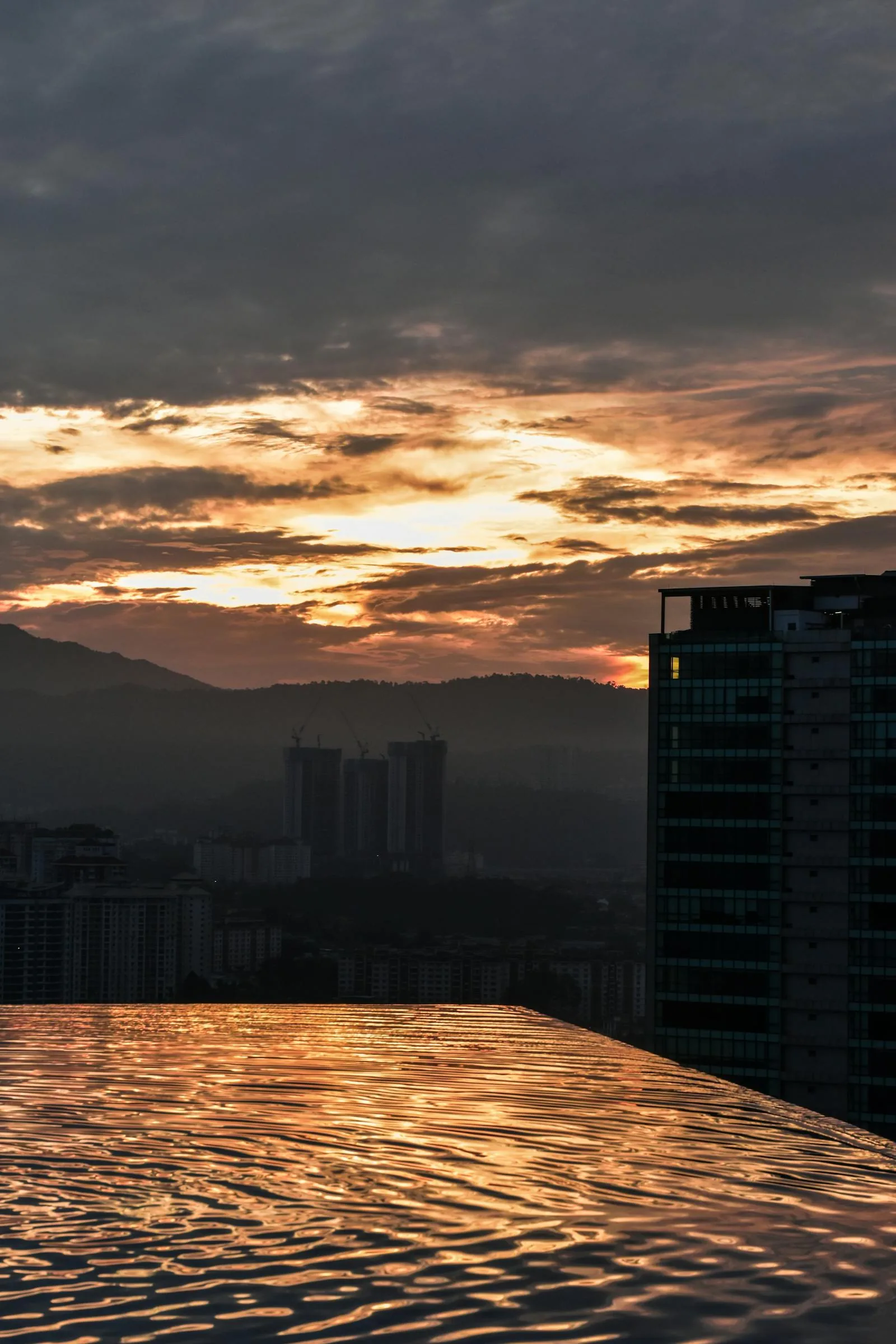
Lisbon’s combination of approximately 300 days of sunshine per year, a compact historic centre with dramatic elevation changes, and a hotel market that has developed significantly since 2015 has produced a rooftop pool landscape that is one of the strongest in Western Europe. The EPIC SANA Marquês Hotel operates a heated infinity rooftop pool overlooking Lisbon’s downtown, designed with sun loungers facing the panoramic city view — the pool appears to spill over the hotel edge toward the Tagus River in the distance. The Verride Palácio Santa Catarina is a 5-star boutique property with a rooftop pool offering 360° views across Lisbon’s terracotta rooftops. NH Collection Lisboa Liberdade has a seasonal rooftop pool eleven floors above the Avenida da Liberdade, with a grass surround and sunbed facilities. For those visiting outside the main summer season (April–October), it is worth confirming whether the hotel’s rooftop pool is heated — some Lisbon properties operate seasonal outdoor pools that close in cooler months, while others, including EPIC SANA, maintain heated pool access year-round. The Rooftop Guide’s Lisbon pool list provides up-to-date details across 11 properties with rooftop pool access.
Heated pools in Gran Canaria — year-round swimming at Maspalomas
Gran Canaria’s southern resort area — centred on Maspalomas and Playa del Inglés — has a subtropical climate averaging 21°C year-round, with summer highs of 24–30°C and winter temperatures of 15–22°C. With approximately 2,800 hours of sunshine annually, the destination operates as a year-round swimming resort. Most large hotels in the area heat their outdoor pools during the winter months, typically to 22–36°C, making outdoor pool swimming practical even in December and January when air temperatures alone would not warm unheated pools sufficiently for comfortable bathing. Maspalomas Resort by Dunas operates all of its pools heated year-round, including dedicated children’s pools. Hotel Cordial Mogán Playa runs two large adult heated pools with whirlpools and a separate heated children’s pool in winter. Palm Oasis Maspalomas, set in tropical gardens near the Maspalomas Dunes and Atlantic Ocean, heats its outdoor pools to 27–36°C in winter and includes waterfalls, hot tubs, and a slide. Seaside Palm Beach is noted for its heated pool with mosaic tile design. For visitors to Gran Canaria specifically seeking heated pool access in winter, filtering Booking.com or TripAdvisor for “heated pool” in the Maspalomas area returns the most relevant subset of the island’s approximately 2,000 hotel properties.
Mexico Cenotes — Natural Swimming Pools of the Yucatán Peninsula
What cenotes are and the best swimming cenotes
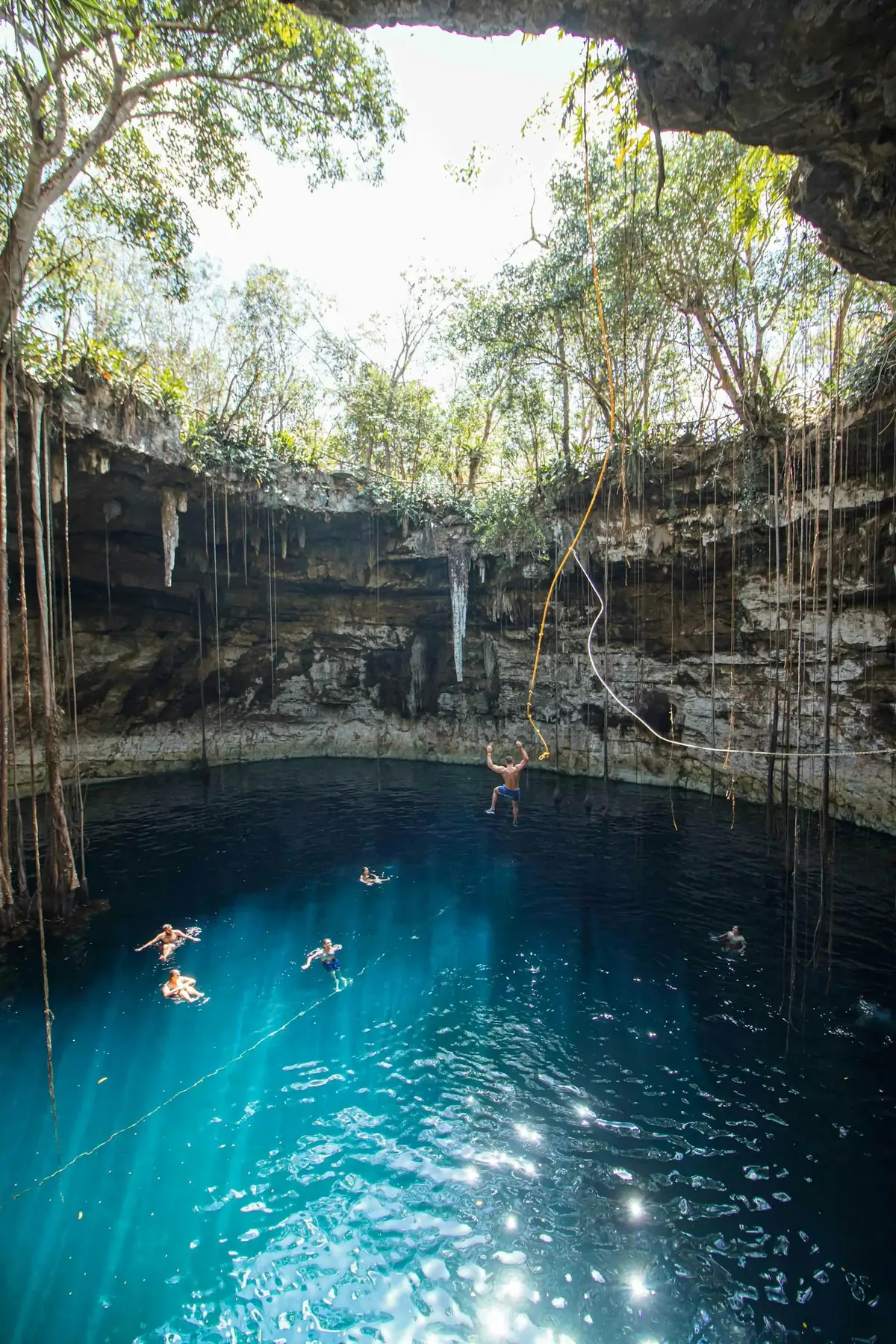
Cenotes are natural freshwater pools formed in Mexico’s Yucatán Peninsula when the limestone bedrock collapses, exposing the groundwater system underneath. The Yucatán’s geology — a flat limestone shelf with no surface rivers — means that the entire peninsula’s freshwater is stored underground; cenotes are where that water is accessible from the surface. The Yucatán Peninsula has over 6,000 recorded cenotes, ranging from small enclosed cavern pools to large open-air lakes. For swimming, the most visited are concentrated along the Riviera Maya corridor between Cancún and Tulum.
Cenote Ik Kil, located 3 km from Chichen Itza near the town of Pisté, is the most photographed cenote in Mexico — a nearly circular open-air pool approximately 60 metres wide and 40 metres deep, with limestone walls rising 26 metres above the water surface, draped with tropical vines and tree roots. Entry requires a ticket (approximately 180 MXN / £8) and a life jacket for non-swimmers; the depth makes it unsuitable for unconfident swimmers without one. Gran Cenote, located 3 km from Tulum on the road to Cobá, is a partially open, partially cavern cenote with multiple interconnected pools — popular for snorkelling and scuba diving due to its visibility, which can reach 50 metres. Dos Ojos (“Two Eyes”) near Tulum is a cavern cenote system with two main pools connected by an underwater passage — one of the longest explored underwater cave systems in the world and a major diving destination, with surface snorkelling also accessible. Cenote Azul, near Playa del Carmen, is a large open-air cenote particularly suited for families — shallow sections, turquoise water, and open layout, with entry fees around 150–200 MXN. For Lonely Planet’s guide to Yucatán cenotes, the recommended approach for first-time visitors is to visit cenotes around Tulum and Valladolid as day trips rather than attempting to visit Ik Kil on the Chichen Itza tour circuit, where crowds are heavier in the peak hours of 10am–2pm.
Frequently Asked Questions
Are there public swimming pools in Seville?
Seville has a small number of public municipal pools operated by the city — including facilities in the Polideportivo San Pablo and other municipal sports complexes — but these have restricted capacity and opening hours. For most visitors, hotel pools are the primary option for pool access in Seville. Most Seville hotels with pools restrict access to overnight guests. The key hotel pools include Hotel Alfonso XIII (luxury outdoor pool in exotic gardens), Hotel Colón Gran Meliá (rooftop panoramic views), Only YOU Hotel Sevilla (swim-up bar), and Barceló Sevilla Renacimiento (three pools including indoor/outdoor). Summer temperatures average 43–44°C in July and August, making pool access a priority for any hotel stay.
Which Lisbon hotels have rooftop pools?
The best rooftop pools in Lisbon include EPIC SANA Marquês Hotel (heated infinity pool overlooking downtown Lisbon and the Tagus), Verride Palácio Santa Catarina (360° views from a 5-star boutique hotel), and NH Collection Lisboa Liberdade (seasonal rooftop pool eleven floors up on Avenida da Liberdade). Lisbon has approximately 300 days of sunshine per year. Some rooftop pools are seasonal (summer only); EPIC SANA operates a heated pool year-round. The Rooftop Guide lists 11 Lisbon hotels with rooftop pools at therooftopguide.com.
Do Gran Canaria hotel pools need to be heated?
Yes — during winter months (December–February), Gran Canaria’s average temperatures drop to 15–22°C, which is too cool for comfortable outdoor swimming in an unheated pool. Most major hotels in the Maspalomas and Playa del Inglés resort area heat their outdoor pools to 22–36°C in winter, making outdoor swimming practical year-round. Maspalomas Resort by Dunas heats all pools year-round; Palm Oasis Maspalomas heats to 27–36°C in winter. When searching for Gran Canaria accommodation for a winter visit, filtering specifically for “heated pool” on Booking.com or TripAdvisor ensures the pool will be usable on arrival.
What is a cenote and can you swim in them?
A cenote is a natural freshwater pool formed in Mexico’s Yucatán Peninsula when limestone bedrock collapses, exposing the underground water table. The Yucatán has over 6,000 cenotes. Yes — swimming is permitted in most tourist-accessible cenotes, and they are a major attraction of the Riviera Maya. The most popular swimming cenotes include Cenote Ik Kil (near Chichen Itza, 60m wide, 40m deep), Gran Cenote (near Tulum, excellent for snorkelling), Dos Ojos (cavern cenote, diving destination), and Cenote Azul (near Playa del Carmen, shallow and family-friendly). Entry fees are typically 150–180 MXN (£7–£8). Life jackets are available at most cenotes and required at deeper sites like Ik Kil for non-swimmers.