pH Plus for swimming pools is a granular sodium carbonate (soda ash) product used to raise pool water pH when it falls below the recommended range of 7.2–7.6. Pool pH drops naturally over time through chlorination, bather activity and rainfall — and when it falls too low, chlorine becomes less effective, pool infrastructure is damaged, and bathers experience eye and skin irritation. This guide covers when to use pH Plus, how much to add, how to apply it correctly, and which UK products are available.
- pH Plus (sodium carbonate/soda ash) raises pool water pH. Use it when pH drops below 7.2 — the ideal range is 7.2–7.6 for bather comfort and chlorine effectiveness.
- Standard dosage: approximately 450g per 10,000 gallons, or 500g per 100m³ in soft water areas. Always retest pH 6–8 hours after adding.
- UK pricing for sodium carbonate pH Plus: 1kg £6.99, 2.5kg £9.99, 5kg £14.49, 10kg £24.99 (Swimming Pool Chemicals).
- Sodium carbonate is more potent than sodium bicarbonate (baking soda) for raising pH — use sodium bicarbonate when you need a gentler, smaller pH increase without significantly affecting alkalinity.
What pH Plus Does and When to Use It
Swimming pool water pH is a measure of how acidic or alkaline the water is, on a scale from 0 to 14. For domestic pools, the target range is 7.2–7.6 — mildly alkaline, which mimics the natural pH of human eyes and skin. Maintaining pH in this band maximises chlorine’s sanitising effectiveness and protects both bathers and the pool’s physical structure.
The Role of pH in Swimming Pool Water
At pH 7.2–7.6, chlorine operates at its highest efficiency as a sanitiser. When pH drops below 7.2, the chemistry shifts: free chlorine becomes more corrosive (hypochlorous acid), eating through pool linings faster than necessary, and bather complaints about stinging eyes and skin increase. When pH rises above 7.6, chlorine becomes progressively less effective — at pH 8.0, only around 20% of chlorine is in its active sanitising form. pH management is therefore directly linked to both the health of bathers and the cost of running the pool (a pool with correct pH requires less chlorine to achieve the same sanitising effect).
Low pH also corrodes pool grouting, plaster and metal fittings. Over time, acidic water accelerates damage to heat exchangers, pump seals and pool surfaces — repair costs that significantly exceed the cost of maintaining pH balance. Using a pH increaser when needed is one of the lowest-cost forms of pool maintenance.
Signs Your Pool pH Is Too Low
The clearest indicator of low pool pH is a test result below 7.2 — weekly water testing with a test kit or test strips is the standard prevention method. Alongside test results, signs that may indicate low pH include: eye or skin irritation in bathers; a noticeably sharp or chemical smell from the pool (often mistaken for excess chlorine — it is more typically associated with chloramines formed in low-pH conditions); faster-than-expected chemical consumption; and visible corrosion or staining on pool wall tiles, grout or metal ladder fittings.
pH naturally falls in pools due to the acidic by-products of chlorination, organic material introduced by bathers (sweat, body oils), carbon dioxide absorption from the air, and rainfall — which in the UK is typically mildly acidic. Outdoor pools lose pH stability faster than indoor pools due to combined sun, wind and rainfall exposure. Testing at least once per week during the swimming season, and adjusting with pH Plus or pH reducer as needed, keeps water within the target band.
Sodium Carbonate vs Sodium Bicarbonate for Raising Pool pH
Both sodium carbonate (Na₂CO₃, sold as pH Plus or soda ash) and sodium bicarbonate (NaHCO₃, sold as alkalinity increaser or baking soda) raise pool pH, but they do so at different rates and through different mechanisms.
Sodium carbonate is the standard active ingredient in pH Plus products. It raises pH significantly and quickly — 450g per 10,000 gallons is the recommended dose for a meaningful pH adjustment. It is the correct choice when pH has fallen below 7.2 and needs to be brought back into range. Sodium bicarbonate raises both pH and total alkalinity more gently, and is used when the primary goal is increasing alkalinity (the water’s buffering capacity) rather than pH directly. If your water tests show both low pH and low alkalinity, raising alkalinity with sodium bicarbonate first is often recommended — as correct alkalinity makes pH easier to stabilise long-term. For straightforward low-pH corrections in otherwise balanced water, sodium carbonate pH Plus is the appropriate product.
How to Use pH Plus: Dosage and Application
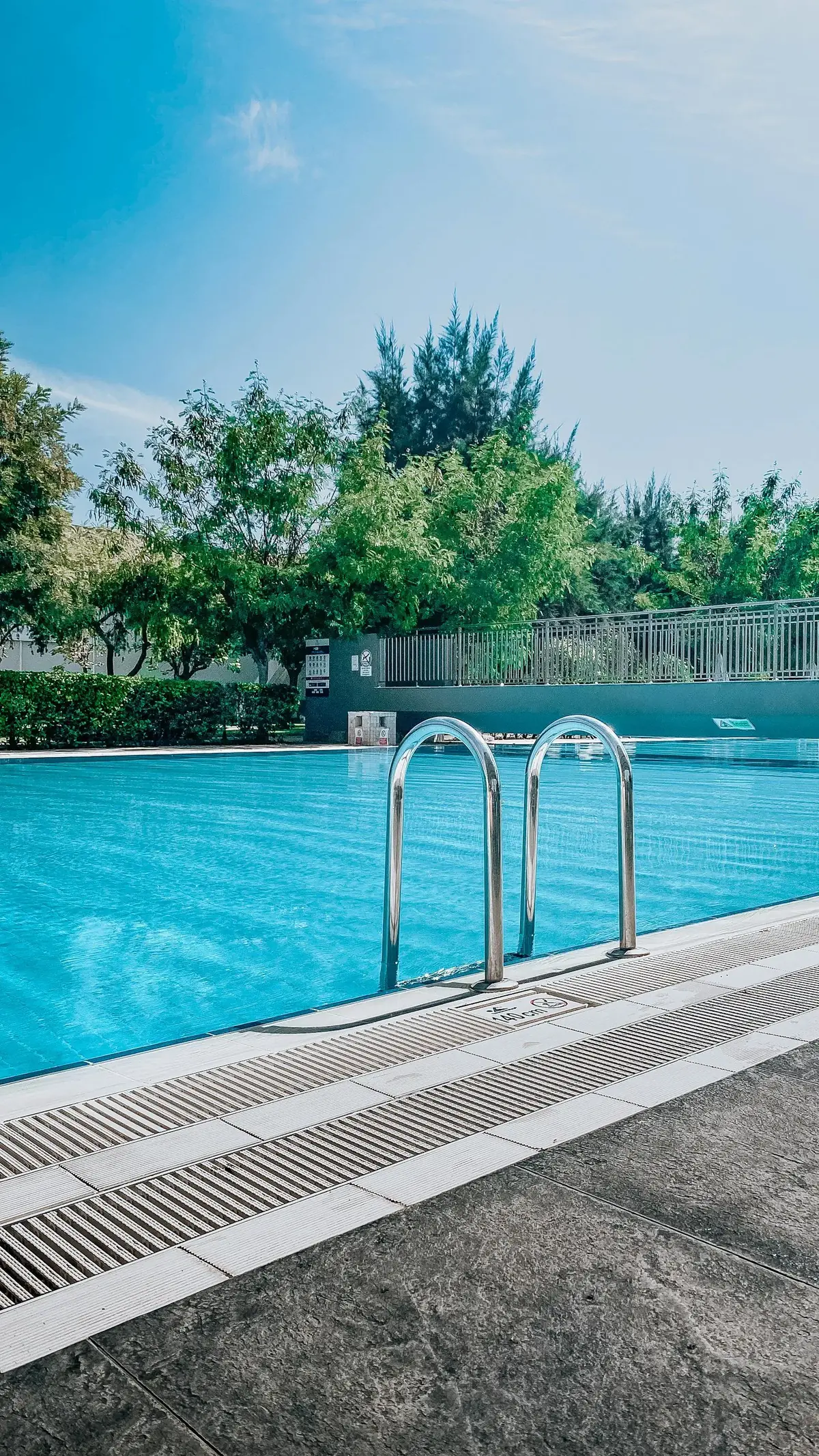
pH Plus is straightforward to apply, but the sequence matters: test before adding, apply correctly while the pump is running, and retest at the right interval. Adding too much pH Plus in a single dose can overshoot the target range and create alkaline water, which causes its own problems (cloudy water, reduced chlorine effectiveness, potential scale formation).
Dosage and UK Products
The standard dosage for sodium carbonate pH Plus is approximately 450g per 10,000 gallons of pool water (equivalent to roughly 100g per 1,000 litres). In soft water areas, the recommended dose is 500g per 100m³ of pool volume. Adding 6 oz (approximately 170g) of soda ash to a 10,000-gallon pool typically raises pH by around 0.2 points — useful for calculating how much to add when the pH gap is small.
In the UK, Swimming Pool Chemicals sells pH Increaser (sodium carbonate) in five sizes: 1kg at £6.99, 2.5kg at £9.99, 5kg at £14.49, 10kg at £24.99 and 20kg at £42.99. Discount Pool Store and OPC (Online Pool Chemicals) also carry sodium carbonate pH Plus in 1kg and 5kg formats. For pool owners who dose regularly, the 5kg or 10kg size offers the lowest cost per kilogram. A seasonal supply for a typical 40m³ garden pool might require 2–3kg over the summer depending on local water hardness, rainfall and bather load.
Application Steps and Retesting
The correct application sequence for pH Plus is:
- Test current pH using a test kit or test strips. Confirm the reading is below 7.2 before adding pH Plus.
- Calculate the dose based on pool volume and how far below 7.2 the current pH reading sits.
- Dissolve in warm water first: measure the required amount of pH Plus granules, place in a plastic bucket half-filled with warm pool water, and stir until fully dissolved. Never add granules directly to the pool without pre-dissolving.
- Distribute evenly around the pool perimeter while the filter pump is running, adding the dissolved solution slowly. Running the pump ensures the product circulates throughout the pool volume.
- Wait 6–8 hours before retesting. Do not add further pH Plus until after this interval — the full effect of the dose may take several hours to stabilise.
- Retest and repeat if necessary, using a smaller dose if pH is close to 7.2 but not yet in range.
One practical tip for UK pool owners: test and adjust pH in the evening after the day’s swim sessions have ended, rather than immediately before swimming. This allows the overnight filtration cycle to distribute the product fully and gives time for the pH to stabilise before the next morning. For context on how pH interacts with other pool water balance parameters, see our guide to types of swimming pools, which covers how different pool construction affects ongoing water balance management.
| Product | Size | Price (UK) | Cost per kg |
|---|---|---|---|
| pH Increaser (SPC) | 1kg | £6.99 | £6.99/kg |
| pH Increaser (SPC) | 2.5kg | £9.99 | £4.00/kg |
| pH Increaser (SPC) | 5kg | £14.49 | £2.90/kg |
| pH Increaser (SPC) | 10kg | £24.99 | £2.50/kg |
| pH Increaser (SPC) | 20kg | £42.99 | £2.15/kg |
Frequently Asked Questions
What is pH Plus for pools?
pH Plus for swimming pools is a granular sodium carbonate (soda ash) product that raises water pH when it falls below the recommended range of 7.2–7.6. It is the standard treatment for acidic pool water, dissolving quickly in water and distributing throughout the pool when applied while the filter pump is running.
When should I add pH Plus to my pool?
Add pH Plus when pool water tests below pH 7.2. Test pH at least once per week during the swimming season. Low pH causes eye and skin irritation, reduces chlorine effectiveness, and corrodes pool surfaces and metalwork. The ideal range for bather comfort and sanitiser efficiency is 7.2–7.6.
How much pH Plus do I add to my pool?
The standard dose is approximately 450g per 10,000 gallons of pool water, or 100g per 1,000 litres. In soft water areas, use 500g per 100m³. Adding 170g (6 oz) to a 10,000-gallon pool raises pH by approximately 0.2 points. Always dissolve in warm water in a bucket before adding to the pool, never add granules directly.
Can I use baking soda instead of pH Plus?
Baking soda (sodium bicarbonate) raises both pH and alkalinity, while pH Plus (sodium carbonate) raises pH more directly and with greater effect per gram. For a straightforward pH correction below 7.2, sodium carbonate pH Plus is the correct product. Use sodium bicarbonate if you need to raise alkalinity rather than pH directly, or want a smaller, more gradual pH increase.
How long does pH Plus take to work?
pH Plus begins working immediately on contact with pool water, but the full stabilisation effect takes 6–8 hours. Always retest pH after this interval before deciding whether to add more product. Testing too early and adding a second dose before the first has fully circulated risks overshooting the target range into alkaline territory (above 7.6).
Where can I buy pH Plus for a swimming pool in the UK?
pH Plus (sodium carbonate) is available from Swimming Pool Chemicals (swimmingpoolchemicals.co.uk), UKPS, Discount Pool Store, OPC Online Pool Chemicals and The Pool Cleaners. Prices start from £6.99 for 1kg, with 5kg available from £14.49 and bulk 20kg bags at £42.99 for the lowest per-kg cost.