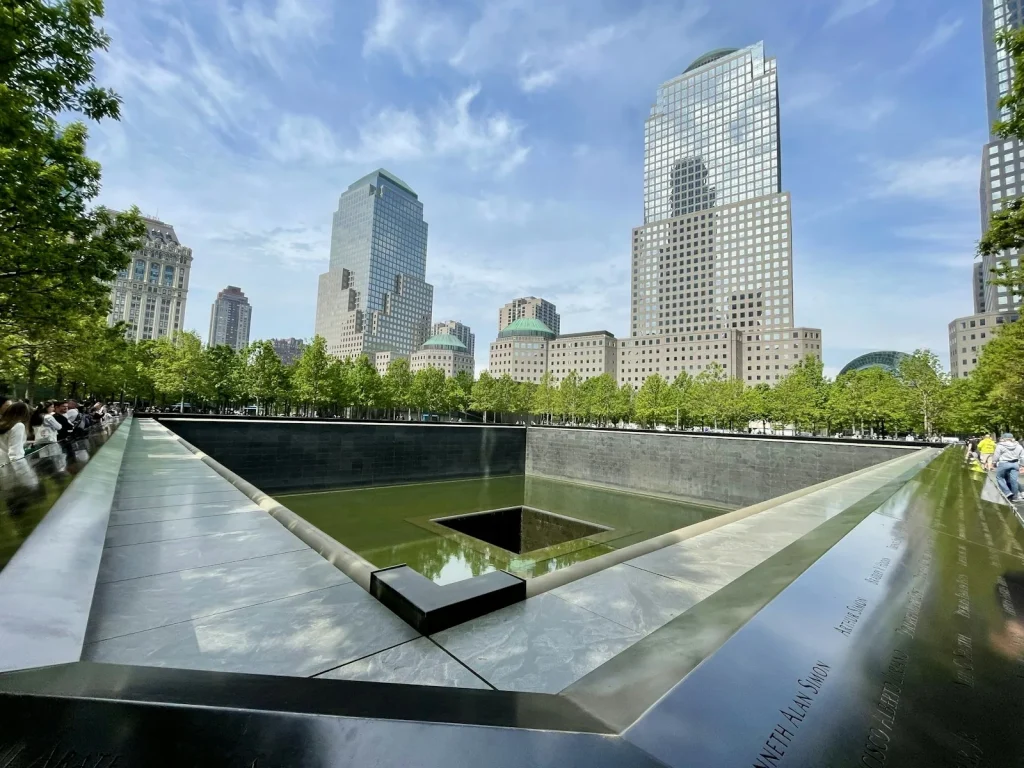
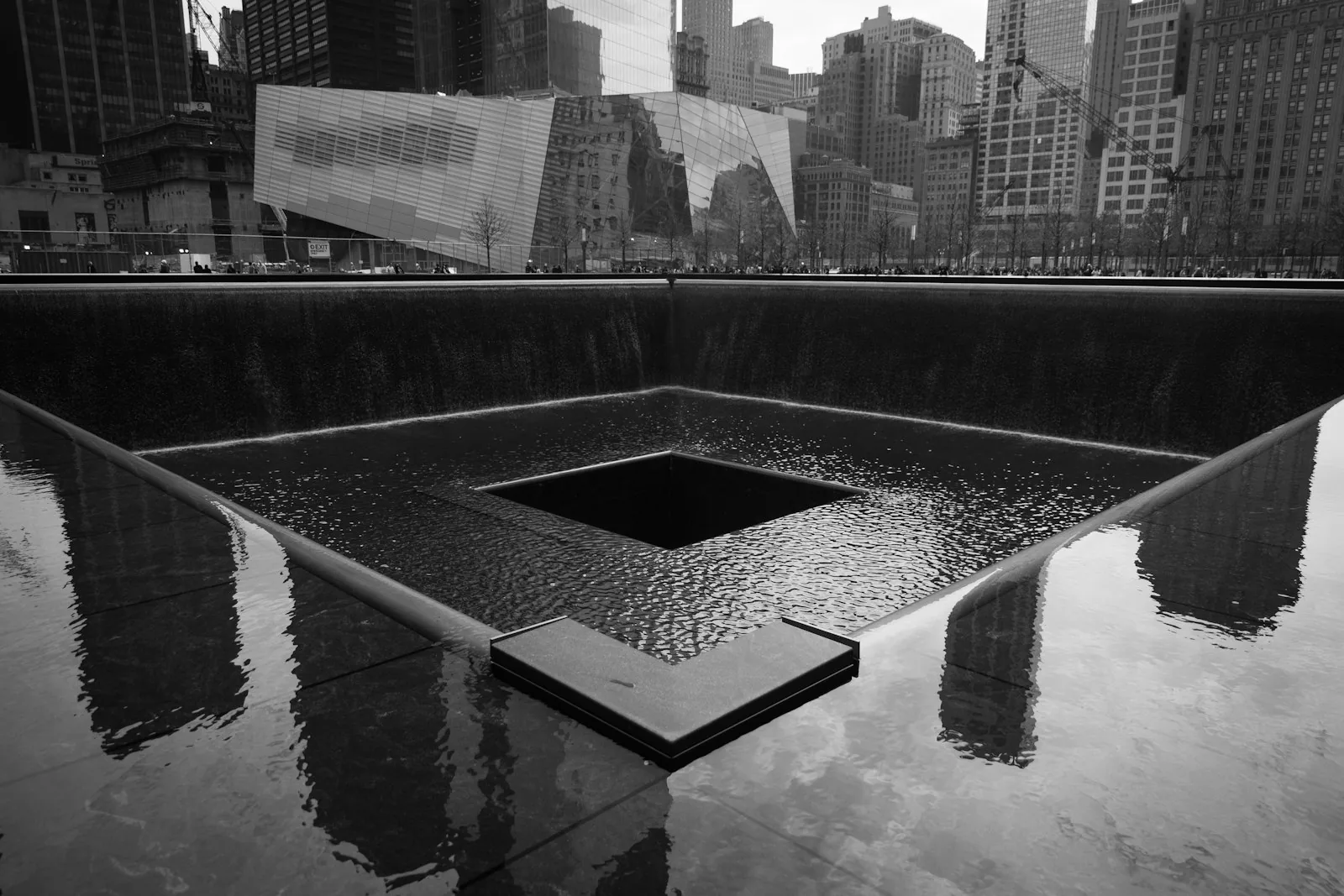
The two reflecting pools at the National September 11 Memorial in Lower Manhattan occupy the exact footprints of the original Twin Towers. Each is nearly an acre in size, with 30-foot waterfalls descending into square basins and then dropping a further 20 feet into a central void — the largest manmade waterfalls in North America. The names of 2,983 people killed in the 2001 and 1993 attacks are inscribed in bronze parapets surrounding the pools. The Memorial is open free of charge, daily from 8am to 8pm. This guide covers the design, the technical specifications and what to expect when visiting.
- The two pools each cover nearly 1 acre, with waterfalls descending 30 feet into square basins and then 20 more feet into a central void — the largest manmade waterfalls in North America.
- 2,983 names are inscribed in 152 bronze parapets: 2,977 from the September 11, 2001 attacks and 6 from the February 26, 1993 World Trade Center bombing.
- The design — “Reflecting Absence” by Michael Arad and landscape architect Peter Walker — was selected in January 2004 from 5,201 entries. Total construction cost: $610 million.
- The Memorial opened on September 11, 2011 — the 10th anniversary of the attacks. It is free to visit, open daily 8am–8pm at 180 Greenwich Street, New York.
Design and Architecture: How the 9/11 Memorial Pools Were Built
The Reflecting Absence Design
In January 2004, a design competition with 5,201 entries from 63 countries concluded with the selection of “Reflecting Absence,” submitted by Israeli-American architect Michael Arad of Handel Architects in collaboration with landscape architect Peter Walker of Peter Walker and Partners. The concept centres on making loss visible rather than celebrating triumph: two square voids occupy the footprints of the towers, water cascades into them continuously, but they can never be filled. As Arad described the intention, the pools represent “absence made visible” — a spatial response to loss that cannot be repaired or completed. The design deliberately offers no focal point or monument at its centre; the void is the monument. Surrounding the pools, approximately 400 swamp white oak trees were planted in a formal grid, softening the hard geometry with seasonal change while creating a space physically distinct from the streets of Lower Manhattan around it.
Pool Dimensions and Waterfall Specifications
Each of the two pools covers nearly one acre, set precisely within the original tower footprints. Water falls 30 feet from the pool edge into the main square basin, then drops a further 20 feet into a smaller central square void from which it does not re-emerge visibly — disappearing, as with the design concept, into absence. The system is engineering on a substantial scale: 16 pumps circulate 26,000 gallons of water per minute, recirculating over 480,000 gallons of water daily through a closed-loop system. The waterfalls are the largest manmade waterfalls in North America. The pools were built by Delta Fountains. The total project cost, including the memorial plaza and underground museum structure, reached $610 million. A maintenance crew of three cleans the pools five nights a week in a cycle that takes approximately eight hours per session.
The 2,983 Names on the Bronze Parapets
152 bronze parapets surround the two pools, on which the names of all victims are inscribed. The total is 2,983: 2,977 people killed in the attacks of September 11, 2001 (at the World Trade Center, at the Pentagon, and on the four hijacked flights) and 6 people killed in the February 26, 1993 World Trade Center bombing. The names are not arranged alphabetically but by meaningful adjacencies — a deliberate process in which families and colleagues were consulted to group names so that those who worked together, died together on flights, or shared meaningful relationships appear beside one another. The names from the North Tower appear on the North Pool parapets; the South Tower names appear around the South Pool. The names of first responders — firefighters, police officers, paramedics — are concentrated together.
Visiting the 9/11 Memorial Pools: Admission, Hours and What to Know
Location, Opening Times and Admission
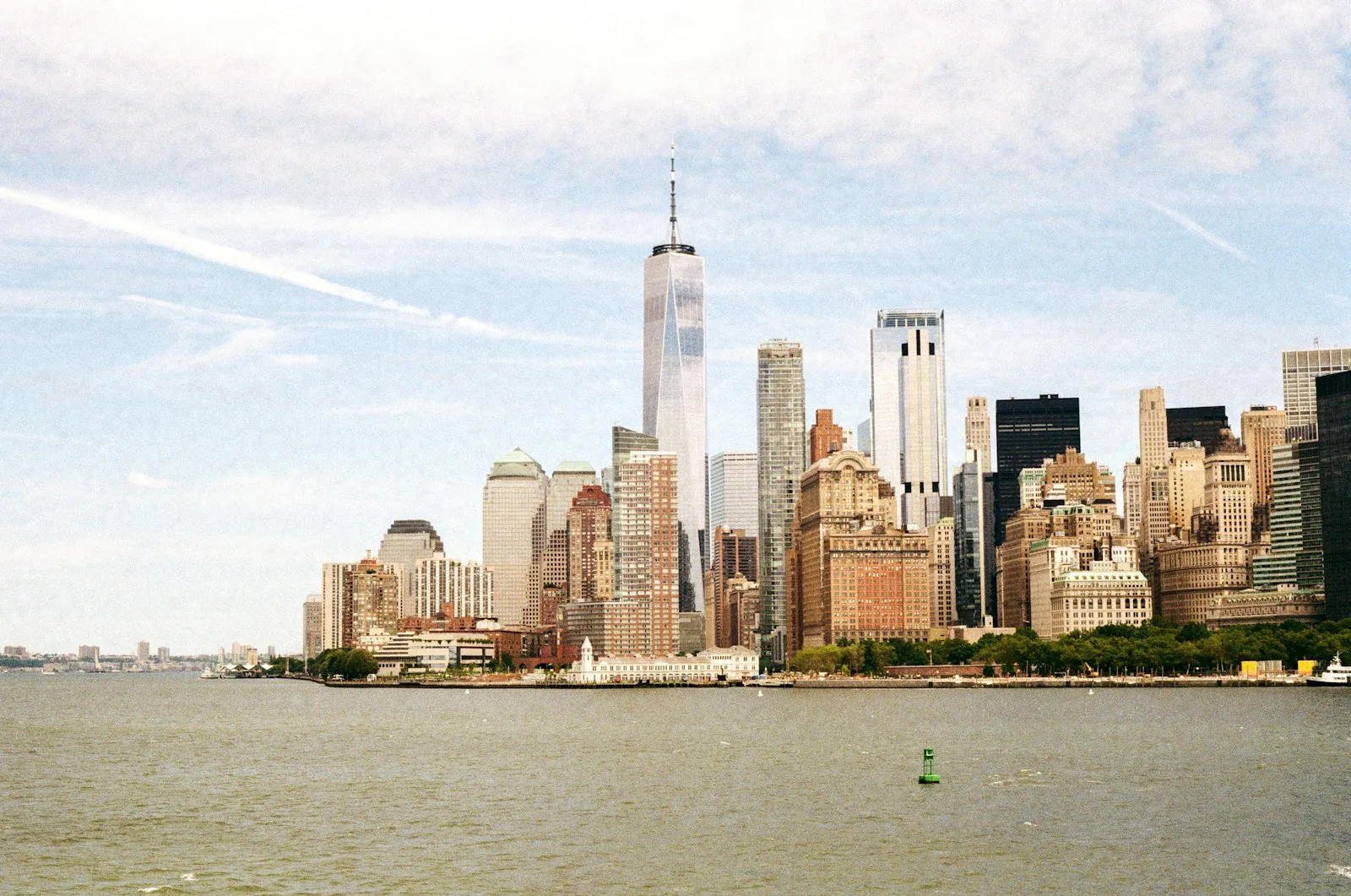
The National September 11 Memorial is located at 180 Greenwich Street, New York, NY 10007, in Lower Manhattan’s Financial District. The Memorial itself is free and open daily from 8am to 8pm. The Museum (located underground beneath the plaza) is open Wednesday through Monday from 9am to 7pm and requires a paid ticket — adult admission is $30, reduced rates for seniors, military, and children. The closest subway stations are Cortlandt Street (1/2/3 lines) and Fulton Street (2/3/A/C/E/J/Z lines), both within a few minutes’ walk. The plaza includes the two reflecting pools, the 400 swamp white oak trees, and the Survivor Tree — a Callery pear tree that was found at Ground Zero after the attacks, nursed back to health, and replanted on the plaza. The Museum entrance is at the northern edge of the plaza, marked by a large trident steel column salvaged from the original towers.
What to Expect and When to Visit
The pools are most peaceful early in the morning (8–10am) before organised tour groups and the lunchtime crowd arrive. Evening visits after 5pm offer a different atmosphere — the pools are illuminated and the surrounding Financial District is quieter than during the working day. The sound of the waterfalls is significant; at the edge of the pools, it largely masks the surrounding city noise, creating an acoustically contained environment. The central voids are visible from all four sides of each pool but are most clearly seen from the east and west, where the angle of light falls more directly into them. The pools are maintained in all weather — the waterfall system operates year-round — and the plaza is open in rain and cold as well as summer. Photography is permitted throughout the memorial plaza.
The Museum and Wider Ground Zero Site
The National September 11 Memorial Museum (Wednesday–Monday, 9am–7pm, $30 for adults) sits beneath the memorial plaza and contains artefacts, survivor testimonies, and the original steel structure of the towers in its underground galleries. One World Trade Center — the 541-metre Freedom Tower — is visible from the plaza and is the tallest building in the Western Hemisphere. The Oculus transit hub (Santiago Calatrava’s white-ribbed structure) and Brookfield Place are within a 5-minute walk, making the memorial part of a broader precinct in Lower Manhattan’s rebuilt waterfront area. Guided tours of the memorial are available, including tours specifically focused on the names and the meaningful adjacencies of the parapets. For context on the world’s most notable pools — both for contemplation and swimming — see our guide to the best swimming pools in the world.
| Specification | Detail |
|---|---|
| Number of pools | 2 (North Pool and South Pool) |
| Each pool size | Nearly 1 acre |
| Waterfall height | 30 feet (basin) + 20 feet (central void) |
| Names inscribed | 2,983 (152 bronze parapets) |
| Pump system | 16 pumps, 26,000 gallons/minute |
| Architect | Michael Arad (Handel Architects) |
| Landscape architect | Peter Walker and Partners |
| Opened | September 11, 2011 |
| Construction cost | $610 million |
| Memorial admission | Free, daily 8am–8pm |
Frequently Asked Questions
How big are the 9/11 memorial pools?
Each of the two reflecting pools covers nearly one acre and sits within the footprint of one of the original Twin Towers. The pools are square in shape, matching the original tower footprints. Together, the North Pool and South Pool represent the two towers.
How deep are the 9/11 memorial pools?
The waterfalls descend 30 feet from the pool edge to the main basin, and then a further 20 feet from the basin into the central void. The total drop from pool edge to the bottom of the void is 50 feet. The pools are recessed approximately 30 feet below the surrounding plaza level.
How many names are on the 9/11 memorial?
2,983 names are inscribed on 152 bronze parapets surrounding the two pools: 2,977 people killed on September 11, 2001 (at the World Trade Center, Pentagon and on the four hijacked flights) and 6 people killed in the February 26, 1993 World Trade Center bombing.
Who designed the 9/11 memorial pools?
Michael Arad of Handel Architects (architect) and Peter Walker of Peter Walker and Partners (landscape architect) designed the memorial, titled “Reflecting Absence.” Their entry was selected in January 2004 from 5,201 competition submissions from 63 countries.
Is the 9/11 memorial free?
Yes. The outdoor Memorial — the two reflecting pools, the bronze parapets, and the plaza — is free and open daily from 8am to 8pm. The underground Museum requires a paid ticket (adult $30). There is no charge to walk through the plaza and view the pools.
What are the opening hours of the 9/11 memorial?
The Memorial plaza is open daily from 8am to 8pm, year-round. The Museum is open Wednesday through Monday from 9am to 7pm (closed Tuesdays). The address is 180 Greenwich Street, New York, NY 10007.
Why are the 9/11 memorial pools square?
The pools are square because they sit in the exact footprints of the original Twin Towers, which were square in plan. The memorial design by Michael Arad preserves the physical absence of the towers as the central element — the square void where the buildings once stood is both the literal and symbolic heart of the memorial.