A natural swimming pool replaces chlorine and chemicals with living plants and biological filtration — giving you crystal-clear water that’s genuinely good for your skin, supports local wildlife, and blends into a UK garden far more gracefully than a conventional pool ever could. If you’re a homeowner thinking seriously about adding one, this guide covers exactly how these systems work, what building your own involves, and what you should budget before picking up a spade.
- Natural pools filter water through plant root zones and biological media — no chlorine required.
- At least 50% of the pool’s total surface area must be a shallow plant zone for effective filtration.
- Planning permission is not usually required in England and Wales — natural pools are typically treated like garden ponds.
- A competent DIY build can cost around £30,000 compared with £60,000–£100,000+ for a professional installation.
How Natural Swimming Pools Work — Plants Instead of Chemicals
The genius of a natural swimming pool lies in replicating what happens in a healthy lake or river: biology does the work that chemicals do in a conventional pool. Water stays clean not because it’s dosed with sanitiser, but because it passes continuously through a living filtration system. Understanding how that system works is the starting point for anyone planning a DIY build.
The Plant Zone and Biological Filtration
Natural pools rely on three distinct filtration mechanisms working in combination: a biological filter in which shale or similar media absorbs phosphates, a plant root zone colonised by beneficial bacteria that break down organic matter, and a circulation and aeration pump that keeps the water moving through both zones. Remove any one of the three and water quality deteriorates.
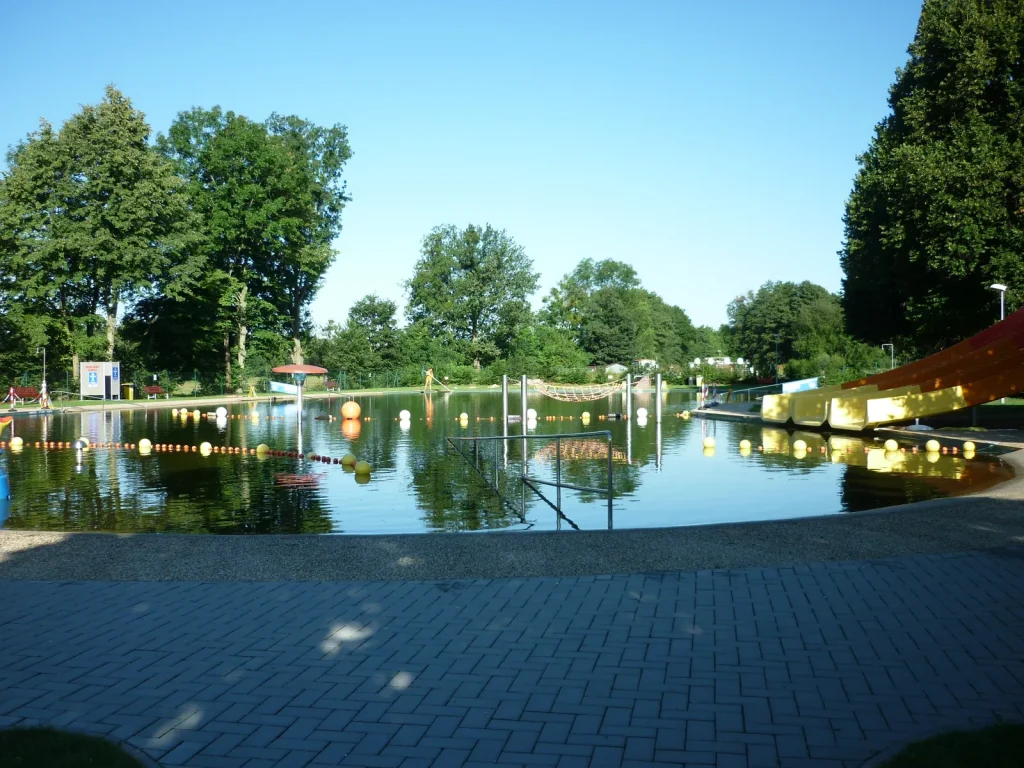
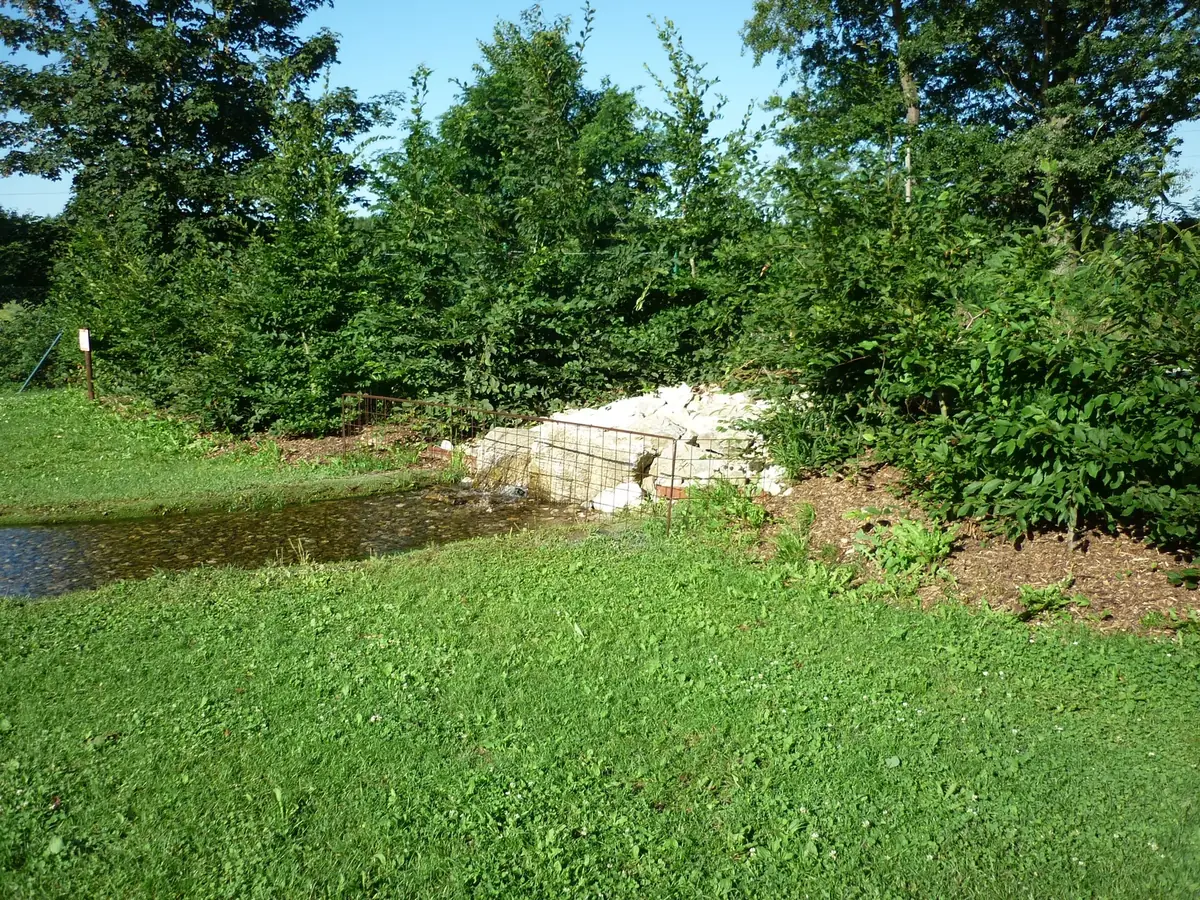
The plant zone is the heart of the system. A minimum of 50% of the pool’s total surface area must be given over to a shallow plant zone; water from the swimming area flows continuously into this zone, passes through the root mass and biological substrate, and returns clean to the swimming area. The division between the two zones is usually a submerged wall or berm — visible from above as a shallow, planted shelf surrounding or adjacent to the deeper swimming area.
For UK conditions, the best-performing aquatic plants include aquatic irises, water lilies, sedges, rushes, hornwort and arrowhead. These species are hardy, widely available, and effective at extracting nutrients — particularly nitrates and phosphates — that would otherwise feed algae. A diverse planting with a mix of submerged, emergent and floating species performs better than a monoculture.
Maintenance is lighter than most homeowners expect. The primary ongoing task is removing leaf litter and dead plant material — described by one specialist as “half an hour with a net” for a well-designed pool. Keeping overhanging deciduous trees trimmed back, and installing a net in autumn, reduces this task considerably.
Design Basics: Size, Depth and Layout
Several design decisions made at the planning stage have a significant impact on both construction complexity and long-term performance. Getting these right before any ground is broken saves time and money.
Shape: Rectangular, square or oval pools are the cheapest to construct because they minimise the amount of liner cutting and seaming required. Irregular organic shapes are achievable but add cost and — more importantly for a DIY build — increase the number of liner joins, each of which is a potential weak point.
Depth: The swimming zone should be 1.5–1.8 metres deep for comfortable adult swimming. Going deeper than 2 metres requires significant structural reinforcement of the pool walls, which adds both cost and complexity — an important consideration for anyone building without professional contractors.
Location and liner: Site selection matters beyond simple aesthetics. Avoid planting near poplar, willow or chestnut trees — their aggressive root systems will eventually breach the liner. For the liner itself, TPO synthetic rubber is the recommended choice because it won’t leach chemicals into the water, unlike some PVC alternatives. A black liner has the additional benefit of absorbing solar heat passively, reducing any supplementary heating costs — a worthwhile consideration given the UK’s unreliable summers.
Natural pools sit comfortably alongside other thoughtful garden water features. If you’re exploring the full range of what’s possible in a UK garden setting, the contrast with engineered options like infinity pools is instructive — both achieve beautiful water aesthetics by very different means.
Building Your Own Natural Swimming Pool in the UK
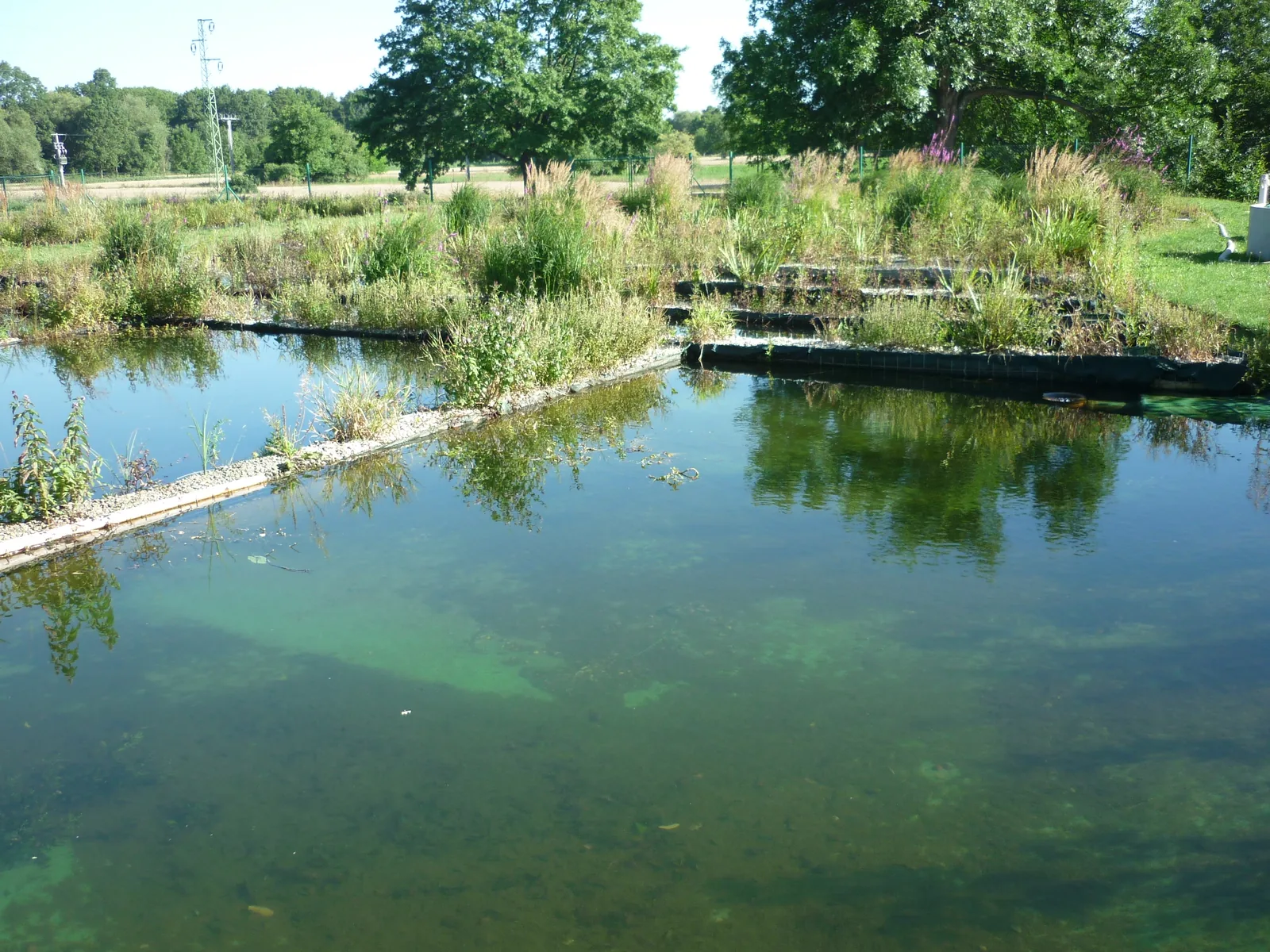
A DIY natural swimming pool is a serious civil engineering project, but it is well within reach of a capable homeowner who is prepared to manage groundworks, source materials, and dedicate several weeks to the build. The key is understanding each stage before you start — and knowing which decisions cannot easily be undone once the hole is dug.
DIY Build Steps and Materials
The build sequence for a DIY natural pool follows a logical order. Skipping stages or attempting to combine them typically creates waterproofing problems that are expensive to fix retrospectively.
1. Excavation. Dig the swimming zone to your target depth of 1.5–1.8 metres, and the plant zone to approximately 0.3–0.6 metres. A flat bottom simplifies liner installation and is strongly recommended for a first build. A flat bottom and box shape are specifically highlighted as construction simplifiers for DIY builders, reducing the number of folds required in the liner.
2. Substrate preparation. Remove any sharp stones or roots from the excavated surface, then lay a geotextile underlay to protect the liner from puncture. The liner goes directly on top of this. TPO rubber liner should be ordered with enough excess to run up the sides and over the pool edge — this overhang anchors the liner and protects it from UV degradation at the waterline.
3. Gravel bed. Once the liner is in place, lay a gravel base of 4–5 inches depth across the liner in the plant zone. This gravel layer provides both the growing medium for plant roots and the biological substrate that beneficial bacteria colonise. Avoid limestone or calcium-rich gravels, which can raise pH and disrupt the biological balance.
4. Plumbing and circulation. Install the pump and pipework before filling. Limiting the number of pipe fittings is strongly advised — every fitting that passes through the liner is a potential leak point. Where possible, run pipes over the liner edge rather than through it. The circulation system can run from a single solar panel, making the pool genuinely off-grid if you wish.
5. Filtration system. Whilst some DIY guides recommend a simple gravel-bed filter, specialists recommend a professional water treatment system over gravel-only filtration for reliable, year-round water quality. The additional cost of a purpose-built biological filter unit is generally worthwhile — particularly if the pool will be used intensively or sits in a shaded location where algae pressure is higher.
6. Planting. Introduce aquatic plants once the pool is partially filled. Start with robust, fast-establishing species — rushes and sedges establish quickly and begin filtering almost immediately. Water lilies and irises can be added once the structural plants are settled, typically four to six weeks after initial planting.
Costs, Planning Permission and Timeline
The financial and regulatory picture for natural pools in the UK is considerably more straightforward than many homeowners assume — and the savings from a competent DIY build are substantial.
Costs: One UK homeowner completed a natural pool project for approximately £30,000 — roughly half the minimum professional quote of £60,000, with professional installations commonly exceeding £100,000 for larger pools. The professional cost scale for reference is set out below.
| Pool Size | Professional Cost (excl. VAT) |
|---|---|
| 40 m² | £40,000+ |
| 100 m² | £65,000+ |
| 200 m² bespoke | £100,000+ |
The DIY saving comes primarily from labour. Materials — liner, gravel, pump, plants, pipework — are the same whether you build it yourself or hire a contractor. A realistic DIY budget of £25,000–£35,000 for a mid-sized pool (approximately 60–80 m² total including plant zone) is achievable for a homeowner doing the project management and much of the physical work themselves.
Planning permission: Planning permission is not usually required for a natural swimming pool in England and Wales — they are treated in planning law similarly to ornamental ponds. However, there are important exceptions: listed buildings, designated conservation areas, Areas of Outstanding Natural Beauty (AONBs), and certain categories of agricultural land may all require a formal application. If you’re in any doubt, a pre-application enquiry to your local planning authority costs between £50 and £100 and gives you a written steer before committing to the project. A full planning application, if required, costs approximately £206.
Interestingly, natural pools can sometimes be easier to gain approval for than conventional pools in AONBs and conservation areas, because their ecological benefits — biodiversity gains, reduced chemical use, rainwater management — align with planning policy objectives in those designations.
Timeline: Construction itself typically takes around one month; however, if you’re filling from rainwater rather than mains supply, allow up to six months for the pool to reach full capacity. The biological system also needs a full growing season to establish fully — plan to open the pool for swimming in its second summer rather than the first, and you’ll be rewarded with significantly more stable water quality. If you enjoy exploring UK aquatic environments in the meantime, our guide to the best rock pools in Cornwall makes for a worthwhile detour.
A DIY natural swimming pool is one of the most rewarding projects a UK homeowner can take on — combining serious civil engineering with ecological design and a genuinely usable outdoor amenity. The upfront investment is significant, but the result is a permanent, low-chemical, wildlife-friendly swimming space that adds lasting value to both the property and the garden. Plan carefully, build to the recommended specifications, and the water will look after itself.
Frequently Asked Questions
How do natural swimming pools work?
Natural pools filter water through three mechanisms: a biological filter (shale or similar media absorbs phosphates), a plant root zone colonised by beneficial bacteria, and a circulation pump.
How much does a natural swimming pool cost in the UK?
Professional natural pools cost from £40,000 (40 m²) to £100,000+ (200 m² bespoke), all excluding VAT. A competent DIY build can cost around £30,000 for a mid-sized pool, as the main saving is on labour.
Do you need planning permission for a natural swimming pool in the UK?
Not usually. Natural pools are treated like ornamental ponds under permitted development rights in England and Wales. Exceptions include listed buildings, conservation areas, AONBs and some agricultural land. A pre-application enquiry costs £50–£100 if you’re unsure.
Can you build a natural swimming pool yourself?
Yes. A capable DIY builder can complete a natural pool project for around £30,000, compared with £60,000–£100,000+ professionally. The key is following the correct build sequence: excavation, geotextile underlay, TPO liner, gravel, plumbing, then planting.
How do you maintain a natural swimming pool?
Maintenance is light: mainly removing leaf litter and dead plant material with a net — typically half an hour per session. Installing an autumn leaf net reduces this further. The biological system largely looks after itself once established.
Are natural swimming pools safe to swim in?
Yes, when properly designed. The biological filtration system — plants and beneficial bacteria — removes nutrients that support harmful algae and pathogens. Water quality in well-maintained natural pools is comparable to that of chemically treated pools.
How long does a natural pool take to build?
Construction typically takes around one month. Filling from rainwater can take up to six months. The biological system needs a full growing season to establish — most owners plan to swim in the second summer rather than the first.
What plants do you need for a natural swimming pool?
Hardy UK aquatic species work best: aquatic irises, water lilies, sedges, rushes, hornwort and arrowhead. A mix of submerged, emergent and floating species performs better than a monoculture, extracting nitrates and phosphates more effectively.